Can a blown gasket be fixed? A DIY troubleshooting guide
Urgent guide for homeowners: can a blown gasket be fixed? Learn diagnostic steps, safe DIY fixes, common repair methods, and when replacement by a pro is necessary.


Can a blown gasket be fixed? In most cases, a blown gasket isn’t a temporary repair—gaskets are usually replaced rather than patched. Start by identifying the gasket type, assess damage, and verify you have the right replacement. If the components are corroded or warped, replace the entire assembly and test for leaks. If unsure, call a pro.
Can a blown gasket be fixed? Quick orientation
When you ask the question can a blown gasket be fixed, the practical answer is: it depends on the kind of gasket and the extent of damage. For most systems—whether a home appliance, plumbing connection, or even a small engine—the blown gasket indicates a fundamental failure of a sealing surface or material. In many cases, the correct approach is to replace the gasket and reseal the joint rather than attempting a patch. The Gasketed team emphasizes that the right gasket, matched to the correct size and material, is critical for a durable seal. If you’re unsure about the type or installation requirements, it’s wise to pause and verify before proceeding. A cautious start will prevent more costly damage later.
Understanding gasket types and failure modes
Gaskets come in varied shapes and materials to suit different conditions: flat gaskets for flanges, thread-sealing gaskets for pipes, and specialized seals for engines or appliances. A blown gasket usually reveals itself through leaks, visible deformation, or corrosion at mating surfaces. In many cases, failure is caused by aging, exposure to heat or chemicals, improper torque, or misalignment during installation. According to Gasketed Analysis, 2026, incorrect sizing and poor seating are among the most common culprits behind gasket leaks. Recognizing the specific gasket type and how it functions helps you decide whether a DIY fix is feasible or if replacement is the safer route.
Safety first: immediate steps and what not to do
Before you touch anything, power down or shut off water, gas, or electricity as appropriate. Do not reuse a damaged gasket or over-tighten, which can warp surfaces and worsen leaks. Use PPE such as gloves and eye protection when disassembling components, and avoid strong chemical cleaners that could degrade gasket materials. If you’re dealing with systems under pressure or high temperature, the risk of injury is real. When in doubt, consult the manufacturer’s safety guidelines or a qualified professional to prevent personal harm and damage to the equipment.
Diagnostic approach: clues and checks you can perform
A systematic diagnostic flow helps you distinguish between a gasket issue and a peripheral problem. Start with the simplest checks: verify the leak location, inspect the gasket’s appearance, and confirm the mating surfaces are clean, flat, and free of nicks. Check for signs of misalignment, warping, or uneven torque on the bolts or clamps. If the leak persists after basic cleaning and reassembly, the issue may be the gasket itself, a damaged seating surface, or extreme aging. This approach minimizes unnecessary disassembly and directs you toward the most probable fix first.
Step-by-step: most common gasket replacement scenario (high-level overview)
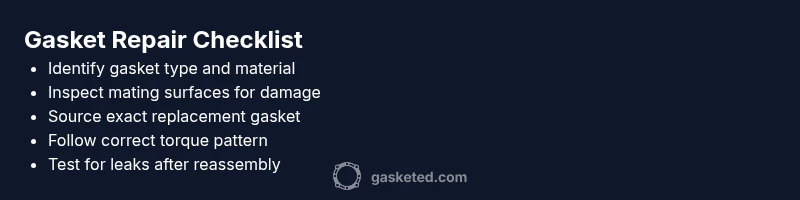
- Confirm the exact gasket type and obtain the correct replacement. 2) Disconnect power or water supply and carefully disassemble the assembly. 3) Remove old gasket and clean all mating surfaces thoroughly. 4) Place the new gasket in alignment with the studs or bolts, ensuring even seating. 5) Reassemble and torque bolts to the manufacturer’s spec, then test for leaks. This block provides a high-level workflow; the detailed, equipment-specific steps are in the STEP-BY-STEP block below.
Tools, materials, and safety notes
Typical tools include screwdrivers, wrenches, torque wrench, gasket scraper, cleaner solvent, and replacement gaskets. Use materials compatible with the system’s temperature, pressure, and chemical exposure. Safety notes: never work on pressurized or hot systems without following proper locking-out procedures, and never reuse damaged components. Proper labeling and organized hardware help prevent misassembly.
Prevention and maintenance to extend gasket life
Regular inspection for cracks, corrosion, or embedding of debris helps catch issues early. Keep seals clean and dry, replace aging gaskets during routine maintenance, and avoid abrupt operational changes that stress seals. Maintain manufacturer-recommended torque and seating surfaces, and store spare gaskets in a clean, dry environment. Small preventative steps save big repair costs down the line.
When to call a pro and what to expect from a professional
If corrosion, warping, or extensive damage is present, or if you’re unsure about the gasket type, it’s wise to hire a professional. A trained technician will verify gasket compatibility, inspect seating surfaces, and perform professional torque and seating procedures to ensure a lasting seal. For complex systems like engine head gaskets or critical plumbing joints, professional service is the safest option.
Steps
Estimated time: 45-60 minutes
- 1
Power down and prep workspace
Turn off power, water, or gas as appropriate. Disconnect power cords or shutoff valves, and drain the area if needed. Lay out a clean workspace, label parts, and keep replacement gaskets within reach.
Tip: Take photos during disassembly to guide reassembly. - 2
Identify gasket type and obtain replacement
Check the equipment manual or the old gasket to determine material, thickness, and size. Order or source a gasket that exactly matches the original specifications, avoiding generic substitutes that don’t seal properly.
Tip: If in doubt, bring the old gasket to a hardware store for comparison. - 3
Disassemble and remove old gasket
Carefully loosen fasteners in the recommended sequence to prevent warping. Remove the old gasket without gouging the mating surfaces. Clean both surfaces completely to a bright, smooth finish before installing the new gasket.
Tip: Use a plastic scraper to avoid scratching metal surfaces. - 4
Install the new gasket and reseal
Position the new gasket precisely, ensuring alignment with bolt holes or channels. Lightly lubricate if required by the manufacturer, then reassemble using the prescribed torque pattern. Avoid over-tightening to prevent damage.
Tip: Check alignment before final tightening; misalignment causes leaks. - 5
Test for leaks and finalize
Restore power or water and observe the joint under normal operating conditions. Look for any signs of seepage, then re-tighten in small increments if allowed by the spec. If leaks persist, reassess the gasket or consult a professional.
Tip: Perform a short leak test rather than a full system run to catch leaks early.
Diagnosis: Gasket is leaking, seeping, or failing to seal under normal operating conditions
Possible Causes
- highImproper gasket size or orientation
- mediumWarped/misaligned mating surfaces
- lowAged or degraded gasket material
Fixes
- easyVerify gasket type and correct alignment; reseat with even torque
- easyClean and flatten mating surfaces; replace gasket if damaged
- mediumIf surfaces are damaged, replace the seal kit and re-torque per spec
Common Questions
Can a blown gasket be fixed without replacement?
In most cases, a blown gasket cannot be reliably fixed; replacement is typically required for a lasting seal. Temporary sealants or patches may provide a short-term fix in low-pressure scenarios, but they are not a durable solution.
Usually, you need to replace the gasket for a lasting seal. Temporary patches aren’t reliable.
What are common signs of a blown gasket?
Common signs include visible leaks, coolant or oil seepage, unusual odors, over-pressurization, or white exhaust indicating burning coolant. In engines, a blown head gasket can cause white smoke and milky coolant.
Leaks, unusual smells, or white exhaust can signal a blown gasket.
Is using gasket sealant ever a good idea?
Sealants can be a temporary fix on low-pressure, non-critical joints, but they’re not a substitute for proper gasket replacement. Rely on manufacturer guidance and avoid sealing critical joints permanently.
Sealants are usually only temporary and not a substitute for replacement.
How long does a gasket replacement typically take?
Time varies by system but plan for 30 to 90 minutes for simple joints and longer for complex assemblies. Allow extra time if you’re also inspecting mating surfaces and torque specs.
Most gasket replacements take from a half hour to over an hour, depending on the setup.
When should I call a professional?
Call a professional if you encounter warped surfaces, corrosion, high-pressure systems, or if you’re unsure about gasket type and torque requirements. A pro can prevent costly mistakes and ensure a proper seal.
If you see damage or aren’t sure about specs, get a professional.
Watch Video
Key Takeaways
- Assess gasket type and damage before deciding repair.
- Replacement is often safer than patching a blown gasket.
- Follow exact torque specs and seating procedures.
- When in doubt, consult a professional for critical systems.