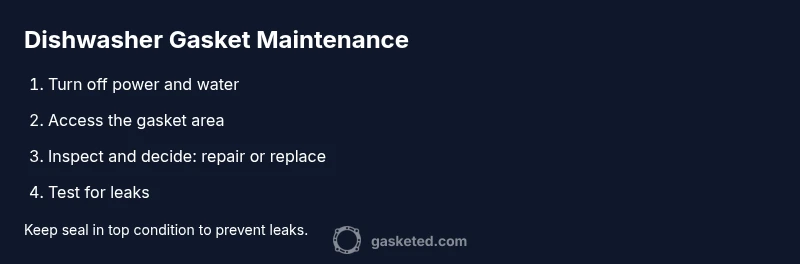
How to Fix Gasket on Dishwasher: A Step-by-Step DIY Guide
Learn to diagnose, clean, reseat, and replace a dishwasher gasket with step-by-step instructions, safety tips, and maintenance ideas to prevent leaks.


This guide shows you how to inspect, clean, reseat, and seal a dishwasher gasket, identify worn seals, and safely test for leaks. You’ll learn which tools to gather, common failure modes, and step-by-step tasks you can complete in under an hour. With patience and care, most gaskets can be restored without professional service.
What a dishwasher gasket does and how leaks manifest
The dishwasher door gasket acts as a flexible seal between the door and the tub, preventing water from escaping during wash and rinse cycles. When this seal is compromised, you may notice water spraying or dripping from the door seal or pooling on the floor near the appliance. Leaks can be caused by wear, mineral buildup, misalignment, or damage from improper loading. Understanding how the gasket works helps you identify when cleaning is enough or when a replacement is necessary. In many cases, leaks originate not from the gasket itself but from the groove or frame where the gasket seats.
Key takeaway: a healthy gasket keeps water inside the tub and protects your kitchen floor from spills, so a quick inspection can save a lot of cleanup.
Common gasket failure modes and warning signs
Gasket deterioration happens for several reasons, including dry-rot, cracking from temperature fluctuations, and mineral residue that prevents a clean seal. Common warning signs include visible cracks or tears, flattened or deformed gasket lips, persistent leaks after cycles, and uneven seating where the gasket doesn’t sit flush along the door frame. If you notice mold or musty smells around the door seal, cleaning may help, but deeper damage often requires replacement. Regularly checking the gasket edges for nicks or splits can catch problems before they cause leaks.
Pro tip: run a quick visual check after each cycle to catch early signs of wear before a full failure occurs.
Cleaning, reseating, and resealing the gasket
Begin by turning off power to the dishwasher and pulling the plug for safety. Remove the lower rack to give yourself access to the door and gasket. Wipe the gasket groove and the door surface with a damp cloth and a mild cleaner to remove residue and mineral buildup. Gently press the gasket back into its groove, ensuring an even, continuous seal around the entire circumference. If you feel stiffness or binding, do not force it—this is a sign the gasket or groove is damaged and may need replacement. Apply a thin layer of silicone grease around the gasket lip to improve seating and longevity. Reassemble the rack and run a short test cycle without dishes to observe for leaks.
Tip: use a soft cloth to avoid scratching the gasket surface; avoid harsh solvents that can degrade rubber.
Replacement vs repair: how to decide and choosing the right gasket
If you find cracks, splits, or a warped gasket lip, replacement is usually the safer, longer-lasting option. Replacement gaskets come in varied shapes and sizes, so you’ll need to confirm compatibility with your dishwasher model—check the model number plate or the user manual. When choosing a replacement, look for a gasket with a similar thickness and groove profile as the original. Some gaskets include integrated adhesive or mounting features that affect installation. If the groove is damaged, replacing the door or the entire front panel may be required in rare cases.
Practical note: even when repairing, it’s worth buying a new gasket to ensure a reliable seal for the next several years.
Testing for leaks safely and effectively after gasket work
With the gasket reseated or replaced, run a test cycle with the empty dishwasher. Observe the door seam and underneath the door for any signs of leaking. If water appears at the seal, stop the cycle and recheck the gasket alignment, seating, and cleanliness; minor adjustments can make a big difference. For stubborn leaks, run a second, short water-only cycle with the door open to observe where water travels and whether the seal remains intact. Dry any moisture promptly to prevent mold.
Caution: do not ignore leaks, as ignored leaks can damage cabinetry and electrical components.
Maintenance tips to extend gasket life and prevent future leaks
Regular maintenance is simpler than repeated repairs: clean the gasket after each use, avoid slamming the door, ensure even loading to prevent stress along the seal, and inspect the gasket monthly. If you live in hard water areas, mineral buildup is more likely and can be reduced with a light monthly cleaning. Consider keeping a small amount of silicone grease on hand for reseating and reducing friction during use. Replace worn gaskets promptly to avoid more extensive damage.
Final quick reference and safety reminders
- Always disconnect power when working on the dishwasher.
- Inspect the gasket for tears, cracks, or warping; replace if damaged.
- Clean and reseat the gasket before deciding on replacement.
- Test cycles should be short and with no dishes to avoid water damage.
- Use food-grade silicone grease to improve seal and longevity when reseating.
Tools & Materials
- Screwdriver set (Phillips and flathead)(Phillips #2 and flathead #3 are common sizes)
- Soft cloths or towels(For wiping water and drying surfaces)
- Replacement dishwasher door gasket(Only if gasket is torn or stretched; ensure model compatibility)
- Silicone grease (food-grade) or plumber's grease(Helps seal and ease gasket seating)
- Bucket or shallow tray(To catch water during disassembly)
- Small brush or old toothbrush(For cleaning grooves and channels)
- Protective gloves and safety glasses(Hand and eye protection during disassembly)
- Isopropyl alcohol or mild cleaner spray(Sanitize surfaces and remove residue)
Steps
Estimated time: 45-75 minutes
- 1
Power down and prep
Turn off the dishwasher at the circuit and unplug the unit. If accessible, turn off the water supply to avoid any drips during work. Set up a tray and towels to catch any residual water. This safeguards you and reduces cleanup after the repair.
Tip: Take a photo of the gasket before disassembly to help with reassembly. - 2
Access the gasket area
Remove the lower rack to access the door area and gasket. Gently pull back any door latches or screws that secure the door panel as needed. Ensure you have clear visibility of the gasket groove and the door frame.
Tip: Work slowly; avoid prying the gasket or door frame with metal tools. - 3
Inspect the gasket for wear
Look for cracks, tears, warping, or flat spots along the gasket lip. Run your finger along the groove to feel for rough edges or mineral buildup. If damage is found, plan for replacement rather than forcing a reseat.
Tip: If you’re unsure about damage, compare with a new gasket of the same profile. - 4
Clean the gasket and groove
Use a damp cloth and mild cleaner to remove residue, mold, and mineral scale from both the gasket and the groove. A toothbrush can reach narrow channels. Dry the surfaces thoroughly before reseating.
Tip: Avoid harsh solvents that could degrade rubber. - 5
Reseat or replace the gasket
If the gasket is intact, re-seat by aligning it evenly in the groove all the way around. Press gently with your fingers to ensure a complete seal. If damaged, replace with a compatible gasket, following the manufacturer’s alignment instructions.
Tip: Apply a thin layer of silicone grease to the gasket lip to improve seating. - 6
Test for leaks after reseating
Replace racks and reassemble any panels. Run a short wash cycle with no dishes to check for leaks around the door seam. Look under the door outside and inside the tub to confirm the seal is holding.
Tip: If water appears, stop the cycle and recheck seating and cleanliness. - 7
Consider replacement if leaks persist
If leaks continue after reseating and cleaning, inspect the door frame and groove for damage that might require replacement of the gasket or door assembly.
Tip: Sometimes the frame or groove is damaged, not just the gasket. - 8
Document results and plan maintenance
Note the condition of the gasket and the outcome of your test. Keep a spare gasket on hand for future maintenance and schedule periodic inspections.
Tip: Set a reminder to inspect seals every 6–12 months depending on usage.
Common Questions
Can a dishwasher gasket be fixed without replacing it?
Yes, many leaks are resolved by cleaning and reseating the gasket. If there are visible cracks or deformation, replacement is usually the safer long-term option.
Yes, you can often fix a gasket by cleaning and reseating it. Replacement is usually needed if the gasket is cracked or deformed.
What causes dishwasher gaskets to leak?
Leaks typically arise from wear and tear, mineral buildup, misalignment, or chemical damage from cleaners. Regular maintenance can reduce the risk.
Leaks usually come from wear, mineral buildup, misalignment, or chemical damage. Regular maintenance helps prevent this.
How long does it take to fix a dishwasher gasket?
A typical gasket inspection, cleaning, and reseating take about 30 to 60 minutes, depending on access and damage. Replacement can take longer if parts need ordering.
Most fixes take about an hour, with longer times if you need to order a new gasket.
Do I need special tools to fix the gasket?
You only need common household tools: screwdrivers, a soft cloth, a toothbrush, silicone grease, and possibly a replacement gasket tailored to your model.
Just basic tools and a compatible gasket if replacement is needed.
How do I know if the gasket needs replacement?
Look for deep cracks, tearing, warping, or a gasket lip that no longer seats. If cleaning and reseating don’t stop leaks, replacement is advised.
If you see deep cracks or warping, replacement is typically required.
Is it safe to operate the dishwasher during repair?
Do not operate with the door open, and always disconnect power and water during disassembly to prevent shocks and water damage.
Power off and unplug first; never run the dishwasher with parts exposed.
Watch Video
Key Takeaways
- Inspect the gasket for wear before replacement.
- Clean and reseat the gasket to restore a seal.
- Replace damaged gaskets rather than forcing a patch.
- Test cycles confirm leak status safely.
- Regular maintenance extends gasket life.