Replacement Gasket for Refrigerator: DIY Replacement Guide
Step-by-step guide to replacing a refrigerator gasket. Identify worn seals, choose the right gasket, gather tools, perform the installation safely, and maintain the seal to boost efficiency and prevent energy loss.


Goal: replace a refrigerator gasket to stop door leaks, reduce frost, and save energy. You’ll need an exact replacement gasket for your model, basic hand tools, a clean workspace, and careful measurements of door dimensions. This quick guide prepares you for a safe, successful DIY repair that restores seal quality.
Why fridge gaskets fail
According to Gasketed, most refrigerator door gasket failures come from aging and exposure. Over time, the gasket's elastomer loses elasticity; sunlight, heat, and frequent temperature fluctuations accelerate drying and cracking. When the door seals are not tight, warm air leaks into the cabinet, making the compressor run longer and frost can form along the door frame. You may notice condensation on the door seal, ice buildup near the hinge, or the door won’t stay closed without extra pressure. In energy terms, a worn gasket can cause a refrigerator to work harder, increasing utility costs and shortening its lifespan.
Other contributors include improper cleaning or using harsh cleaners that degrade rubber compounds; warped doors from frequent slamming; and misalignment from door sag as the fridge ages. If your seal seems brittle or tears are visible, replacing the gasket is often the most cost-effective fix. Before replacing, inspect the hinge alignment, door frame flatness, and the inner rim for residue that can prevent a proper seal. Finally, ensure you select a gasket style that matches your door: stretch-in, screw-in, or snap-in types vary by model and installation method.
In the DIY context, replacement gaskets offer a practical, cost-efficient fix for many households. When done correctly, a new gasket restores door compression, reduces air exchange, and helps your fridge reach steady temperatures faster after door openings. This leads to quieter operation and lower energy bills over time. The following sections outline how to identify the right gasket and perform the install with confidence.
How to identify the right replacement gasket
Start with the model data: locate the refrigerator’s model and serial number on the label inside the fresh-food door or on the frame edge. Use this information to pull a gasket that is specified for your unit. Gaskets come in several configurations: screw-in channels, snap-in grooves, and full-wrap edge gaskets. Match the gasket cross-section and edge profile to the original—most doors use a rounded bulb around the edge, but some models use a square or T-shaped seal. Check whether the door is a standard single-door, French-door, or side-by-side, as some gaskets are designed specifically for these layouts.
Measure carefully before ordering: take three measurements—door width at the hinge line, vertical door height, and groove width where the gasket sits. Then compare your numbers to the gasket’s listed dimensions with a small tolerance (about 2–3 mm) to ensure a proper fit. If you’re unsure between OEM (original equipment manufacturer) and aftermarket, consider the fit and warranty. OEM gaskets guarantee exact fit and compatibility, but aftermarket options can be cheaper and readily available; however, you may need minor trimming or adjustment. Finally, ensure the gasket is explicitly labeled for your fridge model and door type to avoid misfit and future leaks.
Tools and materials you’ll need
To complete the replacement effectively, gather the following essentials. A well-prepared toolkit reduces frustration and speeds up the job.
- Replacement refrigerator gasket (essential and model-specific)
- Phillips and flat-head screwdrivers (essential, to fit screws or clips)
- Soft cloths for cleaning
- Mild soap or dish detergent and water
- Isopropyl alcohol (optional, for stubborn residue)
- Tape measure or ruler (essential for verifying dimensions)
- Adhesive remover or plastic scraper (optional, for old adhesive)
- Masking tape or small clamps (optional, to hold gasket during seating)
- Gentle heat source (hair dryer) to help with tight bends (optional)
- Protective gloves (optional, for hand protection)
Note: Keep your area clean and well-lit. Having good light helps spot hidden screws and ensures the gasket seats evenly.
Step-by-step overview (high-level)
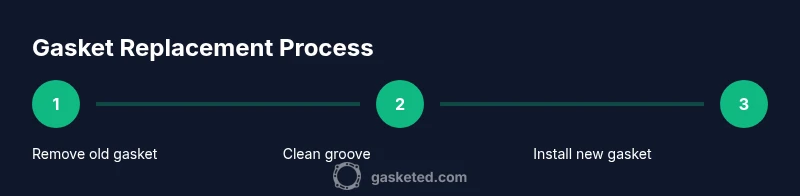
Replacing a refrigerator gasket involves: (1) preparing and identifying the correct gasket, (2) removing the old gasket, (3) cleaning the door groove, (4) fitting the new gasket, and (5) testing the seal. This overview gives you the flow of the process without substituting the detailed steps that follow in the dedicated step-by-step section.
Key to success is verifying compatibility, cleaning the groove to remove residue or old adhesive, and seating the gasket evenly along the entire door edge. Any misalignment or kinks can create air gaps that undermine the seal and waste energy. After seating, reattach the door and perform a visual inspection and a simple door slam test to confirm the gasket closes evenly across the top, middle, and bottom.
Common installation challenges and fixes
Most installation challenges come from a misfit or an improperly seated gasket. If the gasket binds in the corner, remove and re-seat, starting at the top corner and working down both sides to avoid twists. A stubborn gasket might need slight trimming along the bottom or sides; trim conservatively with scissors and re-check fit. Warped doors can also prevent a tight seal; if you notice significant misalignment, re-tighten hinges or consult a professional.
Gasket seating can be aided by warming the gasket slightly (carefully with a hair dryer) to increase flexibility, especially in colder environments or with stiffer material. If you see gaps when the door is closed, double-check the groove cleanliness, ensure there’s no debris behind the gasket, and confirm that the groove is uniform around the frame. Do not force or bend the door frame to accommodate a gasket; misalignment risks damaging the door and outlet wiring inside.
Flush seating is critical for performance. After installation, run a simple test: close the door on a thin piece of paper near the middle of the door. If the paper pulls out easily, you may have a loose seal in that area; adjust accordingly.
Maintenance after replacement
A newly installed gasket benefits from a short break-in period. Open and close the door a few dozen times during the first 24–48 hours to allow the gasket to settle into the groove. Clean any fingerprints or residue from the gasket surface with a mild detergent; avoid abrasive cleaners that can wear down the material. Inspect the seal periodically for small cracks or stiffening; if you see cracks or a loss of elasticity, consider replacing the gasket again soon to prevent leaks.
Keep the door alignment correct. If the door still doesn’t seal properly after seating, check the hinge alignment and ensure the door frame is flat and not sagging. For French-door or side-by-side configurations, verify that the secondary doors also seal properly to avoid cross-leaks and ensure energy efficiency. Finally, log the replacement date and model details in your maintenance notes so you can plan replacements in the future and track energy savings.
Safety considerations when replacing a refrigerator gasket
Safety should be your first priority when performing any appliance maintenance. Always unplug the fridge before beginning work to prevent electrical shock. Use gloves to protect your hands from sharp metal edges and screws. Work in a well-lit area and keep small screws and fasteners in a container to avoid losing them. If you encounter a damaged door frame or a gasket footprint that does not align with standard profiles, stop and consult a professional to avoid personal injury or further appliance damage.
Finally, handle the gasket and any cleaning solutions according to their labels, and dispose of old gaskets in accordance with local regulations. Following these precautions reduces risk and ensures a successful, safe replacement.
Tools & Materials
- Replacement refrigerator gasket(Must match model and door type; bring model number from the label.)
- Phillips screwdriver(Have the correct size for your screws.)
- Flat-head screwdriver(May be needed for stubborn clips.)
- Soft cloths(For cleaning the groove and door edge.)
- Mild soap or detergent(Gentle cleaners prevent gasket damage.)
- Isopropyl alcohol(Eases residue removal.)
- Tape measure or ruler(Verify dimensions before ordering.)
- Masking tape or clips(Temporary holds during seating.)
- Gloves(Protection for hands.)
- Hair dryer or heat gun (optional)(Helps with stiff gaskets; use cautiously.)
Steps
Estimated time: 30-60 minutes
- 1
Power down and prep
Unplug the fridge, remove nearby items, and lay out your tools. Verify you have the correct gasket for your model and the space to work. This prep minimizes risk and ensures you can work cleanly and efficiently.
Tip: Unplug the appliance and take photos of the old gasket orientation for reference. - 2
Remove the old gasket
Open the door and locate screws or retaining clips along the gasket. Loosen or remove them, then slide the gasket away from the door edge. Keep track of any mounting pieces and note the gasket’s orientation for installing the new one.
Tip: Take a photo of the gasket around the edge before removal to guide reinstallation. - 3
Clean the door groove
With the door edge exposed, wipe the groove and gasket recess with a cloth and mild soap solution. Remove old adhesive, grime, and debris so the new gasket seats evenly. Let the area dry completely before the next step.
Tip: Avoid abrasive cleaners that can abrade gasket material. - 4
Dry and inspect the groove
Ensure the groove is dry and free of residues. Look for warping, cracks, or nicks in the door edge; these can prevent a proper seal and may require additional repair or a spare door.
Tip: If the groove is damaged, consider professional evaluation before proceeding. - 5
Fit the new gasket to the door edge
Start by aligning the gasket’s corner with the door’s top corner. Work the gasket into the groove along the sides, gradually seating it all the way around. Avoid twisting or compressing the gasket in one spot.
Tip: Work slowly and press evenly to avoid creating air gaps. - 6
Check seating and alignment
Close the door gently to test seating. Look for even compression along the entire edge and check for any gaps at the top, middle, or bottom. If you see a twist or kink, re-seat that section carefully.
Tip: If gaps persist, re-open and reposition the gasket around the affected area. - 7
Reconnect and test the door
Plug the fridge back in and let it reach normal temperatures. Close the door firmly and perform a simple test by sliding a sheet of paper near the seal to see if it holds. Repeat from multiple angles to confirm a complete seal.
Tip: If the paper pulls out easily, continue adjusting the seating until you have a snug seal. - 8
Final check and cleanup
Wipe away any cleaner from the gasket and surrounding surfaces. Put tools away and store the old gasket for reference. Document the replacement date for future maintenance and monitoring.
Tip: Keep a small note of the model and gasket type for future replacements.
Common Questions
What are the signs that my fridge gasket needs replacement?
Common signs include audible air leaks, noticeable frost around the seal, higher energy bills, and doors that don’t stay closed without effort. If you see visible cracks or a stiff, brittle gasket, replacement is likely needed.
Look for air leaks, frost, or doors that won’t seal properly. Cracks or stiffness indicate replacement is due.
Can I replace a refrigerator gasket myself, or should I hire a pro?
Many homeowners can replace a gasket themselves with the right gasket model and basic tools. If you encounter a warped door, gas lines, or electrical components near the door frame, consider professional help.
You can often do it yourself if you have the right gasket and tools. Seek a pro if the door is warped or you’re unsure.
How long does a gasket replacement typically take?
Most replacements take about 30 to 60 minutes, depending on door type and how easily the new gasket seats in the groove.
Usually half an hour to an hour, depending on your fridge model.
Will a new gasket really save energy?
Yes. A properly seated gasket reduces air exchange, helps the compressor cycle less, and can lower energy use over time.
A good seal means your fridge doesn’t have to work as hard to stay cold.
How do I measure for the correct gasket size?
Measure the door width at the hinge, the height, and the groove width. Compare to the gasket’s listed dimensions with a small tolerance.
Measure width, height, and groove; match the gasket’s size and profile.
OEM vs aftermarket gasket — which should I choose?
OEM gaskets guarantee exact fit and compatibility, often with better warranty; aftermarket options can be cheaper but may need minor trimming or adjustments.
OEM usually fits best, but aftermarket can save money—check compatibility and return policies.
Watch Video
Key Takeaways
- Identify the exact gasket model before buying
- Follow model-specific installation steps for a proper seal
- Test seating around the full edge after installation
- Regularly inspect and clean the gasket to extend life