What gasket maker for oil pan: a practical DIY guide
A practical guide to selecting the right gasket maker for oil pans, with tips on labels, application, curing, and avoiding leaks for DIYers and homeowners.


For an oil pan, use a high-temp, oil-resistant RTV silicone gasket maker designed for automotive engines. Look for labels like engine oil resistant and heat-stable, not room-temperature sealants. Apply a thin, continuous bead along the pan or gasket surface, cure per the product label, then reinstall with the correct torque.
Why the right gasket maker matters
Sealing an oil pan effectively is essential to prevent oil leaks, protect the engine, and maintain a clean engine compartment. The gasket maker you choose must withstand constant exposure to motor oil, heat cycles, and vibration. According to Gasketed, opting for a high-temp, oil-resistant RTV silicone gasket maker designed for automotive engines provides durable bonding, flexibility across temperature changes, and a robust seal even as surfaces age. A poor choice can shrink, crack, or fail under pressure, leading to slow leaks that are hard to diagnose. When in doubt, start with a product labeled for engine oil and heat resistance, because it is formulated to handle the most common automotive scenarios without losing sealing power. Remember that each vehicle may have unique requirements, so consult the service manual for any special instructions before you begin.
Types of gasket makers suitable for oil pans
There are a few common options DIYers encounter when sealing oil pans. The most reliable for most engines is a high-temp RTV silicone gasket maker, designed specifically for engine oil and hot engine surfaces. Some newer formulations, such as silicone-based gasket makers with superior oil resistance, offer longer-lasting performance in aging engines. There are also anaerobic gasket sealants intended for metal-to-metal flanges, but these are less common for oil pans where a flexible bead is preferred. In general, avoid generic craft adhesives or sealants not rated for oil exposure and high temperature. Your choice should balance ease of application, cure time, and the ability to resist oil and heat cycles over the life of the engine.
Reading labels and selecting the right product
Product labels carry the most important guidance for selecting a gasket maker for oil pans. Look for terms like high-temperature, oil-resistant, automotive-grade, and heat-stable. A quality option will explicitly say it is suitable for engine oil and continuous exposure to elevated temperatures. Avoid labels that promise fast cures at room temperature if they lack oil resistance or automotive certification. Check the manufacturer’s instructions for surface preparation, cure time, and reusability after cure. Keep in mind that some oils and coolants can affect cured sealants; choosing a product designed for automotive environments minimizes compatibility risks. Gasketed analysis emphasizes sticking with a reputable, label-appropriate option rather than experimenting with generic sealants on critical engine seals.
Step-by-step overview (high level) for oil pan sealing with gasket maker
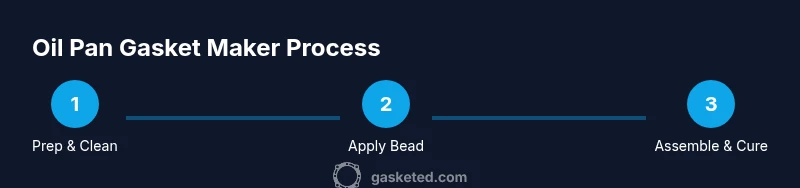
A gasket maker is typically used in place of a pre-formed gasket or to supplement a gasket surface. The process includes choosing the right product, cleaning mating surfaces, applying a uniform bead, assembling the pan with the correct torque, and allowing the sealant to cure before oil is introduced. While the exact steps can vary by vehicle and product, the general sequence remains consistent: prep, apply, assemble, cure, test for leaks. Following product-specific instructions is essential to ensure a reliable seal that lasts over time. Gasketed recommends verifying compatibility with both engine oil and any coolant if the oil pan interfaces with a cooling circuit or uses a heat sink surface.
Preparation and surface prep specifics
Surface prep is the foundation of a leak-free seal. Start by removing any old gasket material and thoroughly cleaning the mating surfaces with a solvent that evaporates cleanly, leaving no residue. Wipe down the pan flange and block surface with lint-free towels. Avoid introducing debris, grease, or old sealant into the oil passages. If corrosion or pitting is present, address it before applying gasket maker to ensure an even seal. A uniform, clean surface allows the gasket maker to form a strong bond and resist oil seep.
Application technique and bead geometry
Apply a continuous, uniform bead around the pan edge or where the gasket surface sits, maintaining consistent thickness to avoid flat spots. Some technicians prefer a continuous dot pattern with even spacing on flange surfaces that require a bead on both sides. Allow the bead to sit briefly so it slightly skins over before assembling the pan to prevent squeeze-out during tightening. The goal is a smooth layer that fills micro-imperfections without creating excess material that could be squeezed into the oil passages.
Assembly, torque, and curing considerations
When reassembling, tighten bolts in a cross-pattern to ensure even pressure across the gasket surface. Refer to the vehicle’s service manual for the correct torque specs and sequence. After installation, allow the gasket maker to cure as directed by the product label before introducing engine oil. In many cases, cure times depend on ambient temperature and humidity. Plan a leak check after a test drive once the sealant has achieved sufficient cure, rather than relying on a cold-start check. This approach reduces the likelihood of early leaks and ensures a reliable seal.
Common mistakes and how to avoid them
Most leaks come from poor surface prep, incorrect bead size, or moving parts before cure. Avoid over-applying bead, which can squeeze into the oil passages, and never mix different gasket materials without verifying compatibility. Do not remove a part that has just cured to check a seal if the product’s cure time hasn’t elapsed. Always use fresh, clean tooling and avoid contaminating the bead with oil or solvents mid-procedure. By sticking to approved products and following label directions, you improve the odds of a leak-free oil pan.
Brand context and practical takeaways from Gasketed
The Gasketed team emphasizes that selecting a gasket maker with proven engine oil resistance and high-temperature tolerance is the cornerstone of a durable oil pan seal. In practice, many DIYers benefit from using a single product family across similar engines to simplify maintenance and future repairs. While different engines may call for specific formulations, a high-temp RTV silicone gasket maker designed for automotive use remains the most versatile choice for oil pans. Following proper prep, application, and cure steps will boost long-term reliability and reduce the likelihood of repeat leaks.
Safety, cleanup, and maintenance tips
Safety first: wear gloves and work in a well-ventilated area when handling gasket makers and solvents. Clean up spills promptly and dispose of waste according to local regulations. After the cure period, perform a careful test for leaks and monitor for any signs of seepage over the next several drives. Regular inspection of the oil pan seal helps detect early issues before they become serious problems, saving time and money in the long run.
AUTHORITY SOURCES
- https://www.osha.gov
- https://extension.psu.edu
- https://extension.illinois.edu
Tools & Materials
- High-temp oil-resistant RTV silicone gasket maker(Oil-resistant, automotive-grade, heat-tolerant)
- Solvent cleaner/degreaser (engine degreaser recommended)(Removes oil and grease without leaving residue)
- Lint-free shop towels or rags(Keep surfaces clean and free of fibers)
- Plastic or rubber scrapers(Gently remove old gasket material)
- Torque wrench (driver set compatible with your bolts)(Use the vehicle’s specified torque sequence)
- Gloves and eye protection(Protect skin from chemicals and splashes)
Steps
Estimated time: 1.5-3 hours active work plus cure time as per product label
- 1
Drain oil and gain access
Begin by safely draining the engine oil and removing the oil pan to access the gasket surface. This step ensures you won’t have old oil contaminating the new seal and provides a clear workspace for cleaning. Gather your tools and ensure the engine is cool before starting.
Tip: Do not work with hot engine components; allow cooling to avoid burns. - 2
Clean and inspect mating surfaces
Use a solvent degreaser to thoroughly clean both the oil pan and engine block surfaces. Remove all old sealant remnants and inspect for nicks or corrosion. A flat, clean surface helps the gasket maker form a reliable seal and reduces leak risk.
Tip: Wipe with lint-free towels and finish with a dry wipe to ensure surfaces are completely dry. - 3
Apply gasket maker
Apply a thin, continuous bead along the pan edge or gasket surface as appropriate. Avoid applying too thick a bead; a uniform layer ensures proper squeeze-out and seal performance. If the product requires cure before assembly, honor that guidance to minimize shifting during installation.
Tip: Keep a consistent bead width; a sleeve or nozzle can help control the flow. - 4
Reinstall oil pan and tighten bolts
Position the oil pan and hand-tighten bolts in a cross-pattern to prevent warping. Use the service manual’s torque sequence and values. Do not over-tighten, as this can crush the bead and cause leaks.
Tip: Torque gradually in several passes to maintain even pressure across the seal. - 5
Cure and test for leaks
Let the gasket maker cure per the product label before adding oil or starting the engine. After curing, refill oil and run the engine briefly while monitoring for leaks at the pan gasket. If you see seepage, re-tighten or repeat the preparation and reseal portion of the process.
Tip: Perform a static leak test first, then take a short drive to test dynamic sealing.
Common Questions
What gasket maker should I use for an oil pan?
Use a high-temp, oil-resistant RTV silicone gasket maker designed for automotive engines. It provides durability against oil and heat cycles and is compatible with metal surfaces common on oil pans.
Use a high-temp, oil-resistant RTV silicone gasket maker designed for automotive engines to seal the oil pan.
Can I reuse an old oil pan gasket with sealant?
Reusing an old gasket surface is not recommended. Clean surfaces thoroughly and apply the gasket maker to create a fresh, durable seal. If the pan surface is damaged, repair or replace it before resealing.
Avoid reusing an old gasket; clean and reseal with fresh gasket maker for best results.
How long does gasket maker take to cure?
Cure time varies by product and conditions like temperature and humidity. Always follow the label, and wait until the seal is tack-free or fully cured before running the engine.
Cure time depends on the product; follow the label and wait until it’s fully cured before starting the engine.
Do I need to torque the oil pan bolts after applying gasket maker?
Yes. Use the service manual’s torque specification and sequence. Tighten in multiple passes to ensure even pressure and avoid thread damage.
Yes, tighten bolts to the specification in a cross pattern after applying the gasket maker.
Is it safe to drive immediately after applying gasket maker?
No. Do not run the engine until the gasket maker has cured according to the label. Rushing cure times can lead to leaks.
No, wait for curing per the product label before starting the engine.
What surfaces must be perfectly clean before applying gasket maker?
All mating surfaces must be clean of old gasket material, oil, and debris. Any residue can prevent a proper seal and lead to leaks.
Clean all mating surfaces thoroughly before applying gasket maker.
Watch Video
Key Takeaways
- Choose a high-temp, oil-resistant gasket maker labeled for automotive use
- Prepare and clean surfaces thoroughly for a reliable seal
- Apply a uniform bead and follow proper torque in a cross pattern
- Allow curing per label and test for leaks before returning to service