Does Gasket Maker Expire? A Practical Shelf-Life Guide
Does gasket maker expire? Learn shelf life for unopened vs opened tubes, storage tips, and how to evaluate sealant usability with insights from Gasketed.


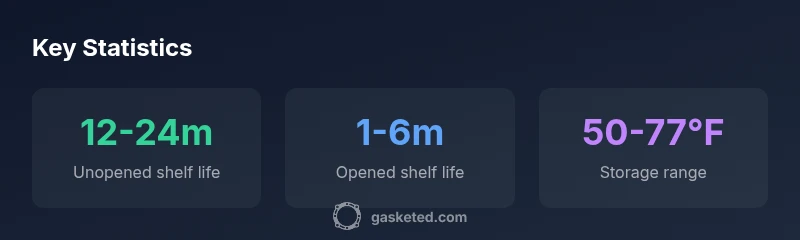
Yes, does gasket maker expire. Most manufacturers assign a shelf life of 12-24 months for unopened tubes, while once opened the usable window drops to about 1-6 months depending on the formula. Proper storage—cool, dry conditions, away from direct sunlight and heat—can help preserve sealant performance, but performance degrades with time.
Does gasket maker expire: a practical overview
Does gasket maker expire? Yes, in most cases there is a defined shelf life that matters for reliable sealing. For DIY enthusiasts, understanding expiration isn’t about alarmist warnings, but about ensuring you’re using materials that will cure correctly and form a durable seal. Manufacturers typically assign a shelf life of 12 to 24 months for unopened tubes. Once you pop the cap, exposure to air and moisture accelerates aging, and the usable life can drop to 1-6 months depending on the product family and storage conditions. Temperature and humidity during storage amplify chemical changes; heat or persistent high humidity can speed degradation even inside a sealed tube. While a product may appear normal—no gritty texture, no strong odor, no phase separation—expiration can still affect elasticity, cure speed, and bond strength. This is especially true for critical gasket applications such as engine gaskets, water heater seals, or appliance door gaskets. When you’re trying to diagnose a leak or mis-sealing, expired gasket maker is a common culprit to consider alongside wear or improper installation.
According to Gasketed, the practical takeaway is to treat the printed date as a guideline, not a guarantee, and to consider the time elapsed since opening as a separate factor. Always test a small bead on a scrap surface before applying to a real joint. If the material fails to cure within the expected window, or shows changes in consistency after mixing, discard and replace.
Factors that influence shelf life
Shelf life for gasket maker is not a single universal number; it varies by formula, container type, and how you care for the product after purchase. Unopened tubes benefit from the most stable conditions: a cool, dry environment away from direct sun and heat helps preserve the polymer network and additives that provide elasticity, adhesion, and resistance to oils and fuels. Opening the tube introduces oxygen, moisture, and potential contaminants into the mix, which can accelerate the aging process. Some formulas are more forgiving than others, especially pastes designed for general purpose automotive or plumbing uses, while high-performance or specialty gasket makers with slower curing systems may show reduced shelf life once opened. Storage in damp basements or hot attics can lead to premature thickening, separation, or loss of tack. Environmental factors such as exposure to solvents, VOCs, or strong odors can also indicate degradation. Gasketed’s analysis notes that ensuring proper sealing after use—tight caps, avoiding contact with the nozzle, and returning the tube to a clean, dry storage area—helps maximize the product’s usable life. When in doubt, leaning on 1- or 2-month incremental checks during use can prevent unexpected failures on critical joints.
For homeowners and DIYers, the key is to align expectations with storage realities and usage patterns. A well-stored unopened tube is more reliable than a highly aged opened tube. The more frequently you use gasket maker, the more important it is to establish a routine: label opened tubes with the date of first use and retire them when you notice changes that affect performance.
How to read the label and dates
Labels provide important cues about expiration and usability. Look for terms such as "Best by" or "Use by" dates, but also note the manufacture date and batch code. Some brands also include an open-date warning once the tube has been opened. A few steps to properly read the date information:
- Check the printed expiration date on the tube; if missing, examine the lot or batch code for age estimation.
- Note the date you opened the tube and set a personal reuse window based on the product type.
- Compare the product color and viscosity to a fresh sample; changes in color (yellowing), thickening, or stringiness signal reduced performance.
- If the cartridge has been refrigerated or frozen, allow it to acclimate to room temperature and test on scrap material before applying.
Remember that the expiration date is a guideline, not a guarantee of instant failure. When a product is close to its open-use window, proceed with caution and perform a small test before any critical seal.
Storage and handling best practices
Proper storage is one of the most reliable levers to extend gasket maker life. Keep unopened tubes in a cool, dry place away from direct sunlight and heat sources. Store tubes upright with the cap fully tightened to minimize air ingress. After use, wipe the nozzle, reseal tightly, and return the product to its original container or an airtight storage solution. Avoid mixing different gasket maker formulas in the same container, as incompatibilities can alter cure characteristics. If you have multiple formulas on hand, label each tube clearly with the open date. Temperature control is also crucial: aim for a stable range around 50-77°F (10-25°C). Extreme temperatures accelerate chemical changes and can degrade adhesion and elasticity. If you must move storage locations seasonally, monitor the containers upon return and test on scrap material before use. These practices reduce the risk of contamination and preserve the material’s sealing capability for as long as possible.
Testing sealant performance before reuse
Before reusing a gasket maker that has been stored for a while, perform a small on-scrap test to confirm curing and adhesion. Squeeze a short bead on a scrap metal or plastic surface that matches your intended joint. Allow the sealant to cure in the intended ambient conditions. Check for cure time that matches the product’s specification, tackiness that remains after curing, and elasticity under slight pressure. If the cured bead crumbles, cracks, or fails to seal when pressed, discard the tube. Contamination from moisture, dust, or oily residues can compromise adhesion; always clean the test surface and ensure dry conditions. When evaluating a half-used tube, it may be safer to transfer the remainder to a clean, tight-sealing container if the original is deteriorated but the formulation remains intact—however, this practice can introduce contamination risk and is discouraged for critical applications.
When to replace vs reuse
Deciding between reuse and replacement hinges on product condition, performance, and the criticality of the seal. If the opened product shows changes in texture, a strong odor, or color change, treat it as compromised. For non-critical tasks, a cautious scrap-test can verify viability, but never rely on an expired look alone. Engine and plumbing seals demand consistent performance, so if there is any doubt about cure speed, tack, or bond strength, replace with a fresh tube. When a gasket maker has surpassed its open-use window, even if it appears usable, its long-term reliability can be uncertain under pressure, temperature cycling, or exposure to fuels and oils. In DIY projects around the home, consider stocking a fresh tube for high-stakes jobs and reserving older material for low-risk repairs that don’t involve critical joints. The practice of retiring old product on a schedule helps prevent failures and saves time and resources in the long run.
Common myths and practical realities
Myth: If a gasket maker looks okay, it’s still good to use. Reality: Visual checks are insufficient to gauge performance; chemistry may have degraded invisibly. Myth: Refrigeration extends shelf life indefinitely. Reality: Some formulations survive cold storage, but prolonged cold cycles can alter viscosity and cure characteristics. Myth: All gasket makers age the same way. Reality: Different chemistries (silicone, acrylic, anaerobic) age differently under the same storage conditions. Real-world practice shows that following the label, using a test bead, and retiring opened tubes within a conservative window dramatically reduces the risk of leaks and failures.
Practical expiry checklist for gasket maker
- Verify unopened shelf life on the label (typically 12-24 months).
- Note the open date and limit use to 1-6 months where feasible.
- Store in a cool, dry place away from heat and sunlight.
- Keep caps clean and containers sealed to prevent contamination.
- Test on scrap material before applying to critical joints.
- If any sign of degradation appears, replace the tube.
Shelf life overview for gasket makers
| Aspect | Unopened shelf life | Opened shelf life | Storage notes |
|---|---|---|---|
| Unopened shelf life | 12-24 months | N/A | Store in a cool, dry place |
| Opened shelf life | N/A | 1-6 months | Re-tighten cap; avoid contamination |
| Storage temperature | 50-77°F (10-25°C) | N/A | Avoid freezing or excessive heat |
Common Questions
Does gasket maker expire even if the container is unopened?
Yes. Unopened gasket maker generally carries a 12-24 month shelf life, but always verify the date on the label. Storage conditions still matter for unopened tubes. If in doubt, replacing unopened material is a safer choice.
Yes. Unopened tubes have a shelf life; check the label and store properly.
Can expired gasket maker still seal effectively?
Expired or aged gasket maker may not cure properly or achieve the intended elasticity. If there are signs of thickening, color change, or separation, discard and replace. For critical joints, avoid using expired material even if it seems to apply.
Expired gasket maker may not seal well; discard if it shows signs of degradation.
How should I store gasket maker to maximize life?
Store unopened tubes in a cool, dry place away from direct sun. After opening, reseal tightly, clean the nozzle, and use within the recommended window. Avoid extreme temperatures and contamination.
Keep it cool and dry, reseal well after use, and avoid contamination.
What should I do with a partially used tube?
If a tube has been opened and stored properly, consider using it within its open-use window. If there are any doubts about performance, replace. For non-critical tasks, you may use older material with caution and test first.
Test on scrap and be cautious with older tubes.
Is there a difference in expiry between silicone-based and anaerobic gasket makers?
Yes. Different chemistries age differently; silicone-based products may retain properties longer under cold storage than anaerobic types. Always refer to the product label and perform a test bead before use.
Different formulas age differently; test before using.
“Shelf life is a practical guide, not a guarantee; always treat expired products as less reliable even if they appear usable.”
Key Takeaways
- Check the label and open-date before use
- Store gasket maker cool, dry, and out of sunlight
- Open tubes should be used within 1-6 months for reliability
- Test on a scrap surface before applying to critical joints
- Discard product with any signs of degradation