Is It Seal or Bond First? A DIY Gasket Guide for Beginners
Learn when to apply sealant versus bonding agent first in gasket repairs. A practical, step-by-step guide for DIY homeowners to prevent leaks across plumbing, appliances, and automotive seals.


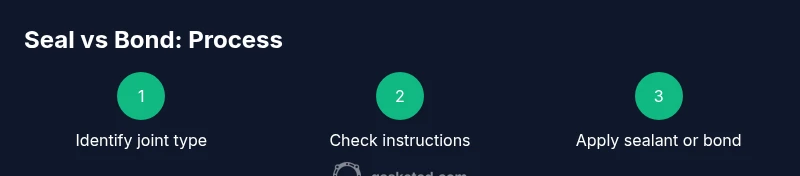
Is it seal or bond first? Generally, apply a compatible sealant to the mating surfaces before placing the gasket, then tighten to spec. Bonding agents are used only when the manufacturer specifies, and typically only on joint faces or unusual materials. Consider surface prep, cure times, and compatibility with gasket material to avoid leaks.
Is It Seal or Bond First? A Practical Guide
According to Gasketed, the question is more about function than a universal rule. In most gasket repairs, sealants create a moisture- and air-tight surface, while bonds connect components or cap off surfaces where the gasket alone won’t seal. The critical idea is to follow the joint’s design requirements and the material compatibility. The Gasketed team found that starting with a clean, dry surface dramatically reduces failures caused by contaminants or weak bonding. When you see a recommendation that says seal first, don’t skip it—this order helps prevent leaks and makes torquing predictable. Keep the goal in mind: a reliable seal that lasts under operating conditions.
When to Use Sealant First (and Why)
Sealants are most effective on mating surfaces that contact fluids or gases, especially where the gasket sits between dissimilar metals or porous substrates. They fill micro gaps and improve conformity, which lowers the risk of seepage around fastener holes. If the manufacturer specifies a sealant, choose one that is compatible with the gasket material (e.g., silicone for silicone gaskets, anaerobic for metal-to-metal joints). Always apply a thin, even layer to both sides or to one side only as directed, then assemble promptly to prevent curing gaps.
When Bonding Is Appropriate (and How to Choose a Bond)
Bonding agents are used to join surfaces or hold composite gaskets in place where a sealant alone won’t ensure stability. Use a bonding adhesive only when the instructions call for it, or when the joint design requires it for vibration absorption or structural integrity. Select a bond compatible with the gasket material and operating environment (temperature, exposure to fluids, and pressure). In most residential DIY projects, bonding is the exception rather than the rule, so verify that it’s specified before proceeding.
Common Gasket Materials and Their Rules
Gaskets come in numerous materials, and each interacts differently with sealants and bonds. Rubber or silicone gaskets often pair with silicone or room-temperature vulcanizing (RTV) sealants. Neoprene, cork, or graphite gaskets may require different sealants or a light coat on mating surfaces. Always check the compatibility chart on the product packaging. Mismatches—such as using a sealant that cures hard with a flexible gasket—can lead to leaks or gasket creep. If you’re unsure, conduct a small compatibility test on a spare joint before committing to the repair.
Quick Reference Checklist: Is It Seal or Bond First?
- Identify the joint material and operating conditions.
- Check the manufacturer’s instructions for sealant or bonding requirements.
- Confirm surface cleanliness and dryness before applying anything.
- Apply sealant only where instructed; avoid excess to prevent squeeze-out.
- Torque fasteners to the recommended spec after assembly.
- Seal first unless a bond is explicitly specified for the joint.
- Allow any cure times per product directions before testing for leaks.
Surface Prep Essentials: Cleaning, Drying, and Priming
Surface prep is the silent factor behind gasket success. Start by removing all old sealant and debris with a plastic scraper, then clean surfaces with isopropyl alcohol or a detergent suitable for the system. Rinse and dry thoroughly; moisture trapped under the gasket is a primary leak culprit. For porous substrates, consider a mild primer if the product instructions permit. Always work in a well-ventilated area and wear gloves to protect skin from chemicals.
Application Techniques: Spreading Sealant, Seating Gasket, and Tightening
Apply a thin, uniform layer of sealant to the appropriate surface, or lightly coat the gasket if recommended. Place the gasket carefully to avoid shifting, and align bolt holes precisely before hand-tightening. Use a torque wrench to reach the manufacturer’s specified tightening sequence and torque values. Over-tightening can squeeze out sealant and damage the joint; under-tightening may cause leaks.
Troubleshooting Leaks and Preventative Tips
If a leak appears after reassembly, re-check the tightening sequence and ensure the sealant cured properly. Inspect for misalignment, damaged gasket, or incompatible materials. In some cases, replacing the gasket with one of a different material or thickness is necessary. Regular maintenance—cleaning surfaces, inspecting seals, and re-applying sealant if specified—extends gasket life and reduces emergency repairs.
Maintenance and Longevity: Extending Gasket Life
Proactive maintenance can dramatically reduce gasket failures. Schedule periodic inspections of joints exposed to heat, vibration, or chemical exposure. Replace gaskets after several thermal cycles or if materials show signs of compression set, cracking, or swelling. Store gaskets in a cool, dry place away from direct sunlight and chemicals; this preserves elasticity and seating characteristics for future repairs.
Tools & Materials
- Gasket set for the target joint(Choose correct size and material for the system)
- Compatible gasket sealant(Select silicone, RTV, or anaerobic based on gasket material)
- Bonding adhesive (if specified)(Only if the manufacturer requires it)
- Solvent degreaser or isopropyl alcohol(Clean surfaces before applying sealant or gasket)
- Lint-free wipes or clean rags(Dry and wipe surfaces without fibers)
- Torque wrench(Follow the manufacturer's torque spec and sequence)
- Scraper or plastic putty knife(Remove old sealant without scratching)
- Gloves and safety glasses(Protect skin and eyes from chemicals)
- Soft brush or compressed air (optional)(Clean hard-to-reach areas without debris)
Steps
Estimated time: 90-120 minutes
- 1
Identify joint and product instructions
Locate and read the joint’s service manual or gasket kit instructions to confirm whether sealant or bonding is required. Note any temperature or chemical exposure limits that affect material choice.
Tip: If in doubt, start with sealant first and keep a spare gasket on hand. - 2
Prepare surfaces and dry the joint
Remove old material completely, then clean with degreaser and dry thoroughly. Any residual moisture can prevent proper sealing.
Tip: Avoid leaving lint or fibers; they can create leak paths. - 3
Apply sealant (if specified)
Apply a thin, even layer on the mating surface or gasket per product directions. Don’t over-apply to prevent squeeze-out into fastener holes.
Tip: Use a small brush or nozzle applicator for precision. - 4
Seat the gasket carefully
Position the gasket so holes align precisely with bolts. Avoid shifting during seating, which can create misalignment and leaks.
Tip: Lightly press the gasket to ensure full contact with sealant. - 5
Tighten in correct sequence
Follow the manufacturer’s torque pattern, usually a criss-cross sequence. Use a torque wrench to reach the specified value.
Tip: Do not over-tighten; this can deform the gasket or strip threads. - 6
Check for squeeze-out and cure time
Inspect for excess sealant around the joint and allow the sealant to cure as directed before testing.
Tip: Cure times vary; testing too early can give a false leak reading. - 7
Perform a leak test
Introduce the system with running conditions and inspect for leaks at all joints. Note any drips or seepage around bolts.
Tip: If leaks occur, re-tighten in sequence incrementally or reapply sealant if approved. - 8
Decide on bonding only if specified
If the instructions call for bonding, apply the adhesive to the receiving surface and assemble. Follow cure times exactly.
Tip: Bonding is less forgiving of small misalignments; ensure precise placement. - 9
Document and monitor
Record the gasket type, sealant used, and torque values for future maintenance. Monitor the joint during the first operating cycles.
Tip: A simple maintenance log helps prevent recurring issues.
Common Questions
What happens if I use bonding when sealant is required?
Using bonding where sealant is required can trap fluids and cause leaks or joint failure. It may also interfere with gasket seating and cure times. Always defer to the instruction sheet on the gasket packaging.
Using bonding where sealant is required can cause leaks; follow the packaging instructions for the joint.
Can I reuse an old gasket if it looks intact?
Reusing an old gasket is risky, as compression set and wear can reduce sealing performance. Inspect for cracks, deformations, or hardening; replace if any doubt exists.
Reusing an old gasket is risky; inspect closely and replace if in doubt.
Are there universal sealants for all gaskets?
There are no universal sealants for all gaskets. Material compatibility and operating conditions matter. Always choose a sealant specified for your gasket material and the system environment.
There isn’t a universal sealant; pick one that’s compatible with your gasket and system.
How long should a sealant cure before testing?
Cure times vary by product. Check the label for the recommended duration before applying pressure or water. Rushing testing can lead to false results.
Let the sealant cure as directed before testing the joint.
What should I do if leaks persist after replacement?
If leaks persist, re-check gasket fit, material compatibility, and torque sequence. Consider replacing with a different gasket material or thickness if the joint design allows.
If leaks continue, verify fit and torque, and consider a different gasket material.
Watch Video
Key Takeaways
- Follow manufacturer instructions for sealant vs. bond.
- Prepare and dry surfaces thoroughly before assembly.
- Apply sealant first unless bonding is specified.
- Torque to spec using proper sequence to prevent leaks.
- Test thoroughly and document the process for future maintenance.