Jeep Head Gasket Repair: A Practical DIY Guide
Diagnose, plan, and perform a Jeep head gasket repair with a safe, step-by-step approach. Learn tools, techniques, common pitfalls, and post-repair care to keep your engine sealing reliably.


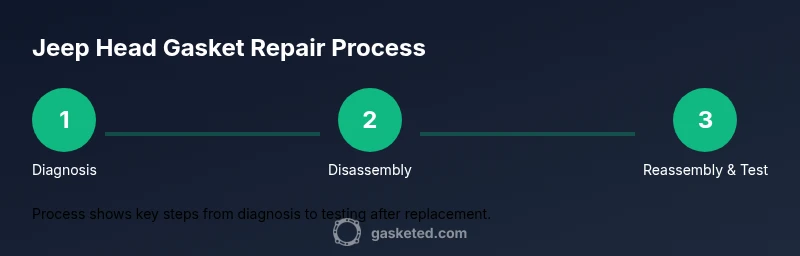
By the end of this guide, you’ll know how to diagnose a Jeep head gasket failure, decide if DIY is feasible, and safely perform a gasket replacement or reseal. You’ll gather the right tools, follow a clear step-by-step process, learn torque basics, avoid common mistakes, and complete post-repair tests to prevent hot-starting leaks. Additionally, you’ll understand cooldown scheduling, coolant system checks, and maintenance to extend engine life after repair.
Understanding the Jeep Engine and Head Gasket Role
The head gasket is a critical seal between the engine block and the cylinder head. In Jeep engines, especially older or high-mileage variants, overheating, warping, and the use of certain coolants can lead to gasket failure. A leaking head gasket allows coolant, oil, or combustion gases to mix or escape, causing white smoke, coolant loss, overheating, or oil contamination. Before beginning a repair, confirm failure patterns with a compression test and a leak-down test to identify the exact path of leakage and avoid unnecessary parts replacement. This section explains how the gasket functions in common Jeep configurations and why proper torque and a clean seal surface matter for long-term reliability.
Signs of a Head Gasket Leak in a Jeep and How to Confirm Them
Symptoms include white exhaust, milky oil, overheating, persistent coolant loss without visible external leaks, and radiator bubbling. For Jeep engines with turbochargers or higher compression, symptoms may appear under load or after a hot restart. To confirm, perform a cooling system pressure test, a leak-down test, and inspect spark plugs for coolant or fuel fouling. Collect baseline data on temperature behavior and coolant consumption to monitor performance over time.
DIY vs Pro: Making the Call for Jeep Head Gasket Repair
Some Jeep engines are straightforward, with accessible cylinder heads and simple gasket layouts, making DIY feasible for enthusiasts with the right tools. Others—especially interference engines with MLS gaskets and tight clearances—demand specialized equipment, precise head resurfacing, and advanced torque procedures. If the head is warped or if you lack a proper torque wrench, a hydraulic press, or a clean, level work surface, consider professional service to avoid costly mistakes.
Safety First: Workspace, Cooling, and PPE
Head gasket repair involves heat, sharp edges, hazardous coolant, and heavy parts. Set up a clean, well-lit workspace with a stable bench. Disconnect the battery, drain and safely collect coolant, and secure components in labeled containers. Wear eye protection and gloves, and use a magnetic tray for fasteners. Be mindful of hot surfaces during teardown and avoid steam exposure. Proper safety planning reduces the risk of burns, chemical exposure, and dropped components.
Tools, Materials, and Jeep-Specific Parts You’ll Likely Need
Having the right tools reduces effort and prevents damage. Essential items include a calibrated torque wrench, a gasket set matched to your Jeep model, coolant compatible with your engine, a leak-down tester for diagnosing compression, a straightedge and feeler gauges for surface checks, and a torque-angle gauge if your bolts require angle tightening. You’ll also need coolant, distilled water, fresh oil, rags, labeled fastener trays, and a service manual for your exact year and model.
Common Jeep-Specific Gasket Considerations (Types and Choices)
Replacement gaskets vary by model year and engine family. Some Jeeps use multi-layer steel (MLS) gaskets; others use composite or graphite variants. The bolt sequence, lubrication recommendations, and head surface finish requirements differ between MLS and non-MLS designs. Always consult the OEM service manual to confirm the correct gasket type, tightening sequence, oil and coolant compatibility, and whether head resurfacing is required before installation.
Step-By-Step Overview: Prepping for the Head Gasket Repair
Before disassembly, review timing marks and belt routing. Label hoses, wires, and brackets to ensure accurate reassembly. Decide whether you’ll perform a valve lash check or a light head refresh if your experience allows. This overview helps you plan the teardown and avoids common missteps later in the process.
Common Mistakes and How to Avoid Them in a Jeep Head Gasket Repair
Rushing the teardown, neglecting surface cleanliness, and ignoring torque sequences are frequent failure points. Do not reuse damaged bolts where replacement is specified. Verify surface flatness with a straightedge and feeler gauges and follow the exact torque sequence from the service manual. These cautions are essential to achieve a reliable seal.
Aftercare: Testing, Coolant, and Leak Checks
After reassembly, refill the cooling system with the correct coolant mix and bleed air to prevent hot spots. Start the engine and monitor temperatures, perform a pressure test, and recheck for leaks after a short road drive. Proper coolant maintenance and a successful post-repair test are key to long-term sealing.
Maintenance to Prevent Future Head Gasket Issues on Jeeps
Regular cooling system maintenance, high-quality coolant, and promptly addressing overheating can prevent recurrence. Schedule thermostat and radiator checks and monitor for signs of oil-coolant mixing. Routine compression tests help detect early gasket wear and plan preventive maintenance.
Tools & Materials
- Torque wrench(Calibrated; torque specs depend on model and gasket type)
- Gasket set compatible with your Jeep model(Include MLS or composite gasket as required by year)
- Coolant suitable for your engine(Pre-mix or concentrate as per manual)
- Leak-down tester(For diagnosing compression paths)
- Cylinder head surface straightedge and feeler gauges(Check deck flatness; head resurfacing if needed)
- Torque-angle gauge or angle-tightening setup(Some bolts require angle tightening)
- Gasket sealant/tape as recommended by manufacturer(Only where specified by the manual)
- Magnetic tray, markers, labeled bags(Organize fasteners accurately)
- Coolant drain pan and distilled water(For final flush and fill)
- Shop rags and solvent(Keep surfaces clean during reassembly)
- Jack stands or a sturdy lift(Safety priority; engine support may be needed)
- OEM service manual for your Jeep model(Follow model-specific steps)
- Gasket scraper (non-metal) and cleaner(Clean residues without scoring surfaces)
Steps
Estimated time: 3-6 hours
- 1
Prepare workspace and safety
Set up a clean, well-lit area with a secure workbench. Disconnect the battery and drain the cooling system safely. Gather tools and arrange fasteners in labeled containers to prevent misplacement.
Tip: Label everything; a missing bolt can ruin reassembly. - 2
Remove ancillary components
Detach hoses, belts, and accessories that block access to the cylinder heads. Take photos and label connectors for correct reassembly.
Tip: Take many reference photos from different angles. - 3
Record timing and alignment marks
Mark the crank and cam positions to ensure correct timing on reassembly. This avoids timing-related damage after reinstall.
Tip: Double-check marks before any disassembly. - 4
Loosen and remove cylinder head bolts
Carefully loosen bolts in the reverse order specified by the service manual. Remove the head and inspect the gasket surface.
Tip: Do not pry under the head; use a lever and helper if needed. - 5
Inspect head and deck surfaces
Check for warping using a straightedge; measure with feeler gauges. If the surface is not flat, planing or resurfacing by a machine shop may be required.
Tip: Any warping beyond factory spec requires professional resurfacing. - 6
Clean and prep cylinder head and block
Remove gasket residues with non-metal scraper; clean deck and head thoroughly. Prepare for new gasket with a uniform, dry surface.
Tip: Avoid gouging the metal; keep abrasives away from oil passages. - 7
Install new gasket and re-torque
Place new gasket; reinstall bolts in correct sequence. Initial torque followed by any required angle-tightening per manual.
Tip: Use a calm, steady torqueing pace; overheating can stretch bolts. - 8
Refill fluids and test
Refill coolant, bleed air, and start the engine at idle to check for leaks. Perform a compression and leak-down test to confirm seal.
Tip: Watch for thermostat behavior and ensure no air bubbles.
Common Questions
What are the common signs of a blown head gasket in a Jeep?
Look for white exhaust, milky oil, overheating, coolant loss, or bubbles in the radiator. Confirm with a compression and leak-down test.
Common signs include white exhaust, milky oil, and overheating. A compression test confirms the issue.
Is head gasket repair a DIY job for most Jeep owners?
Yes, for engines with straightforward layouts and accessible access. More complex engines or warped heads may require professional service.
It can be DIY for simple engines, but complex setups may need a pro.
How long does a Jeep head gasket repair take?
Typical projects span several hours to a full day depending on access and whether head resurfacing is needed.
Expect several hours to a full day depending on the engine and equipment.
What should I do after completing the repair?
Refill coolant, bleed air, run to operating temperature, and recheck for leaks. Perform a pressure test to confirm seal.
Refill and bleed cooling system, then recheck for leaks.
Should I replace head bolts or study the torque sequence?
Always follow OEM bolt replacement guidelines and the correct torque/angle sequence for your Jeep model.
Follow the factory bolt guidelines and torque sequence.
Watch Video
Key Takeaways
- Diagnose before disassembly to save time.
- Follow model-specific torque sequences precisely.
- Ensure surfaces are perfectly flat before gasket installation.
- Test thoroughly after repair to confirm a proper seal.