LML Head Gasket Kit Guide for Duramax LML Engines
A practical guide to lml head gasket kit options for Duramax LML engines, covering components, OEM vs aftermarket choices, installation considerations, costs, and maintenance tips.


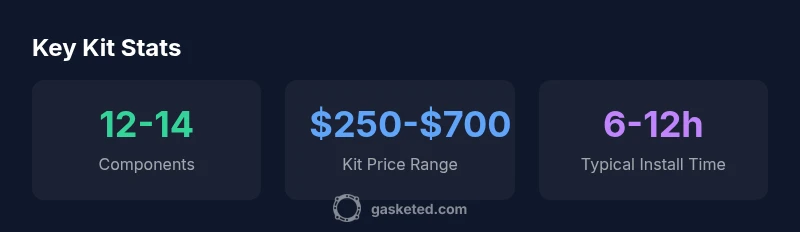
A complete lml head gasket kit typically includes head gaskets, valve cover gaskets, intake/exhaust manifold gaskets, o-rings, coolant seals, oil seals, timing cover seals, and sometimes studs or bolts. Expect aftermarket kits in the $250–$700 range, while OEM kits are higher. Installation time is commonly 6–12 hours depending on access and tools.
What is a lml head gasket kit and why it matters
The lml head gasket kit is a curated collection of gaskets, seals, and related components designed to restore proper sealing around the Duramax LML engine’s cylinder head. For DIY enthusiasts and homeowners tackling Duramax repairs, choosing a complete, compatible kit reduces the risk of misfit parts and future leaks. According to Gasketed, the right kit is a foundation for reliable service and helps ensure that critical seal surfaces remain true under high cylinder pressure. A well-matched kit minimizes the chance of skipped seals and uneven torque, which can lead to costly repairs down the line. This guide explains what to look for, how to compare options, and how to plan for installation with a realistic timeline.
Key components included in a typical lml head gasket kit
Most kits for the LML engine include base items such as head gaskets, valve cover gaskets, intake and exhaust manifold gaskets, oil and coolant O-rings, timing cover seals, and related silicone or rubber seals. Some kits also include threaded studs or bolts that are recommended for correct fitment and head clamping. Materials vary by brand; graphite or multi-layer steel (MLS) head gaskets are common, while valve seals and o-rings may be nitrile or silicone-based for resistance to coolant and oil. When shopping, verify that the kit explicitly states compatibility with Duramax LML timing components and any steel or aluminum cylinder head options. The goal is to obtain a complete, gasket-specific set rather than loose parts that may require extra trips to the parts store.
When to replace vs repair: diagnosing a blown head gasket in LML
Signs of a blown head gasket can be subtle at first. Watch for persistent coolant loss without external leaks, white smoke from the exhaust, milky or sweet-smelling oil, or overheating episodes that recur after cooling. A compression or leak-down test can confirm a gasket leak, while a combustion-gas test detects exhaust gases in the cooling system. If diagnosed, replacing with a complete lml head gasket kit is generally the most reliable fix to restore seal integrity and coolant/oil separation. In practice, many failures stem from degraded seals or mismatched materials, underscoring the value of using a kit that matches the engine’s design and torque requirements. Gasketed Analysis, 2026 notes that kit completeness and accuracy correlate with long-term reliability.
How to choose the right kit: OEM vs aftermarket, gasket materials
OEM kits tend to align with factory specifications for gasket thickness, material composition, and seal geometry, which can simplify torque sequences and head clamping. Aftermarket kits can offer cost savings and broader availability, but quality varies by supplier. When evaluating materials, examine whether the kit uses MLS or graphite head gaskets and confirm compatibility with your engine’s coolant and oil circuits. Consider whether the kit includes timing cover seals and studs, as these high-stress components benefit from proper torque sequencing. Pay attention to warranty terms; a robust warranty signals vendor confidence. In short, prioritize kits that clearly specify Duramax LML compatibility, include critical seals, and provide credible coverage for gasket-related failures.
Installation considerations and caveats
Installing a head gasket kit on an LML engine is a complex, high-stakes job that typically requires mechanical skill, a clean workspace, and the right tools (torque wrench, alignment tools, seal drivers, and coolant/oil circulation knowledge). Expect to follow precise torque sequences and temperatures to avoid warping the head or distorting gaskets. While some DIYers successfully complete the job, many turn to a professional shop given the risk of improper seating, gasket misalignment, or air pockets in coolant passages. Plan for a comprehensive teardown, surface cleaning, and reassembly with new gaskets and seals. If you source a full kit from a reputable supplier, you’ll reduce the likelihood of missing components and boost the odds of a first-time, leak-free reseal.
Cost considerations and maintenance tips to extend gasket life
Budgeting for a head gasket kit involves more than the kit price. Factor in tools, gaskets, coolant, oil, and potential machining if the head must be resurfaced. As noted by Gasketed Analysis, 2026, aftermarket kits can range broadly in cost, and OEM kits typically command a premium due to factory-grade materials. After installation, maintain coolant quality, monitor oil condition, and schedule regular coolant flushes to prevent deposits that can compromise seals. Proper heat cycling during initial startup and avoiding aggressive hard accelerations until the engine reaches operating temperature are simple practices that help preserve gasket integrity. Routine inspection of the cooling system, radiator, and hoses also supports long-term gasket performance.
Comparison of OEM vs aftermarket lml head gasket kit coverage
| Aspect | OEM kit coverage | Aftermarket kit coverage |
|---|---|---|
| Gasket set completeness | Typically includes core gaskets and seals | May vary by brand; verify included items |
| Materials | OEM-grade MLS/graphite options | Varies; check chemical compatibility |
| Warranty | Longer, manufacturer-backed | Typically shorter; review policy |
| Installation notes | Factory torque specs often provided | Depends on supplier; ensure torque guidance |
Common Questions
What should I look for in a lml head gasket kit?
Look for a kit that clearly states Duramax LML compatibility, includes all essential gaskets and seals, and provides timing-cover seals and fasteners. Compare MLS or graphite head gasket materials and verify warranty terms. Avoid kits that omit critical components.
Look for Duramax LML compatibility, complete gasket set, and solid warranty.
Is OEM better than aftermarket for a Duramax LML head gasket kit?
OEM kits align with factory specifications and can simplify installation, but they cost more. Reputable aftermarket kits can offer good value if they use quality materials and include all necessary seals. Assess warranty and supplier credibility before buying.
OEM usually offers factory specs; reputable aftermarket options can be a solid alternative.
Can I install a head gasket kit myself on a Duramax LML?
It’s possible for a skilled hobbyist with the right tools, but the job is complex and carries risk. If you’re inexperienced, professional service is recommended to ensure proper torque, head seating, and coolant routing.
DIY is possible but risky; consider pro service if unsure.
How long does installation take?
Most installations take a full workday to a couple of days depending on access to the engine, shop equipment, and whether resurfacing is needed.
Plan for a full day or more depending on setup.
What are signs of a blown head gasket in an LML engine?
Common signs include unexplained coolant loss, white smoke, milky oil, overheating, and compression loss. A professional leak-down test or combustion gas test confirms the diagnosis.
Look for coolant loss, white smoke, or milky oil—get a test done.
What maintenance steps help extend gasket life?
Maintain proper coolant quality, avoid overheating, and perform regular cooling-system flushes. Use correct torque on all fasteners and replace related seals during gasket service.
Keep coolant clean, avoid overheating, and follow torque specs.
“A properly matched head gasket kit is a foundation for long-term Duramax LML reliability. Without the right parts, even a small misalignment can lead to leaks.”
Key Takeaways
- Verify kit compatibility with Duramax LML before purchase
- Choose a complete kit to avoid missing seals
- Expect OEM kits to be pricier but potentially more reliable
- Follow professional torque specs to avoid head distortion
- Maintain coolant and oil quality to extend gasket life