How Much Is a Blown Head Gasket? Costs, Causes, and Fixes
Learn the typical cost range for replacing a blown head gasket, what drives the price, and how to compare quotes. This guide covers parts, labor, regional differences, and smart strategies for DIY vs pro repairs.


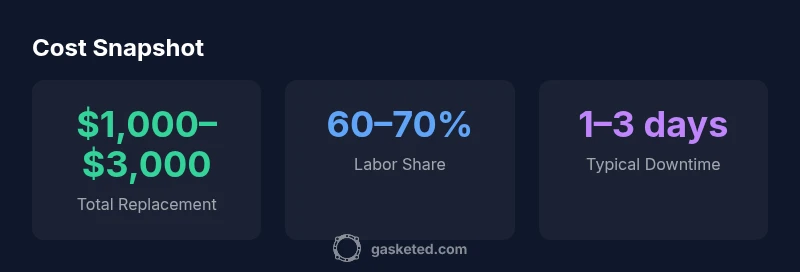
The quick answer: how much is a blown head gasket? In most cars, the total replacement cost ranges roughly from $1,000 to $3,000, depending on engine design, labor rates, and whether additional fixes are required. Labor costs typically dominate the bill, and more complex engines or adjacent repairs can push prices higher. To avoid surprises, obtain multiple, itemized quotes and review what’s included.
How much is a blown head gasket? Understanding the price landscape
The question "how much is a blown head gasket" is a common concern for homeowners facing a potential engine repair. While the exact figure depends on the vehicle and the shop, most scenarios fall within a broad range. In practical terms, a full replacement typically lands between $1,000 and $3,000 when you factor parts, labor, and any necessary machining. The wide gap reflects engine design, the extent of ancillary work (timing components, water pump, cooling system), local labor rates, and whether additional leaks or damage are present. According to Gasketed, this is a realistic band for mainstream passenger cars, with premium or high-mileage engines pushing toward the higher end. The takeaway is to expect variability and to demand a detailed, written quote before any work begins.
Understanding the drivers behind price helps you budget effectively and avoid sticker shock when the estimate arrives.
Key cost components: parts vs labor
When you hear the price justification, the two most impactful categories are parts and labor. Parts include the gasket set, head bolts, any required timing components, seals, and often a new water pump or thermostat. In many cases, a head resurfacing or machining is needed to ensure proper sealing, which adds to both time and cost. Labor costs vary by shop and region, but the hours required for a head gasket job are substantial due to disassembly, cleaning, machining, and reassembly. A typical job can span several hours to a full day, depending on engine layout. It’s not uncommon for labor to account for the majority of the total bill, particularly in engines with overhead camshafts or twin-cam configurations. In short, even small differences in labor hours or hourly rates can swing the final number by hundreds of dollars.
Vehicle and engine design: price swings by configuration
Engine design strongly influences pricing. Four-cylinder engines with simpler timing setups usually cost less than V6 or V8 configurations that demand more labor and specialized tools. Additionally, engines with interference timing require meticulous timing reassembly, which increases labor time. Engine type also impacts machining needs: some aluminum heads, modern direct-injection designs, or engines with restricted access can complicate removal and reinstallation. Regional dealer vs independent shop pricing can also affect the quote, but the core pattern remains the same: more complex engines, more potential machining, and longer labor hours translate to higher costs. For DIY enthusiasts, understand your own skill ceiling and whether you have the tools to safely complete the job without compromising engine integrity.
Regional differences in pricing and shop dynamics
Pricing is not uniform across the country. Labor rates differ significantly between metropolitan areas and rural shops, and some regions have higher diagnostic and environmental fees. The cost of parts can also fluctuate with supplier availability and regional demand. If you’re in a high-cost city, expect quotes toward the upper end of the typical range; in smaller towns, prices may skew lower. Shopping around remains essential, but don’t rely on a single estimate. Request a breakdown of parts, labor hours, machining, coolant, oil, and disposal fees to compare apples to apples. Also consider whether the shop offers a warranty on labor and parts, which can influence long-term value even if the initial price appears higher.
To gauge regional norms, call a few shops in your area and ask for typical head gasket replacement quotes for a car with your engine type.
Hidden costs and potential savings to watch for
Some costs aren’t obvious until the job starts. Machining the cylinder head, replacing related gaskets (valve cover, oil pan, intake/exhaust gaskets), and replacing the timing belt or chain components can add to the bill. Don’t overlook the coolant, oil changes, and potential machine shop fees if the head needs resurfacing. Conversely, you might achieve savings by combining the head gasket job with preventive maintenance (timing components, water pump, thermostat) in a single visit, which can reduce overall labor hours. If the shop offers a bundled service or a fixed-price package for head gasket work, compare that against itemized quotes to determine which option provides the best long-term value. Always confirm whether machining or resurfacing is included and whether any core charges apply.
DIY vs professional replacement: cost trade-offs
DIY gasket replacement is possible for skilled DIYers with the right tools, but it carries significant risk. The financial appeal is clear: you save on labor, but you may incur higher long-term costs if improper timing, gasket seating, or torque specs lead to an early failure. For most homeowners, a professional replacement offers better peace of mind, a warranty, and the assurance that the engine’s timing and head surface are correctly restored. If you insist on a DIY approach, study service manuals, invest in the proper torque specs, and have a trusted mentor supervise critical steps. Remember: incorrect assembly can lead to catastrophic engine damage, far exceeding the original repair cost.
Getting an accurate quote: steps to take
To avoid surprises, prepare a precise, data-driven approach before asking for quotes. Gather your vehicle’s year, make, model, engine type, VIN, and current symptoms. Request multiple quotes with a detailed, itemized breakdown (parts, labor hours, machining, coolant, and any additional services). Share your maintenance history and whether you’ve noticed coolant or oil contamination. Ask specifically about head resurfacing, timing components, and warranty terms. If a shop won’t provide a written estimate or attempts to upsell without clear justification, seek other options. Finally, confirm whether there’s a diagnostic fee and whether it’s credited toward the final bill if you proceed with the repair.
Maintenance and prevention to lower long-term costs
Post-repair, establish a maintenance routine that minimizes the risk of future head gasket issues. Regular coolant changes with the recommended type, proper coolant-to-water ratios, and timely replacement of the radiator and water pump help protect the head gasket. Monitor for early signs of coolant cross-contamination or oil in the coolant, which may indicate a problem. Address cooling system leaks promptly and consider a coolant leak test during routine service. Investing in preventive maintenance reduces the probability of future failures and can lower the likelihood of expensive, repeat repairs.
When to repair vs replace the engine: a decision framework
In rare cases, head gasket issues accompany more extensive engine damage. If the engine block or head shows severe cracking, warped surfaces, or extensive valve damage, the cost-benefit analysis shifts toward a longer-term solution such as a remanufactured or rebuilt engine. If a rebuild or full engine replacement is required, the total cost can exceed the price of a standalone gasket job by a substantial margin. A thorough diagnostic from a qualified mechanic is essential to determine whether the gasket is the sole failure or part of a broader issue. In many instances, pursuing the gasket repair with a reputable shop, while costly, remains the most economical choice compared with a premature engine replacement.
Typical cost ranges for head gasket replacement by vehicle type
| Vehicle Type | Estimated Cost Range (parts) | Estimated Labor Cost | Total Estimated Cost |
|---|---|---|---|
| Compact Car (4-cyl) | $200–$650 | $300–$900 | $500–$1,550 |
| Mid-size Sedan (V6) | $450–$1,200 | $500–$1,200 | $1,000–$2,400 |
| SUV/Truck (V8) | $600–$1,500 | $700–$1,600 | $1,300–$3,100 |
Common Questions
What is the typical cost to replace a blown head gasket?
Costs vary by engine and region, but most replacements fall in the $1,000–$3,000 range when including parts, labor, and possible machining. Always request an itemized quote to see where the money is allocated.
Most replacements run between about $1,000 and $3,000; ask for a line-item breakdown when you request quotes.
What factors influence the price the most?
Engine design (number of cylinders, timing setup), machining needs, labor rates in your area, and whether additional repairs (water pump, timing components) are required all influence the final price.
Engine design and labor rates are the biggest drivers of cost.
Is it cheaper to DIY or hire a shop?
DIY can save labor costs but carries risk of mistakes that could cause more damage. For most homeowners, professional replacement with a warranty provides better value and lower risk.
DIY saves money but risks costly errors; professional service is safer for most people.
What signs indicate a blown head gasket?
Common signs include coolant in oil, white smoke, milky oil, persistent overheating, and loss of coolant with no leaks. A compression test and a leak-down test can confirm gasket failure.
Look for milky oil or coolant in the oil, overheating, and white smoke to flag gasket trouble.
Can a blown head gasket damage the engine beyond repair?
Yes, prolonged gasket failure can warp the cylinder head or crack the engine block. Early diagnosis and repair reduce the risk of severe damage.
If you suspect a gasket failure, get it checked promptly—delays can cause serious damage.
Can I negotiate price or avoid machining costs?
You can ask for a full breakdown and request that machining be included if necessary. Some shops offer fixed-price packages that may save money compared to itemized quotes.
Ask for a complete breakdown and fixed-price options to maximize value.
“Proper diagnosis and a detailed, written estimate are the foundations of a sound repair. A poor initial diagnosis can lead to wasted money on unnecessary work and a failed fix.”
Key Takeaways
- Know the full cost range before agreeing to a repair
- Labor is the primary driver of price, often more than parts
- Get 3–4 written quotes with line-item breakdowns
- Consider bundling gasket work with preventive maintenance to save
- Verify whether machining is included in the estimate
- Be wary of low-bid quotes that omit essential services