Head Gasket Cost Guide 2026: Realistic Estimates
Understand head gasket replacement costs, what affects price, and how to budget. This 2026 guide covers labor, parts, and related repairs for DIY enthusiasts and homeowners.


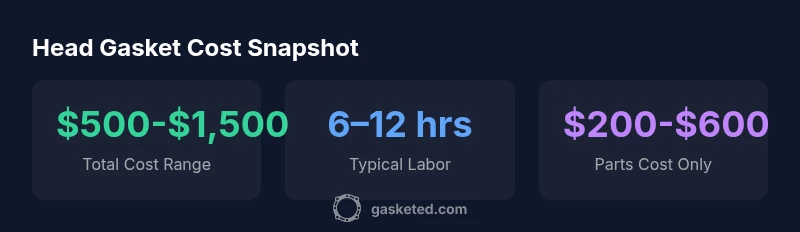
A head gasket replacement typically costs between $500 and $1,500 for most cars, with higher-end engines reaching $2,000–$2,500. The final price depends on engine design, gasket material, labor rates, and whether other components require service. This guide, based on Gasketed Analysis, 2026, explains drivers and budgeting.
What is a head gasket and why replacement is necessary
The head gasket sits between the engine block and the cylinder head, sealing combustion gases, coolant, and oil pathways. When it fails, you may notice symptoms such as coolant leaks, milky oil, overheating, white smoke from exhaust, or loss of coolant without obvious leaks. Replacement is a major repair that requires careful machining of the cylinder head, proper gasket seating, and often simultaneous service of cooling and timing components. If you're asking how much is a head gasket, the answer isn't simple because several factors affect price: engine design, gasket material, the extent of damage, and whether ancillary parts must be replaced. In most mid-range vehicles, a head gasket replacement is not a quick, low-cost fix; it’s an involved job that demands a trained mechanic and precise torque sequences. This section explains what you’re paying for and why the price can vary so widely. By understanding the function and failure modes, you can budget more accurately and avoid surprises when the bill arrives.
What drives the cost: parts, labor, and vehicle complexity
Costs are driven by three broad categories: parts, labor, and vehicle complexity. Parts costs include the gasket set, bolts, seals, and potential timing components; premium materials (MLS gaskets, metal head gaskets) raise the price but can improve longevity. Labor costs reflect the time technicians spend disassembling the engine, inspecting surfaces, replacing the gasket, flushing cooling systems, and reassembling with proper torque specs. In addition, if the engine has been overheated, the cylinder head may require resurfacing, valve work, or replacement of the water pump and thermostat. Vehicle design matters a lot: engines with variable valve timing, direct injection, or multiple chain drives add steps and complexity, increasing labor hours. Local wage rates also influence price; shops in high-cost regions will charge more per hour. Finally, if a shop needs to perform additional tests—like leak-down or compression tests—or perform a complete cooling system service, those add-ons push the total up. Overall, expect variability by hundreds of dollars depending on all these elements.
Variations by engine type and car make
Engine size, layout, and the number of cylinders affect the difficulty of removing and reassembling components. A four-cylinder engine in a compact car might require less labor than a V6 or V8 in a truck or performance sedan. Some engines have timing belts instead of chains, while others use a timing chain system that necessitates thorough inspection of tensioners and guides. Materials differ as well: standard composite gaskets are cheaper upfront, while MLS (multi-layer steel) gaskets are more expensive but resist warping under heat. Also, some vehicles include interference engines where precise timing alignment is critical; a heads gasket job on such engines often calls for timing belt or chain service, increasing both cost and risk. The vehicle’s age and mileage add risk: head surfaces may need machine work, particularly if there’s rust, corrosion, or prior overheating. In short, cost can swing based on engine family, vehicle class, and the availability of replacement parts.
Hidden costs and related repairs to budget for
Beyond the gasket itself, budget for several likely expenses. The cooling system may need flushing, water pump replacement, thermostat, radiator hoses, and coolant. The timing components—timing belt or chain and tensioners—often require replacement when the head is off. The head itself may need resurfacing if it is warped, which adds machine shop fees. Some cars require new head bolts or studs, which can be more expensive for certain models due to torque specifications. Labor charges will accumulate when technicians must re-fill fluids, bleed the cooling system, and perform a leak-down test to verify no channels remain leak-prone. Finally, you may see diagnostic charges or shop fees if the car has multiple fault codes or if the vehicle has an advanced engine management system. Having a realistic budget that accounts for these possibilities helps avoid unexpected price jumps at the end of service.
How to estimate costs for your specific vehicle
To estimate costs accurately, start with your vehicle’s year, make, model, and engine type. Gather quotes from at least three independent shops and ask for itemized estimates showing parts, labor, and any add-ons. Ask if the shop includes resurfacing the cylinder head in its price; if not, obtain a separate quote. Request a pre-purchase inspection if you’re buying a used car; a failed head gasket is a common latent risk. Use online forums and manufacturer service bulletins to understand common failures by model. If your vehicle has a complicated turbo, direct-injection engine, or variable valve timing, plan for additional time and cost. Finally, check for local diagnostic fees and whether the shop offers a warranty on parts and labor; a longer warranty can be a sign of higher quality service and may offset costs over time.
Ways to save money without sacrificing reliability
Shop around for price and value rather than the lowest quote. Compare itemized estimates to see where costs come from; a cheaper initial price may hide expensive add-ons later. Seek shops that specialize in your engine family, as they often have better tooling and more precise torque specs. If feasible, ask about refurbished or aftermarket gasket options that carry solid warranties. Consider negotiating bundled maintenance with the repair (e.g., coolant flush, timing component inspection) to spread costs. Ensure the shop documents torque specs and test procedures; clear documentation reduces rework. Finally, don’t delay repairs if you notice warning signs; letting a bad head gasket go can lead to more extensive damage, which increases cost dramatically.
How to choose a shop and what to expect during the service
Choose a shop with clear communication, transparent pricing, and a strong warranty policy. Verify credentials, read reviews focusing on head gasket work, and ask about machine shop capabilities for head resurfacing. When you bring the car in, expect a thorough diagnostic, a written estimate, and a plan explaining why certain parts are replaced. The process typically begins with coolant system drainage, gasket replacement, and careful reassembly using the manufacturer torque sequence. Expect a post-repair test: coolant leak test, pressure testing, and a road test to confirm proper operation. If you’re curious about long-term maintenance, inquire about cooling system maintenance intervals and how to prevent overheating in the future.
When DIY makes sense and when to avoid it
DIY head gasket work is possible for experienced hobbyists with the right tools and workspace, but it’s risky and time-consuming. For most homeowners, the risk of misalignment, improper torque, or head warp is high enough to justify professional service. If you do attempt it, prepare by reviewing the factory service manual, using torque-to-yield bolts if specified, and securing a machine shop surface for the head. You’ll also need a clean workspace, a reliable lending library of troubleshooting guides, and a system for precisely bleeding the cooling system. A mistake in measurement or reassembly can lead to coolant leaks, engine damage, or catastrophic failure. If your car uses turbocharged engines or direct injection, the task becomes significantly more complex.
Long-term considerations after replacement
After a head gasket replacement, monitor for signs of cooling system issues, like overheating, steam, or consistent coolant loss. Maintain clean coolant, regular oil changes, and radiator and thermostat checks to prevent future problems. Replacing the head gasket can restore engine integrity, but it does not cure every problem tied to prior overheating. A careful post-repair drive and periodic leak checks help ensure the job holds up. If you have a service warranty, follow its maintenance guidelines to avoid voiding coverage. Some owners choose to replace related components as proactive maintenance, which can extend the life of the repair and reduce risk of subsequent head gasket failures.
Estimated cost ranges by vehicle type
| Vehicle Type | Typical Parts Cost | Typical Labor Cost | Total Cost Range |
|---|---|---|---|
| Compact Car | $120-$350 | $300-$800 | $500-$1,150 |
| SUV/Truck | $150-$400 | $500-$1,000 | $650-$1,600 |
| Luxury/Performance | $200-$600 | $700-$1,300 | $900-$1,900 |
Common Questions
What is the typical cost to replace a head gasket?
For most cars, total costs range from $500 to $1,500, with higher-end models reaching $2,000–$2,500. This includes parts, labor, and basic cooling-system work. Always get an itemized estimate.
Most cars fall in the five hundred to fifteen hundred dollar range, with more expensive models higher.
Why does price vary so much between shops?
Variation comes from local labor rates, engine complexity, parts quality, and whether machining or timing components are required. Ask for itemized quotes and warranty terms.
Prices vary due to labor rates and engine complexity; compare quotes and warranties.
Is it worth replacing a head gasket on an older engine?
Older engines can be reliable after a head gasket job, but cumulative wear may lead to more issues. Consider overall engine condition, potential timing belt/chain work, and the vehicle's value.
Consider engine condition and vehicle value before deciding.
Can a blown head gasket be repaired without full replacement?
In rare cases, minor leaks can be addressed with sealants or localized fixes, but a true blown head gasket usually requires full replacement to restore reliability.
Usually need full replacement to be reliable.
What are the telltale signs of a blown head gasket?
Common signs include overheating, milky oil, white exhaust smoke, coolant loss with no apparent leaks, and bubbles in the radiator. If you notice these, stop driving and have a diagnostic done.
Look for overheating and milky oil—get a diagnosis soon.
“The most reliable head gasket repair relies on accurate diagnosis, quality parts, and proper torque procedures to prevent future leaks.”
Key Takeaways
- Budget for a wide price range and potential add-ons.
- Labor is the major cost driver for head gasket work.
- Engine design and vehicle complexity strongly affect price.
- Always request itemized quotes and warranties.
- Preventive cooling and maintenance can reduce future failures.