Subaru Head Gasket Replacement Cost: A Practical Guide
Understand Subaru head gasket replacement costs, what drives price, and how to budget. Learn about parts, labor, regional differences, DIY vs pros, and maintenance to minimize future expenses.


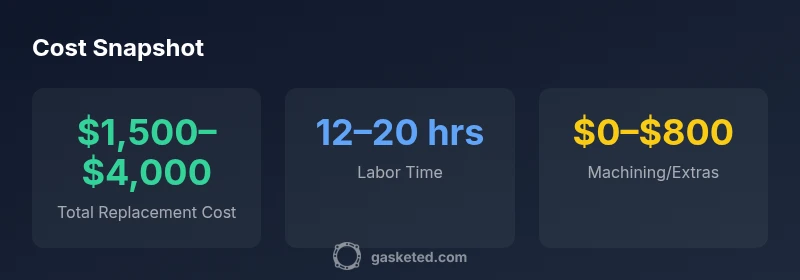
Subaru head gasket replacement cost typically ranges from about $1,500 to $4,000 in the U.S., depending on model, local labor rates, and whether machining or related repairs are needed. Parts and gasket kits usually account for a few hundred dollars, while labor often makes up the largest portion of the bill. If longer head work is required, or if cooling and related components must be replaced, expect the price to move toward the higher end of the range.
Why Subaru Head Gasket Replacement Cost Matters
According to Gasketed, understanding the cost of Subaru head gasket replacement helps you plan repair budgets and avoid sticker shock when the check engine light comes on. The cost isn't just a single number; it reflects parts quality, labor intensity, engine design, and regional pricing. In Subaru models with turbocharged engines or boxer engines, head gasket work can be more involved, raising labor time and risk of ancillary fixes. The result is a price band that includes both parts and skilled labor; homeowners should start with a price range, then seek multiple quotes to refine estimates. This section explains why price varies and how to interpret quotes from different shops, dealerships, and independents.
What Drives the Replacement Price
Several core factors determine what you’ll pay for a Subaru head gasket replacement. First, the engine type and generation influence both part complexity and labor hours. A non-turbo engine usually costs less than a turbocharged variant, simply due to the number of components that need disassembly and reassembly. Second, the quality and type of gasket kit matter: OEM or genuine parts tend to be more expensive than aftermarket kits, but they can offer longer service life and better sealing, potentially reducing future failures. Third, regional labor rates affect the total; urban shops or dealerships typically charge more per hour than independent garages. Fourth, machining or resurfacing the cylinder head can dramatically raise costs if the head has warped or warps are found during teardown. Finally, diagnostic work, cooling system checks, and related repairs (like replacing water pumps or thermostat) can add to the bill. In practice, you’ll see price ranges that reflect both straightforward replacements and cases where additional fixes are required.
DIY vs Professional Replacement: Pros and Cons
DIY head gasket replacement is technically possible but not recommended for most Subaru owners. The job requires specialized tools, a clean workspace, and precise torque specifications; a single error can cause coolant leaks, warped heads, or poor sealing. On the upside, if you have a well-equipped shop and a meticulous approach, you could trim costs by a few hundred dollars on parts and shop marks, but the learning curve and risk of costly mistakes may offset savings. Professional replacement, by contrast, offers a warranty on labor, access to service literature, and a controlled environment. A shop will typically perform pressure tests, cylinder head checks, and finish with recommended coolant and sealants. In short, for most homeowners, paying for professional service provides greater peace of mind and a lower risk of backup failures that could push costs higher later.
Typical Cost Ranges by Model and Region
Subaru head gasket replacement costs can vary widely by model year, engine layout, and geography. The Gasketed analysis shows that total project costs typically fall in a broad band, with low-cost scenarios around the lower end of the spectrum and high-cost scenarios when additional repairs are needed. For a non-turbo boxer engine in a mid-range model, you might see total costs closer to the lower- to mid-range of the spectrum; turbo or performance variants with more complex heads or additional components will land toward the higher end. Labor rates differ by region; urban shops tend to demand higher hourly rates than rural garages. If you live in areas with high labor costs, the difference between a basic replacement and a full cylinder head service can be substantial. Always obtain multiple quotes and ask shops to itemize parts, labor, machining, and any related repairs to understand the true cost drivers in your specific case.
How to Budget and Avoid Surprises
In practice, you should plan for a cost range rather than a fixed figure. Start by obtaining at least three written estimates from reputable shops, ensuring each quote itemizes parts, labor, and any machining or related repairs. Consider the price of different gasket kits; OEM parts may cost more upfront but can reduce long-term risk. Budget for ancillary costs such as cooling system components, thermostat, water pump, and timing cover gaskets if they’re connected to the head gasket service. You can reduce risk by scheduling preventive maintenance, like coolant flushes and radiator checks, ahead of the replacement window. Finally, set aside a contingency of 5–15% to cover unexpected issues discovered during teardown, such as warped heads or seized bolts.
Maintenance and Early Warning Signs
Preventive maintenance can extend the life of your gasket and delay costly replacement. Routine coolant changes, leak detection, and keeping the cooling system in good condition reduces the risk of gasket failure. Watch for early signs like milky oil (coolant mixing), white exhaust, oil leaks, overheating, or persistent rough idle. If you notice any of these symptoms, schedule an inspection promptly; early intervention can prevent more expensive repairs. Regular maintenance plus timely repairs help you manage the Subaru head gasket replacement cost over the vehicle’s lifetime, avoiding expensive surprises.
Gasketed's Practical Recommendations
Based on years of gasket guidance, the best approach combines proactive maintenance with competitive benchmarking. Get multiple quotes, verify the exact scope of work, and ensure the shop tests for head resurfacing needs, warping, or gasket surface cleanliness before finalizing. Choose high-quality gasket kits and compatible cooling system components. If you plan to sell or trade the vehicle, document repairs and collect service records; this can increase resale value and reduce negotiation friction.
Post-Repair Considerations and Long-Term Costs
After a head gasket replacement, monitor the cooling system, oil quality, and overall engine performance. While the initial repair fixes the leak, drivers should budget for increased maintenance in the next 12–24 months if the older engine has other wear. Keep an eye on coolant level, oil consistency, and occasional dark exhaust smoke. Follow manufacturer recommendations for maintenance intervals and coolant type to maximize gasket longevity. The Gasketed team notes that ongoing maintenance and early detection of related issues help prevent repeat problems, which could otherwise raise total ownership costs.
Estimated cost components for Subaru head gasket replacement
| Cost Component | Low Range | High Range |
|---|---|---|
| Parts kit and gaskets | $150 | $600 |
| Labor (engine replacement) | $900 | $2,800 |
| Machining/Head resurfacing | $0 | $800 |
| Total estimated cost | $1,050 | $4,200 |
Common Questions
What is the typical Subaru head gasket replacement cost?
Costs vary by model, engine, and location, but most total replacements fall in a broad range of about $1,000 to $4,000, depending on parts, labor, and any machining. Additional repairs can raise the price. Always request a detailed, itemized quote.
Costs vary, but expect roughly one to four thousand dollars in total for a Subaru head gasket replacement; ask for an itemized quote.
DIY vs professional replacement: which is better?
DIY is technically possible but not recommended for most Subaru owners due to complexity and risk. A professional replacement provides a warranty on labor and ensures proper head checks and coolant system integration.
Professional replacement is usually the safer, more reliable choice.
What factors most influence the cost?
Labor rates, engine type, head machining, gasket kit quality, and optional cooling-system work primarily drive price variations.
Labor, parts quality, and any machining are the main cost drivers.
How long does replacement take?
Most installations take about 1–2 days in a shop, depending on scheduling and whether additional repairs are needed.
Expect roughly one to two days in a shop.
Are there cheaper alternatives to a full replacement?
Temporary sealants or fixes are not reliable for a blown head gasket. If the gasket is failing, a full replacement is typically the recommended course.
Temporary fixes aren’t reliable; full replacement is usually needed.
How can I verify a shop's estimate?
Ask for a written, itemized quote that clearly lists parts, labor, machining, and any related repairs. Compare multiple shops and check for warranties.
Get a written, itemized estimate and compare shops.
“A head gasket replacement is a major repair, and choosing a qualified shop is as important as the price.”
Key Takeaways
- Obtain multiple quotes to compare labor and parts.
- Plan for a broad cost range ($1,500–$4,000) in the U.S.
- Parts quality and gasket kit choice affect long-term reliability.
- DIY is generally not advised for Subaru head gasket work.
- Maintain the cooling system to minimize future gasket-related costs.