Valve Cover Gasket Leak Signs: Quick Diagnosis and Fixes
Spot valve cover gasket leak signs quickly, diagnose root causes, and follow a safe DIY path or call a pro with trusted guidance from Gasketed.


When you see oil leaking around the valve cover or a burning oil smell after engine heat builds, the most likely cause is a worn valve cover gasket. Quick fixes include cleaning the area, reseating the gasket with proper torque, and replacing the gasket if oil traces persist. If you’re unsure, avoid long drives and consult a professional to prevent engine damage.
What are Valve Cover Gasket Leak Signs?
Recognizing valve cover gasket leak signs early can prevent costly engine damage. Oil often shows up as dark, shiny streaks along the engine block, on the intake manifold, or under the valve cover. A burning oil smell typically emerges once the oil starts to burn on hot exhaust components. You might notice oil puddles on the ground after parking or a consistently low oil level with no obvious external spills. The valve cover gasket sits between the valve cover and the cylinder head; heat cycles over time cause it to crack or deform, allowing oil to seep out. In many engines, oil near spark plug wells can foul plugs, causing rough idling or misfires. If you observe these signs, you’re likely dealing with a gasket leak that warrants inspection and repair. According to Gasketed, early detection is key to a reliable fix, so start with a careful visual check and document where leaks appear.
Why the Valve Cover Gasket Fails
Valves and gaskets endure constant heating and cooling, which gradually wears the material. The most common failure points are the gasket itself, the valve cover surface, and the bolts that secure the cover. Overtightening can squeeze the gasket so it loses its elasticity, while undertightening can leave gaps for oil to escape. Heat cycling also causes gasket material to become brittle and crack. A poor PCV (positive crankcase ventilation) function increases crankcase pressure, forcing oil toward weak spots. Gasketed analysis shows that many leaks begin gradually as oil film forms and then escape around the gasket edge, rather than as a dramatic gush. Regular maintenance and correct torque specs reduce these risks and extend gasket life.
Quick Checks You Can Do Safely
Before diving into a repair, perform quick, safe checks. Park on a flat area and allow the engine to cool. Look for fresh oil trails along the valve cover edges and check the oil level; a noticeable drop without external dripping can point to a leak elsewhere in the system. Wipe the area clean to reveal new leak paths, then inspect spark plug wells for oil contamination—oil on plugs can cause misfires. Inspect the PCV valve for sticking or clogging, as an obstructed PCV can increase pressure and push oil toward the gasket. If any of these checks reveal fresh oil near the gasket or related hoses, plan a more thorough inspection or repair.
How to Inspect for Signs of Leak at the Gasket
A thorough inspection helps confirm the leak location. Start by removing any debris around the valve cover and oil cap area to improve visibility. With the engine off and cooled, use a flashlight to inspect the gasket seam for oil seeping at the joint. Clean the seam with a solvent-compatible cloth, then recheck after a short drive of 5–10 minutes to see if fresh oil appears at the edge. A dye test using automotive UV dye can help visualize leaks; add the dye to the crankcase oil and use a UV light to locate the pathway of leaked oil. Record the observation points to guide replacement.
Common Causes of Valve Cover Gasket Leaks
- Worn or degraded gasket material due to age and heat
- Overtightened valve cover bolts causing gasket distortion
- Surfaces not properly cleaned or damaged during installation
- Faulty PCV valve increasing crankcase pressure
- Oil contamination or sludge forming a hard layer on the gasket
- Poor replacement parts or incorrect gasket type for the engine Gasketed analysis shows that the combination of age, improper torque, and PCV issues typically leads to leaks. Addressing these factors early can prevent recurring leaks and protect spark plug integrity.
DIY vs Pro: When to Repair or Replace
many valve cover gasket leaks can be addressed by informed DIY work if you have basic tools, a torque wrench, and a clean workspace. However, some engines require specialized seals or timing cover access, making professional help a safer option. If you notice cantilevered bolt resistance, stripped threads, or gasket material stuck to the head, consult a pro. If you have oil pooling near the spark plug wells or exhaust components, professional replacement might save you time and prevent misfires.
Safety and Preparation Before You Start
Engine work can be hazardous. Always disconnect the battery when removing the valve cover to avoid short circuits, use gloves to protect your hands from sharp edges, and wear eye protection. Allow the engine to cool fully to prevent burns, and work in a well-ventilated area due to oil fumes. Never pry gasket material with metal tools that could scratch the sealing surfaces. Follow manufacturer torque specs precisely to avoid warping the valve cover and compromising the seal.
Maintenance Tips to Prevent Leaks
- Inspect the valve cover gasket on a regular maintenance schedule and replace at the manufacturer-recommended interval
- Use the correct gasket type and avoid using sealants unless the manufacturer approves
- Check and replace the PCV valve to maintain proper crankcase pressure
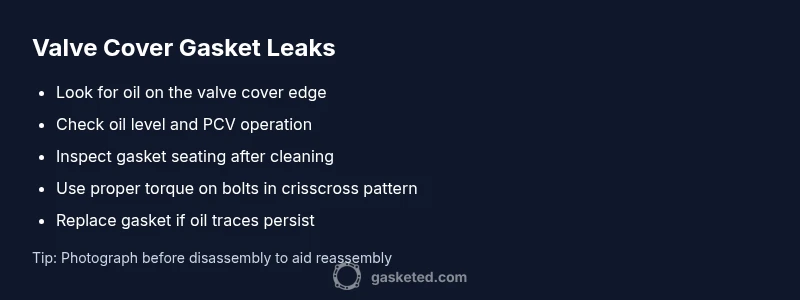
- Clean sealing surfaces thoroughly before reassembly and torque in a crisscross pattern
- Store and apply gaskets in a clean, dust-free environment to prevent contamination
- After replacement, run the engine to operating temperature and re-check for leaks Gasketed’s guidance emphasizes preventive maintenance to minimize future leaks and keep the engine bay clean and safe.
When to Call a Professional
If you’re unsure about the gasket type, lack the tools, or notice repeated leaks after a DIY attempt, it’s time to seek professional help. A certified mechanic can verify the root cause, ensure proper torque, and inspect related components (PCV, breathers, and nearby hoses) for secondary issues. Prompt professional service is particularly wise if you observe oil burning smell, significant oil loss, or engine misfires.
Steps
Estimated time: 60-120 minutes
- 1
Prepare and safety check
Disconnect the battery and allow the engine to cool. Gather tools, including a torque wrench, sockets, gasket scraper, and clean rags. Document the workspace and ensure the area is well-ventilated.
Tip: Take photos of bolt patterns before removal for easy reassembly. - 2
Remove the valve cover
Loosen bolts in a crisscross pattern to avoid warping. Carefully lift the valve cover once all bolts are free, taking care not to bend any studs or interfere with nearby components.
Tip: Label bolts by position to ensure correct reinstallation. - 3
Clean sealing surfaces
Inspect both the valve cover and the engine head for damage or residue. Use a gasket scraper and a solvent to remove old sealant and oil stuck to the surfaces. Dry thoroughly before proceeding.
Tip: Avoid gouging the sealing surfaces; a plastic scraper works well. - 4
Install new gasket and reseal
Place the new gasket in the groove, ensuring alignment with all corners and bolt holes. If manufacturer allows, apply a thin coat of sealant only where specified. Reinstall the valve cover with bolts in a crisscross pattern to the correct torque.
Tip: Double-check gasket orientation before seating. - 5
Torque and reassemble
Torque each bolt to the specified value in the exact sequence recommended by the vehicle manufacturer. Reconnect any wiring harnesses or hoses removed earlier and reinstall engine components.
Tip: Avoid over-tightening; overtightening is a common cause of leaks. - 6
Test for leaks
Reconnect the battery, start the engine, and check for leaks after the engine reaches operating temperature. Look for fresh oil near the gasket edge and around bolt heads. If you see a leak, recheck torque and gasket seating.
Tip: Let the engine run for several minutes and observe in multiple angles.
Diagnosis: Oil leaks around the valve cover or burning oil smell with engine running
Possible Causes
- highWorn or degraded valve cover gasket
- mediumLoose or overtightened valve cover bolts
- lowPCV system problems causing increased crankcase pressure
Fixes
- mediumReplace valve cover gasket with proper torque and reseal the joint
- easyTighten valve cover bolts to the manufacturer's torque specification in a crisscross pattern
- easyReplace the PCV valve if clogged or sticking
Common Questions
What are common signs of a valve cover gasket leak?
Common signs include oil spots on the engine, a burning oil smell, decreased oil level without obvious external leaks, and oil on spark plug wells causing misfires. Early detection helps prevent further damage.
Look for oil leaks near the valve cover, a burning smell, and possible misfires from oil on plugs.
Can I drive my car with a valve cover gasket leak?
Driving a short distance may be possible, but continued driving risks oil damage to the exhaust, misfires, and potential engine trouble. Plan a repair soon.
Avoid long drives; get it fixed to prevent further damage.
Is it okay to use gasket sealant with a valve cover gasket?
Most modern gaskets don't require sealant; follow the manufacturer's instructions. Some engines permit sealants in specific areas, others rely on pre-formed gaskets.
Follow what the manufacturer recommends, don't invent your own sealant method.
How long does a valve cover gasket replacement take?
Time varies by engine, but most DIY replacements take 1–2 hours for straightforward designs and longer for complex layouts. Professional service may be quicker.
Typically around an hour or two for a simple engine.
Is the PCV valve related to valve cover gasket leaks?
Yes. A clogged PCV valve can increase crankcase pressure and push oil toward weak spots like the valve cover gasket, contributing to leaks.
A faulty PCV valve can cause leaks by raising pressure.
Should I replace the gasket only or replace the entire valve cover?
Most leaks are resolved by replacing the gasket alone if the valve cover is clean and undamaged. If the cover is warped or damaged, replacement may be necessary.
Usually just the gasket, unless the cover is damaged.
Watch Video
Key Takeaways
- Identify signs early to prevent damage
- Use proper torque and clean surfaces
- Check the PCV system to prevent recurrence
- Consider professional help for complex engines