Lower Intake Manifold Gasket Replacement: DIY Guide
A practical, step-by-step DIY guide to inspect, remove, and replace the lower intake manifold gasket with safe practices, tools, and troubleshooting for a reliable seal.


You will learn how to safely inspect, remove, and replace the lower intake manifold gasket. This guide covers essential tools, safety checks, and a clear step-by-step plan to avoid leaks and overheating. You'll understand why the gasket fails, how to seal joints, and how to test your work after reassembly.
What is the lower intake manifold gasket?
The lower intake manifold gasket sits between the lower intake manifold and the engine block, sealing coolant passages, vacuum zones, and sometimes oil interfaces. In many engines, this gasket is responsible for distributing the air-fuel mixture and isolating coolant from the intake runners. Over time, material can harden, crack, or creep due to heat cycling, vibration, and oil exposure. When the gasket fails, you may see vacuum leaks, coolant in the intake, or oil contamination in the coolant system. Replacing the gasket requires careful disassembly and reassembly to restore a proper seal. This guide focuses on the practical steps for a typical rear-wheel-drive or front-wheel-drive engine, but always consult your service manual for your specific vehicle model. The lower gasket is a critical seal; if it leaks, you risk rough idle, misfires, and potential overheating. The process can be done by a careful DIYer with the right tools and a clean workspace.
Why gaskets fail and when to replace
Gaskets in the intake system fail for several reasons: heat cycling weakens the seal, aging gasket material cracks, and exposure to engine oil or coolant can degrade the gasket surface. A failed lower intake gasket often presents as vacuum leaks, cooling system cross-contamination, or oil leaks into the intake tract. Replacement becomes necessary when symptoms persist after basic maintenance, or if service notes from your vehicle’s manufacturer indicate gasket wear at the intake interface. Early signs might be a rough idle, misfires, or unexpected coolant odor near the intake area. If you notice any of these, plan a gasket replacement with proper cleaning and reassembly to prevent recurring leaks.
Symptoms of a failing gasket
Common symptoms of a failing lower intake manifold gasket include a rough idle, engine misfires, coolant smell around the intake area, white or light-colored exhaust, and, in some cases, oil in the coolant or vice versa. You may also observe coolant loss without radiator overflow, or a drop in cooling performance on one side of the engine. Vacuum leaks can cause a lean condition, resulting in poor acceleration and reduced fuel economy. If you notice any of these symptoms, perform a diagnostic inspection to confirm that the gasket is the source before replacing other components.
Planning your replacement: prerequisites
Before you start, review your vehicle’s service manual for torque specs, bolt patterns, and any engine-specific steps. Gather the right gasket kit and tools, including a torque wrench, and designate a clean workspace with good lighting. Relieve fuel pressure if your engine uses port fuel injection or proximity-fed injectors, and disconnect the battery to prevent accidental shorts. Label or photograph hoses and electrical connections to ensure correct reassembly. Finally, ensure you have fresh coolant and the appropriate anti-corrosion additives on hand for the re-fill.
Understanding gasket materials and sealants
Lower intake gasket kits come in different materials, such as composite, rubber, or multilayer metal designs. Some engines require a gasket sealant or a thin bead of RTV silicone in specific locations; others rely solely on the gasket to seal. Always follow the gasket manufacturer's instructions and your vehicle’s service manual. Using extra sealant where not advised can trap contaminants or prevent proper bolt torques. If you are unsure, consult the gasket kit’s instructions or contact a trusted automotive resource such as the Gasketed guide for best practices.
Step-by-step overview of the replacement process
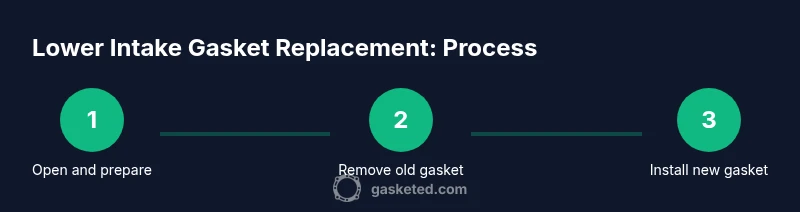
Replacing the lower intake gasket is a multi-stage task: you’ll remove nearby components to access the manifold, detach the lower intake, clean the sealing surfaces, install the new gasket, reassemble, and perform final testing. The goal is to achieve a uniform, gap-free seal across all mating surfaces. Take care to avoid cross-threading bolts or over-tightening, which can warp the manifold. Plan for a thorough cleaning of the sealing surfaces and replacement of any worn bolts if your service manual recommends them.
Safety considerations and working environment
Always work in a well-ventilated, clean environment. Use eye protection and gloves, and disconnect the battery before starting. If you ever encounter unfamiliar wiring or fuel lines, stop and consult the manual or a professional. Keep a fire extinguisher nearby when working near fuel lines, and never work under a hot engine. A tidy workspace helps avoid losing small fasteners and ensures you can follow the torque sequence correctly.
Reassembly and sealing best practices
During reassembly, apply sealant only where specified, and ensure the gasket sits flat without folds or misalignment. Torque bolts in the correct sequence and gradually in multiple passes to avoid warping. Start with hand-tight, then torque in small increments to the recommended value. Check that all vacuum lines and sensors are reconnected, and verify that the gasket surfaces are clean and free of old sealant or debris before reassembly.
Testing and troubleshooting after install
After reassembly, refill the cooling system and start the engine carefully. Check for leaks around the gasket area, listen for abnormal noises, and monitor for any diagnostic trouble codes related to vacuum or misfires. A controlled test drive can help verify the seal, but return to the shop if you notice coolant loss or abnormal engine behavior. A final inspection under the hood should reveal no signs of leakage.
Maintenance tips to extend gasket life
Routine maintenance can extend gasket life: keep the cooling system clean, replace aging hoses, monitor coolant pH, and avoid using improper sealants. Regular inspections of the intake manifold area can catch creeping leaks early. If you service the engine again, follow the same torque sequence and cleaning steps to maintain seal integrity over time.
Common mistakes to avoid
Avoid using excessive sealant, misaligning the gasket, or skipping the step-by-step torque sequence. Don’t reuse old bolts if the service manual specifies replacement, and never rush through the torque process—improper torque is a leading cause of gasket leaks. Finally, avoid neglecting safety measures like disconnecting the battery and properly securing fuel lines.
Tools & Materials
- Socket set (metric and SAE)(Includes deep sockets for recessed bolts and a range of sizes)
- Torque wrench(Critical for bolt sequence and proper sealing torque)
- Gasket scraper(Plastic scraper preferred to avoid surface gouging)
- Lower intake manifold gasket kit(Verify fit by engine family/model year)
- Sealant or gasket maker(Only use if specified by the gasket kit or manual)
- Shop towels and degreaser(Clean surfaces thoroughly before reassembly)
- Safety gear (gloves, eye protection)(Protective equipment is essential during disassembly and reassembly)
- Anti-seize compound(Optional for bolts if recommended by the manual)
- New intake manifold bolts (if required)(Some engines require replacing bolts; check spec sheet)
Steps
Estimated time: 3-5 hours
- 1
Disconnect battery and relieve fuel pressure
Disconnect the negative battery terminal to prevent shorts. If your engine uses fuel injection, relieve fuel pressure per the service manual to avoid spray when disconnecting lines.
Tip: Label any fuel lines or senders before removal to simplify reassembly. - 2
Remove intake components to access the manifold
Detatch air intake ducting, throttle body connectors, and any related hoses that block access to the lower intake manifold. Keep fasteners organized so you can return items in the same spots.
Tip: Take photos during disassembly for reference. - 3
Disconnect vacuum lines and sensors
Carefully detach vacuum lines, PCV hoses, and sensors connected to the intake area. Label lines to ensure you reconnect them properly later.
Tip: Use a small container to catch any residual fluids. - 4
Unbolt and remove the lower intake manifold
Loosen and remove the bolts in the prescribed sequence. Gradually lift the lower intake to reveal the gasket, being mindful of any seals or gaskets that may stick.
Tip: Keep bolts in order to avoid misplacement and ensure correct reinstallation. - 5
Remove the old gasket and clean sealing surfaces
Take out the old gasket and thoroughly clean the mating surfaces with a degreaser. Ensure no old sealant or debris remains in coolant passages or vacuum ports.
Tip: Inspect for any warping or damage to the manifold surface. - 6
Install the new gasket and prepare for reassembly
Place the new gasket in its correct orientation. If the kit specifies any sealant, apply a thin, uniform bead only where directed.
Tip: Double-check alignment before tightening bolts. - 7
Reinstall the intake and torque the bolts
Reinstall the lower intake manifold, tightening bolts in the recommended order and torque range in multiple passes. Do not skip to final torque in a single pass.
Tip: Use a torque wrench and refer to the service manual for exact specs. - 8
Reconnect lines, sensors, and components
Reconnect all vacuum lines, sensors, and intake components previously removed. Confirm all connectors are clicked and seated securely.
Tip: Test each connection for snug fit before starting the engine. - 9
Refill coolant, bleed air, and test run
Refill coolant as required and bleed air if your system requires it. Start the engine and monitor for leaks, overheating, or abnormal pressure.
Tip: If you see a leak, shut off the engine and recheck the gasket seating and bolt torque. - 10
Final inspection and road test
After the initial test run, perform a short drive to ensure the seal holds under load. Re-inspect for leaks at the gasket area after cooling down.
Tip: Keep an eye on coolant level and watch for any odor or smell near the intake area.
Common Questions
Can I reuse the old lower intake gasket?
Most engines require a new gasket for a reliable seal. Reusing an old gasket can lead to leaks and engine damage. Always check the gasket kit instructions and the service manual before deciding.
Most engines require a new gasket for a reliable seal. Reusing an old gasket can lead to leaks and engine damage. Check your manual before proceeding.
Is it necessary to remove the fuel rail during replacement?
Often the fuel rail does not need to be removed for gasket replacement, but some layouts require it for access. Consult the service manual for your exact engine before proceeding.
Usually you don’t, but some engines require fuel rail removal for access. Check your manual first.
What if coolant leaks into the intake after replacement?
If you see coolant leaks after reassembly, recheck the gasket seating and the coolant passages. Bleed the cooling system if required and confirm there are no cross-overs or damaged seals.
If coolant leaks occur, recheck the gasket seating and bleed the cooling system as needed.
Do I need special tools for torquing the bolts?
Yes. Use a calibrated torque wrench and follow the factory sequence. This ensures an even seal and prevents warp or damage.
Yes, use a torque wrench and follow the sequence for a proper seal.
How can I verify the gasket is sealing correctly?
After installation, inspect for leaks while the engine is at operating temperature and perform a controlled test drive. Re-check coolant and vacuum lines for any signs of leakage.
Inspect for leaks after a brief test drive and re-check all lines.
Watch Video
Key Takeaways
- Identify the gasket location and its role in sealing coolant and vacuum paths.
- Prepare and label all components before disassembly to avoid confusion.
- Install the gasket with correct orientation and torque in sequence.
- Test thoroughly for leaks and temperature stability after reassembly.
- Follow manufacturer guidance for sealant use and bolting specs.