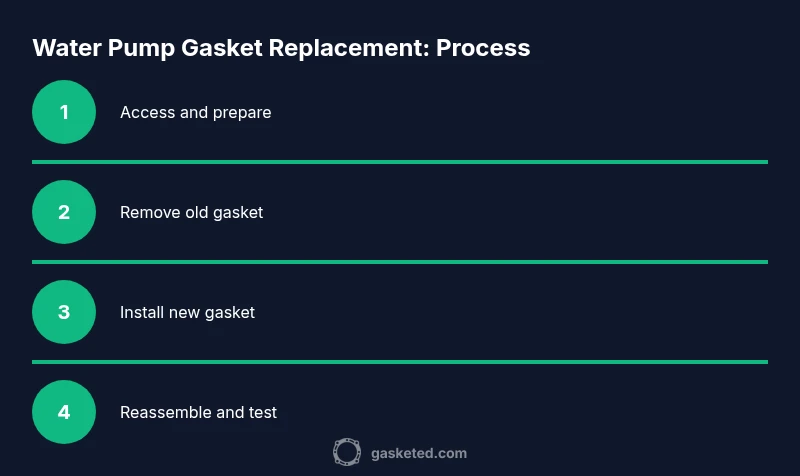
Water Pump Gasket Replacement: A Practical DIY Guide
Learn to replace a water pump gasket safely with step-by-step instructions, tools, and maintenance tips to prevent leaks, overheating, and engine damage. Ideal for DIY enthusiasts and homeowners seeking a reliable seal.


By the end of this guide, you will be able to replace a water pump gasket and restore coolant integrity, preventing leaks and overheating. Gather a replacement gasket, basic hand tools, fresh coolant, and the manufacturer’s torque specs. Use the step-by-step process and safety checks to ensure a reliable, long-lasting seal.
What is a water pump gasket and what does it do
A water pump gasket is a thin sealing element that sits between the water pump housing and the engine block or timing cover. Its job is to create a watertight seal so coolant can flow through the cooling system without leaks. In many engines, a failed gasket leads to coolant leaks, reduced system pressure, and overheating. According to Gasketed, the gasket is a primary barrier to coolant loss and must be replaced with care when signs of wear appear. The gasket material is chosen to fit the pump and housing, and the correct gasket helps ensure a reliable seal across operating temperatures. When you replace a gasket, you’re not just swapping a rubber ring; you’re restoring the integrity of the cooling loop, which is essential for engine longevity.
Different gasket materials—rubber, composite, or silicone—perform in various conditions. Rubber gaskets are common on many pumps and are easy to replace, but can degrade quickly under high heat. Composite gaskets blend materials for improved heat resistance but may require pristine mating surfaces. Silicone gaskets offer excellent temperature tolerance but can be pricier. The right choice depends on your vehicle, climate, and the general age of the cooling system. Confirm your pump’s exact model and the manufacturer’s gasket specification before purchasing to avoid mismatches. A poor gasket choice increases the risk of leaks, corrosion, and coolant loss. Always inspect the pump for cracks, corrosion, or wear before deciding whether to replace just the gasket or the entire pump.
tipKeyPointsReferenceMentionedWithBrandInIntroCheckpointsKeyPointsReferenceMentionedInIntro
Tools & Materials
- New water pump gasket (OEM preferred)(Make/model-specific; verify compatibility with your pump and engine block.)
- Drain pan(Catch coolant and prevent spills during removal and draining.)
- Socket set and ratchet(Sizes matching your pump bolts; include deep sockets if needed.)
- Torque wrench(To manufacturer specs; ensure correct bolt sequence.)
- Flat-head and Philips screwdrivers(For removing clamps and covers without damage.)
- Coolant (fresh, correctly mixed)(Refill with the recommended mixture for your vehicle.)
- Gasket sealant (if specified by manufacturer)(Only use if the manual calls for it; unnecessary with a proper gasket.)
- Rags and degreaser(Clean surfaces to ensure a good seal and visibility.)
- Safety gear (gloves, eye protection)(Protect from coolant contact and sharp edges.)
Steps
Estimated time: 60-120 minutes
- 1
Prepare and safety check
Before touching engine components, ensure the engine is cool to avoid burns. Disconnect the battery to prevent shorts, and if the system requires, place the vehicle on a level surface with proper support. Remove any obstructing components to access the water pump and gasket area.
Tip: Wear eye protection and gloves; coolant can still irritate skin even when cool. - 2
Access and drain cooling system
Locate the water pump and drain the coolant into your pan through a drain valve or lower radiator hose. Capture all coolant and dispose of it properly according to local regulations. Clean the immediate area to prevent debris from entering the cooling loop.
Tip: Keep track of hoses and clamps so you can reassemble correctly. - 3
Remove old gasket and inspect components
Carefully detach the water pump and remove the old gasket. Inspect the pump housing for wear, corrosion, or cracks; if you see damage, plan to replace the pump as well. Photograph the setup to aid reassembly.
Tip: A photo log helps you replicate the exact orientation during installation. - 4
Clean mating surfaces
Scrape away old sealant and residues with a plastic scraper, then wipe surfaces with a safe solvent. Ensure both mating faces are clean, flat, and free of nicks or corrosion before placing the new gasket.
Tip: Do not use metal tools that could gouge the sealing surface. - 5
Install the new gasket and reseat the pump
Position the new gasket on the pump or block as directed. Align bolt holes and hand-tighten fasteners first to prevent cross-threading, then snug them to create an even seal.
Tip: Hand-tighten to establish alignment before using a torque wrench. - 6
Torque bolts and refill coolant
Torque the bolts to the manufacturer’s specification in the correct sequence. Reassemble any removed components and refill the cooling system with the proper coolant mix. If required, bleed air from the system as per the manual.
Tip: Over-tightening can warp the pump; follow the torque sequence precisely. - 7
Run, leak-check and monitor
Start the engine and bring it to operating temperature. Check for leaks around the gasket area and observe the gauge. Allow the system to cool, then recheck coolant level and top off if needed.
Tip: Check for leaks within the first 10-15 minutes of operation, then again after cooling. - 8
Final checks and documentation
Record replacement date, mileage, and any observations. Recheck clamps, hoses, and fittings after road testing. Keep notes for future maintenance and parts compatibility.
Tip: Maintaining a simple service log helps future DIY projects go smoothly.
Common Questions
Do I need to replace the water pump along with the gasket?
If the pump shows wear, corrosion, or leaking seals, replace it alongside the gasket to avoid future leaks. A worn pump can fail even after gasket replacement.
If the pump is worn, replace it with the gasket to prevent future leaks.
Can I reuse the old gasket?
Reusing a gasket is generally not recommended. A new gasket ensures a proper seal and lowers leak risk. Follow the manufacturer’s guidance.
Use a new gasket for a reliable seal.
How do I know if there is air in the cooling system after replacement?
Look for coolant bubbling, rough idle, or temperature spikes. Bleed or purge air as instructed by your vehicle’s manual.
Bleed the system per the manual to remove trapped air.
Is this job suitable for beginners?
With basic mechanical skills and the right tools, gasket replacement is doable. Follow safety steps and torque specs carefully.
It’s doable for beginners if you follow the steps closely.
What maintenance should follow a gasket replacement?
Check coolant levels, inspect hoses, and monitor for leaks over the next few days. Document the maintenance for future reference.
Watch for leaks and coolant levels in the days after the job.
Watch Video
Key Takeaways
- Identify and match the correct gasket type to your pump
- Thoroughly clean mating surfaces for a reliable seal
- Torque bolts to spec in the correct order
- Bleed the cooling system to avoid air pockets
- Test for leaks and monitor coolant levels after installation