What to Do If the Freezer Seal Breaks
According to Gasketed, a broken freezer seal wastes energy and risks food spoilage. This urgent troubleshooting guide covers quick checks, safe fixes, and when to call a professional.


Most freezer seals fail due to a worn or warped gasket, poor door alignment, or debris preventing a tight seal. Quick check: inspect the gasket for cracks or tears, clean the surface, and test closure. If the door still won’t seal after cleaning, replace the gasket or seek professional repair.
The Risks of a Broken Freezer Seal
A broken or compromised door seal on a freezer is not just an annoyance—it affects safety, energy use, and food quality. According to Gasketed, a damaged seal can allow warm room air to circulate into the freezer, causing frost buildup, uneven temperatures, and more frequent cycling of the compressor. Over time, this wastes electricity and can lead to local frost and freezer burn on items near the door. The result is higher electricity bills, reduced freezer efficiency, and a greater chance that perishable foods will thaw and refreeze, potentially compromising safety. In most homes, the first sign is a faint cooling sound or an unexpected temperature rise, followed by visible frost around the door gasket. This guide prioritizes urgent, practical steps to diagnose and fix the most common causes, with a focus on DIY-friendly repairs and safe handling practices. If the seal cannot be restored with basic steps, professional service is recommended to avoid further damage.
Quick Visual Check: Is the Seal Broken?
A quick visual audit can save you time. Look for obvious signs of damage on the door gasket—cracks, tears, or missing sections where the seal should touch the frame. Warping or flattening along the gasket can prevent a full seal, particularly at the corners. Inspect the full loop of the gasket, including the bottom edge where it meets the frame. If you can slide a thin piece of paper or a dollar bill between the gasket and the frame and feel a surprising air gap, that's a sign the seal isn't contacting properly. In addition, assess the door alignment: loose hinges or a bent strike plate can create a gap even with a good gasket. Run a simple energy check by closing the door on the dollar bill test at multiple points around the door. If light shines through, or if the door refuses to stay closed after a quick test, you likely have a gasket or hinge issue that needs closer inspection.
Cleaning, Testing, and Immediate Actions to Take Now
Start with the simplest corrective steps. Unplug the freezer for safety, then remove any items near the door to inspect the gasket in a clean workspace. Mix warm water with a small amount of mild dish soap and wipe the gasket's surface and the door frame with a soft cloth. Rinse with a damp cloth and dry completely to prevent any moisture from entering the insulation. Gently flex the gasket to check for stiffness or cracks. If the gasket is pliable and can be pressed evenly around the door, re-seat the door and test the seal by closing firmly. For small debris or grime buildup, a thorough cleaning alone can restore contact. If you notice cracks, missing sections, or persistent gaps after cleaning, a replacement gasket is typically the best long-term fix. Note: avoid harsh chemicals that could degrade the gasket material.
Diagnostic Flow: Symptom → Diagnosis → Solutions
This section outlines a systematic approach to determine the cause of a broken seal and the most effective fix. Start with the symptom: doors that don’t close tightly or doors that easily push air out. Move to the likely causes: worn gasket (high likelihood), door misalignment (medium), hinge issues or frame warping (low). For each cause, apply the corresponding fix with escalating effort: simple cleaning and reseating (easy), adjusting hinges or replacing the gasket (medium), or professional repair if structural damage exists (hard). The goal is to guide you from observable symptom to a practical, safe solution without unnecessary steps.
Replacing or Repairing the Gasket: What to Consider
Not all gasket problems require a full replacement, but most lasting fixes do. If the gasket is cracked, torn, or has lost its elasticity, replacement is the most reliable option. For warped or loose gaskets that still contact the frame around most of the perimeter, a restoration approach—cleaning, conditioning, and re-seating—may buy time. Ensure the new gasket matches your model exactly; refer to the appliance’s manual or manufacturer’s part database. If you’re unsure about you can do, consider a professional diagnosis to confirm whether the issue is solely the gasket or if door alignment or hinges also need attention.
Step-by-Step: Quick Fixes Before Replacement (overview)
In practice, you’ll follow a logical sequence: confirm safety, inspect and clean, test close, reseat, and decide on replacement if gaps persist. This overview prepares you for the detailed, step-by-step guide that follows, so you can quickly determine whether you can fix it yourself or if a professional should handle it.
Safety, Warnings, and When to Call a Professional
Electrical components and refrigerant systems carry inherent risks. Before any repair, unplug the appliance to avoid shock. If you detect refrigerant odor, hissing sounds, or refrigerant exposure, stop and call a licensed technician. Do not attempt to reseal if the door frame or hinges are bent or cracked, as this can worsen cooling performance or create safety hazards. Always verify that you have the correct gasket model for your freezer and follow manufacturer instructions to avoid voiding warranties.
Prevention and Maintenance to Extend Gasket Life
Proactive maintenance helps you avoid future seal failures. Clean the gasket and door frame every few months to prevent grime and ice buildup, check door alignment annually, and keep the freezer level to ensure an even seal. When moving the appliance or replacing shelves, inspect the gasket for damage and re-seat it if necessary. Consider replacing the gasket proactively after several years of use, especially in areas with extreme temperatures. Gasket maintenance reduces energy consumption and protects frozen goods over the long term.
Quick Troubleshooting Checklist
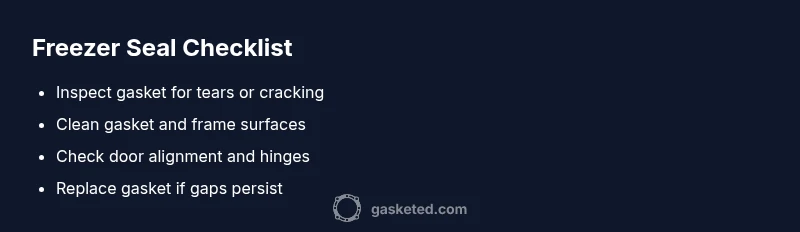
Use this immediate reference for DIY troubleshooting: inspect the gasket for tears, clean the contact surface, test with a paper-till test at multiple points, check door alignment, verify hinges function, and replace gasket if gaps remain after cleaning. Always unplug before inspection and call a professional if you encounter refrigerant or electrical concerns.
Next Steps and The Gasketed Verdict
A broken freezer seal is a manageable problem with the right approach. If the gasket is damaged beyond simple repair, replace it with the correct model and re-test the seal. Maintain good cleaning habits and monitor door alignment to prevent recurrence. The Gasketed team recommends addressing seal issues promptly to restore efficiency and food safety.
Steps
Estimated time: 60-120 minutes
- 1
Gather tools and safety gear
Before starting, unplug the freezer and assemble needed tools: replacement gasket (matching model), mild detergent, soft cloths, a putty knife or plastic scraper, a hair dryer (optional to soften gasket), and a Phillips screwdriver if hinges require adjustment.
Tip: Always disconnect power first to avoid electric shock. - 2
Inspect the current gasket
Check the entire gasket for cracks, tears, or deformation. Gently flex the gasket to test for stiffness or rigidity. Note any sections that do not contact the frame evenly.
Tip: If you feel a crack but the rest is intact, plan for replacement rather than repair. - 3
Clean and dry the gasket and frame
Wash the gasket and door frame with warm water and mild soap. Rinse and dry thoroughly to remove residue that could prevent a seal. Ensure the gasket surface and frame are completely dry before proceeding.
Tip: Moisture can impair adhesion and the seal quality. - 4
Test door alignment and hinges
Check that the door sits level and the hinges are secure. Tighten screws or adjust the strike plate as needed to ensure uniform contact around the gasket.
Tip: A misaligned door often causes gaps even with a good gasket. - 5
Re-seat the gasket or install a replacement
If reseating doesn’t fix the issue, replace the gasket with the correct part for your model. Follow manufacturer guidelines for removing the old gasket and installing the new one, starting at the top corners and working around.
Tip: Take your time to press the gasket firmly into the channel as you go. - 6
Test the seal and restore cooling
Close the door firmly and monitor the seal from multiple angles. Reconnect power and allow the freezer to stabilize for 24–48 hours, then recheck the temperature.
Tip: Don’t overload the freezer immediately after replacement; allow time to calibrate.
Diagnosis: Freezer door seal leaks or fails to close tightly, leading to energy waste and frost buildup.
Possible Causes
- highDamaged or worn gasket causing poor seal
- mediumDoor alignment or hinge issues causing gaps
- lowCracks or deformation in gasket not immediately visible
Fixes
- easyInspect gasket for tears or cracks and clean the contact surface.
- easyClean, dry, and reseat the door; test closure all around the perimeter.
- mediumIf gaps persist, replace the gasket with the correct model and reseal
- easyCheck door hinges and alignment; tighten screws or adjust strike plate as needed
Common Questions
What does a broken freezer seal mean for energy bills?
A broken seal lets cold air escape, causing the freezer to work harder and use more energy. It also increases the chance of frost buildup and food spoilage. Regular maintenance helps minimize energy waste.
A broken seal makes the freezer run longer and harder, which wastes energy and can spoil food.
Can I repair a gasket without replacing it?
Minor cracks or stiffness can sometimes be improved with cleaning and conditioning, but warped or torn gaskets usually require replacement for a reliable seal.
If the gasket is cracked or warped, replacement is usually best.
How do I know if the door is aligned correctly?
Look for an even seal gap around the door. If you can slide a dollar bill evenly around multiple points with little resistance, alignment is likely off. Adjust hinges or strike plate as needed.
Check for even contact around the door if light shows through or the seal is uneven.
Is it safe to use the freezer with a broken seal?
No. A broken seal can lead to food spoilage and frost, and may put extra strain on the cooling system. Repair promptly.
No—avoid using until the seal is fixed to protect food safety and energy use.
What tools do I need to replace a gasket?
Commonly, you'll need a replacement gasket, a screwdriver, a putty knife, a soft cloth, and a heat source like a hair dryer for stiff gaskets.
You’ll usually need a replacement gasket and basic tools to install it.
When should I call a professional?
If the door still won’t seal after a DIY gasket replacement or if you suspect frame or refrigerant issues, a technician should evaluate the unit.
If you can’t get a proper seal after your attempts, contact a professional.
Watch Video
Key Takeaways
- Inspect gasket for damage and replace if needed
- Clean and reseat door to restore seal
- Check door alignment and hinges for proper contact
- Call a professional if you detect refrigerant or electrical issues