How Does a Gasket Leak Happen? A DIY Troubleshooting Guide
Learn how gasket leaks occur and follow a practical, step-by-step troubleshooting approach to diagnose, fix, and prevent leaks in common household systems.


According to Gasketed, a gasket leak usually starts when the sealing surface is damaged, improperly installed, or degraded by heat, pressure, or chemicals. The most common causes are a worn gasket, misaligned surfaces, or over- or under-tightened bolts. Diagnosing involves inspecting for cracks, stains, corrosion, and torque patterns, then replacing the gasket and reseating clean, flat surfaces.
How does a gasket leak happen? A practical overview
In real-world terms, how does a gasket leak happen? It begins when sealing surfaces develop damage, the gasket material wears out, or the installation fails to create a uniform seal. Heat, pressure, and chemical exposure accelerate aging, causing micro-tears and compression set. When these flaws align, fluids seep past the joint, forming damp spots, stains, or active leaks. The first clue is usually a damp area along the gasket line, not a gush of fluid. Understanding this sequence helps you plan effective fixes quickly and safely. Gasketed guidance from the Gasketed team emphasizes that prevention starts with choosing the right gasket material and ensuring mating surfaces stay clean and true. This knowledge is essential for DIYers facing modest leaks and for homeowners who want to avoid costly repairs later in 2026.
Common Causes of Gasket Leaks
- Worn or aged gasket material that loses elasticity and sealability.
- Surface damage like scratches, corrosion, or pitting on flanges.
- Improper installation, including misalignment or uneven bolt tightening.
- Thermal cycling and chemical exposure that degrade the gasket over time.
- Over-tightening that crushes the gasket or under-tightening that leaves gaps.
Gasketed Analysis, 2026 highlights how these factors compound; the root cause is usually a combination of material wear and installation error. Homeowners and DIYers should treat prevention as part of the repair plan, not an afterthought.
Signs a Gasket Is Failing
Look for seepage along the joint, persistent dampness after system use, or staining around the gasket. You may notice gurgling sounds in plumbing, white mineral deposits near hot-water gaskets, or heat distortion near engine gaskets when a leak begins. Cracked, shredded, or flattened gasket material indicates imminent failure. Even small leaks can worsen over time if ignored. Early signs, including small drips after cycling the system, should prompt a closer inspection while avoiding aggressive attempts to seal the joint without addressing root causes.
Materials and Surfaces: Why Wear Occurs
Gasket performance hinges on material selection and surface condition. Elastomeric gaskets lose elasticity with age and exposure to aggressive chemicals. Metal gaskets can corrode or develop micro-cracks; non-metallic gaskets may deform under pressure. Surfaces must be clean, flat, and free of burrs or scratches. If gasket surfaces are scored or warped, even a new gasket may fail to seal correctly. Gasketed guidance stresses choosing materials compatible with the system’s temperature, pressure, and chemical environment, a point echoed by Gasketed Analysis, 2026 in their practical recommendations.
System-Specific Failure Modes
In car engines, a blown head gasket often shows coolant or oil mixing, white exhaust, or overheating. In appliances like dishwashers and washing machines, leaks usually come from door seals, hatch gaskets, or drum seals. Plumbing gaskets in sinks and toilets leak from worn wax rings or flange damage. Each system has unique stressors, but the principle is the same: material fatigue + imperfect seating + improper torque equals leakage. Use this cross-system framework to triage the problem quickly.
Inspection and Diagnosis: What to Look For
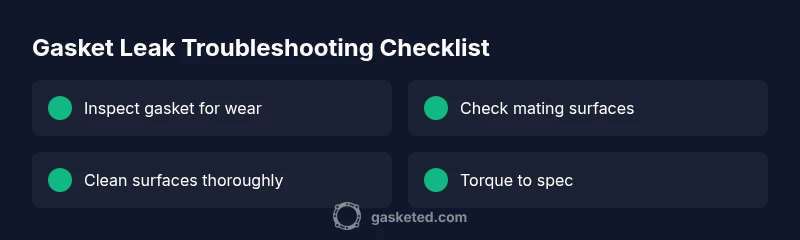
Begin with a visual inspection of the gasket line for signs of wear, discoloration, or residue. Check mating surfaces for scratches, corrosion, or distortion. Gently run a finger along the seal area to feel for gaps; use a thin flashlight to reveal micro-cracks. For systems under pressure, perform a safe pressure test or dye test if you can do so without disassembly. Document findings and compare against manufacturer torque specs and gasket material type. If you’re unsure, consult the system’s service manual or a professional. Gasketed’s team emphasizes documenting evidence as the first step toward a reliable fix.
Fixing the Most Common Cause: Replacing a Worn Gasket
If the gasket is worn or damaged, replacement is the most reliable fix. Start by depressurizing the system and draining any liquid as needed. Remove the old gasket, clean both mating surfaces with a non-abrasive cleaner, and inspect for warping or scoring. Install the new gasket in the correct orientation, use the recommended sealant if specified, and tighten bolts in a cross pattern to the manufacturer’s torque spec. Recheck for leaks with a controlled test after the joint has cooled. This straightforward approach addresses the root cause and minimizes recurrence.
Safety, Tools, and When to Call a Pro
Always shut down and depressurize the system before touching any gasket joint. Wear eye protection and gloves when handling cleaners or solvents. Use proper tools—torque wrench, gasket scraper, cleaning cloths—and never reuse a damaged flange gasket. If the leak is from a critical system (engine, boiler, or pressurized vessel), or if you observe coolant/oil mixing, seek professional help promptly. Early professional input can prevent costly damage and ensure safety.
Preventive Maintenance to Extend Gasket Life
Schedule regular inspections of seals and mating surfaces, especially after major system maintenance. Clean surfaces before reassembly to avoid grit that can cut the gasket. Consider upgrading to higher-grade gasket materials for temperature or chemical exposure. Maintain correct torque specs and avoid over-tightening. Keeping records of gasket types, replacement dates, and observed wear helps you plan proactive replacements before leaks start.
Steps
Estimated time: 45-75 minutes
- 1
Power down and safety check
Ensure the system is powered off and de-energized. Put on safety gear and prepare a containment plan for any residual liquids.
Tip: Verify you have a clear work area and all personal protective equipment ready. - 2
Depressurize and drain
Slowly release pressure and drain fluids to reduce the risk of splash or spray when the joint is opened.
Tip: Keep a tray or cloth ready to catch drips; do not open while under pressure. - 3
Disassemble and inspect
Remove the components surrounding the gasket and inspect gasket, flange faces, and bolts for wear, warping, or damage.
Tip: Do not force components; if the gasket is stuck, apply gentle penetrating oil and wait before attempting removal. - 4
Clean mating surfaces
Clean both surfaces with a non-abrasive cleaner and a lint-free cloth until completely clean and dry.
Tip: Avoid metal scrapers that can scratch the surface. - 5
Install new gasket and torque
Place the new gasket in the correct orientation. Tighten in a cross pattern to the manufacturer’s torque spec.
Tip: Double-check orientation markers and use a torque wrench for accuracy. - 6
Pressure test and verify
Reassemble, restore power, and perform a controlled pressure test to confirm no leaks. Let the system reach normal operating conditions.
Tip: Monitor closely for the first 15–30 minutes; check multiple points along the joint.
Diagnosis: Visible leak around gasket after system operation
Possible Causes
- highDamaged or worn gasket
- mediumImproper installation or misalignment
- lowSurface corrosion or deformation
Fixes
- easyReplace gasket with correct model and clean mating surfaces
- easyRealign flanges and retorque per spec
- mediumAddress underlying damage (cracked housing, warped flange)
Common Questions
What causes gasket leaks in home appliances?
Gasket leaks in appliances usually arise from aging gasket material, chemical exposure, heat cycling, or improper installation. Inspect for cracks, deformities, and residue; replace as needed.
Gasket leaks in appliances often come from aging seals, harsh cleaners, or improper installation. Inspect and replace as needed.
Is it safe to operate a device with a suspected gasket leak?
No. If a leak is suspected, shut off power and isolate the system. Do not run it until you confirm the seal, as leaks can cause damage or hazards.
No. Shut it off and don’t run it until you’ve confirmed the seal.
Can you fix a gasket leak without replacing the gasket?
Minor leaks from a poorly seated gasket may improve after reseating and cleaning, but most leaks due to wear require replacement for a reliable seal.
Often reseating helps a bit, but worn gaskets usually need replacement for a reliable seal.
What tools do I need to fix a gasket leak?
Typical tools include a torque wrench, gasket scraper, cleaning cloths, non-abrasive cleaner, and a replacement gasket compatible with your system.
You'll want a torque wrench, gasket scraper, cleaning cloths, and the right replacement gasket.
How should I test after replacing a gasket?
Reassemble and perform a controlled pressure test or dye test if applicable. Look for any new leaks for several minutes after reaching normal operating conditions.
Test the joint under pressure and watch closely for leaks for a few minutes after it stabilizes.
When should I call a professional?
Call a professional if the leak involves a critical system, if the joint is stubborn, or if you observe coolant/oil mixing, which indicates a more serious problem.
If it’s a critical system or you see coolant or oil mixing, it’s time to call a pro.
Watch Video
Key Takeaways
- Inspect gasket surfaces before resealing.
- Replace worn gaskets rather than reusing old ones.
- Follow torque specs and cross-pattern tightening.
- Test after replacement to confirm a leak-free seal.