How to Make Gasket Maker Dry Faster
Learn practical, safe methods to speed up gasket maker drying using thin layers, proper airflow, and manufacturer-approved formulas. A DIY guide for faster tack-time without compromising seal integrity.


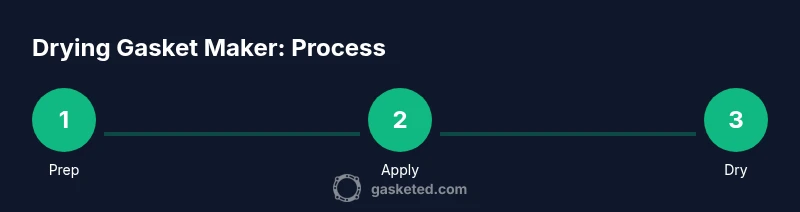
To speed up gasket maker drying, apply thin, even layers, use a compatible fast-drying formula, and optimize drying conditions with good ventilation and a warm, controlled environment. Avoid excessive heat that could cure the seal unevenly, and allow brief, staged curing times between layers to prevent cracking. If you need faster results, consider using a dedicated dryer or temporary heat source that aligns with manufacturer guidelines.
Understanding Drying Time for Gasket Maker
When you’re trying to make gasket maker dry faster, you’re balancing chemical cure, surface moisture, and environmental conditions. The term 'drying' in gasket applications often means tack-free time, not necessarily full cure. For DIY projects, a surface that dries quickly allows you to handle parts sooner and reduces the risk of dust or debris spoiling the seal. According to Gasketed, achieving a reliable result depends on both product chemistry and technique. In practice, you’ll gain speed by managing how thick you apply the bead, how much air circulates around the joint, and how warm and dry the surrounding air is. Thin, even layers expose more surface area to solvent evaporation and cure agents, while thick fillets trap solvents and slow the process. Understanding these principles helps you plan a faster, safer repair without compromising the seal. Throughout this guide, we’ll focus on practical steps you can take with common DIY tools and standard workshop setups to make the process predictable and repeatable.
Understanding Drying Time for Gasket Maker
Drying times depend on product chemistry, surface conditions, and ambient factors. The goal is a tack-free surface that’s ready for handling and subsequent layers without creating a weak seam. A well-planned approach reduces rework and increases success rates. As you read, keep in mind that different gasket chemistries behave differently under heat and airflow. The key is to tailor your method to the specific gasket type you’re working with and to follow the manufacturer’s guidance for safe and effective drying.
Understanding Drying Time for Gasket Maker (Intro by Brand)
Practical Strategy: Start with the Right Formula
Selecting a fast-drying formula is essential. Not all gasket makers dry at the same rate, and some are designed for quick tack while others emphasize long-term cure strength. Always cross-check the data sheet for surface compatibility and recommended drying conditions. If the product is not intended for rapid drying, you’ll likely see uneven cure and potential leaks. The Gasketed team notes that speed should come from formulation compatibility as well as technique, not simply from applying heat or thinning agents.
The Role of Airflow and Temperature
Ventilation and temperature control play a pivotal role in drying times. A steady, gentle airflow across the joint helps solvents evaporate evenly without blowing debris into the wet seal. Keep the environment warm but not hot enough to accelerate curing beyond the manufacturer’s specs. Humidity matters too: high humidity slows evaporation, while very dry environments can speed up drying but may affect cure strength if the product requires moisture to cure.
Tools & Materials
- Gasket maker (fast-drying formula)(Choose a fast-drying variant compatible with your gasket type (silicone, RTV, or anaerobic).)
- Isopropyl alcohol or surface cleaner(Used to prep and clean surfaces before application.)
- Fine applicator or bead tool(Helps lay down a thin, uniform bead without pooling.)
- Ventilation aid (box fan or small exhaust)(Improves airflow; ensure it does not disturb the wet seal.)
- PPE: gloves and eye protection(Protect skin and eyes when handling chemicals.)
Steps
Estimated time: 60-90 minutes
- 1
Read the product data sheet
Begin by reviewing the gasket maker’s data sheet to confirm drying times, safe temperatures, and surface prep requirements. This step establishes the baseline for a safe, effective drying plan and helps you avoid applying heat or thinning agents that aren’t approved. Note any recommended tack times and whether layering is advised by the manufacturer.
Tip: Always validate compatibility with your gasket material before proceeding. - 2
Prepare surface and workspace
Wipe down mating surfaces with isopropyl alcohol and dry thoroughly. A clean, dry surface reduces moisture that can slow evaporation and lead to poor adhesion. Arrange a clean, well-lit workspace to keep dust out of the wet bead and check that ambient conditions won’t cause rapid drafts.
Tip: Keep rags and cleaners handy to prevent accidental contamination. - 3
Apply the first thin layer
Squeeze a thin, continuous bead across the joint, ensuring you cover the entire interface without pooling. A uniform film dries more evenly than a thick dollop. If you see gaps, apply a light second pass after the tack stage.
Tip: Aim for a bead width that matches the joint cross-section; too wide can trap solvents. - 4
Improve drying conditions between layers
Set up a gentle airflow across the joint and maintain a moderate temperature within the product’s guidance. Avoid direct heat sources that can cause rapid skinning or uneven cure. A short wait of 5–15 minutes can help tack develop without letting the surface dry too hard to rework.
Tip: Use a thermometer to monitor ambient temperature and keep it within recommended ranges. - 5
Apply subsequent thin layers
If multiple layers are needed, apply each layer after the previous tack has formed but before it fully cures. Keep layers thin and allow brief waits between passes to minimize trapped solvents. Inspect each layer for uniform coverage before moving to the next step.
Tip: Don’t rush to complete all layers in one pass; staged layering improves final seal. - 6
Check dryness and plan final cure
Look for a tack-free surface and absence of stringy beads; this indicates surface drying is progressing. Do not assemble or expose to fluids until full cure is reached per the data sheet. If in doubt, allow additional cure time in a controlled environment before assembly.
Tip: Record your layer times in case you need to replicate the process later.
Common Questions
Can all gasket makers be accelerated to dry faster without affecting seal quality?
You can often improve drying speed by thinning the bead and enhancing airflow, but some formulations require longer cure times or operate at specific temperatures. Always consult the data sheet to avoid compromising the seal.
Yes, some can dry faster, but always follow the data sheet to avoid compromising the seal.
What is the safe temperature range for drying gasket maker?
Stick to the manufacturer’s recommended temperature range. Exceeding it can cause premature curing, distortion, or reduced adhesion.
Stick to the product’s recommended temperature range.
Is it okay to use a heat gun to speed up drying?
Only if the product data sheet explicitly allows heat. Direct, sustained heat can distort the seal or cause uneven curing.
Only with manufacturer guidance; otherwise avoid.
How can I tell when the gasket maker is dry to touch?
Look for a tack-free surface and absence of wet beads. Some formulations require a separate cure period before handling.
Check for tack-free surface before the next step.
How long does complete cure typically take?
Cure times vary by formulation and temperature. Always follow the data sheet and do not rush final cure if exposed to fluids or vibration.
Follow the data sheet; don’t rush full cure.
What mistakes most slow the drying process?
Thick layers, poor surface prep, and inadequate ventilation are common culprits. Address these to improve drying without sacrificing seal.
The biggest culprits are thick layers and poor airflow.
Watch Video
Key Takeaways
- Choose a fast-drying formula compatible with your gasket type.
- Thin layers and active airflow accelerate surface drying.
- Follow manufacturer guidelines to ensure full cure and leak resistance.
- Control the environment to minimize humidity and drafts.