How to Use Permatex Gasket Maker: A DIY Guide
Learn how to use Permatex gasket maker safely and effectively with our step-by-step guide. Prep surfaces, choose the right gasket maker, apply correctly, cure, and test for leaks in automotive and home repair projects.


This guide shows how to use Permatex gasket maker to seal gaskets in engines, appliances, and plumbing. You’ll learn prep, application, cure times, and cleanup, plus choosing the right product and safety considerations. By the end you’ll be able to complete a reliable gasket seal with minimal mess and reduced risk of leaks.
What is Permatex gasket maker?
Permatex gasket maker is a silicone-based RTV sealant designed to form flexible, durable gaskets where conventional premade gaskets may fail or be impractical. It fills micro-gaps, accommodates slight surface irregularities, and remains pliable after curing, helping to resist vibration and thermal cycling. For DIYers, this type of product is invaluable for engines, pump housings, valve covers, water fixtures, and other assemblies where perfect gasketing isn’t feasible. Always read the label for temperature range, cure time, and surface compatibility. The Gasketed team emphasizes selecting the right formulation for the job to minimize runny beads and ensure a proper seal.
When to use gasket maker vs RTV silicone
Using gasket maker versus a premade gasket hinges on surface condition and the need for a resilient seal. If mating surfaces are smooth and undamaged, a classic gasket may be sufficient and easier to reseal in the future. If surfaces are slightly damaged, irregular, or you’re working with a pump, water heater, or automotive component, gasket maker can bridge gaps and create a reliable seal. Permatex gasket maker is available in several formulations, each designed for different temperatures, oils, and solvents. Check the label for compatibility with oil, coolant, gas, or air systems, and choose a product that matches your application. In all cases, avoid over-applying and ensure the area can vent any moisture during cure. This approach reduces the risk of leaks and makes future disassembly more manageable.
Prep for application
Proper prep is the foundation of a durable gasket seal. Disconnect power to any equipment and remove the component to access the mating surfaces. Thoroughly scrape away all old gasket material and wipe the surfaces clean with solvent or isopropyl alcohol until they are free of oil and dirt. Dry surfaces completely; moisture can weaken adhesion. If you’re sealing near painted finishes, apply masking tape to protect adjacent areas and prevent accidental excess bead transfer. Finally, inspect for surface damage; small gouges should be addressed so they do not create gaps in the seal.
Choosing the right Permatex product
Not all Permatex gasket makers are the same. Determine whether you need an oil-resistant RTV silicone, a high-heat formulation for engines, or a room-temperature cure option for household plumbing. Read the product label to confirm what fluids it resists (oil, coolant, fuel) and the cure time. Temperature rating is critical for engines and heaters, while chemical compatibility matters for plumbing and appliance repairs. If in doubt, start with a standard oil-resistant option and verify compatibility with the fluids in your system. Remember, choosing the correct formulation reduces edge tearing, slip, and cure issues.
Step-by-step overview
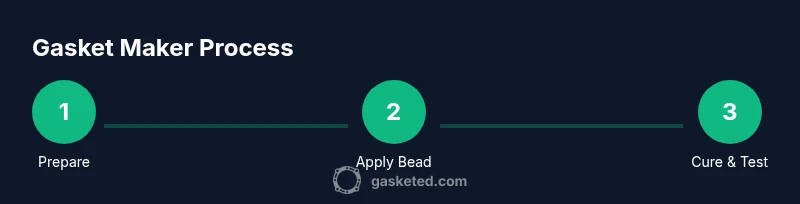
The following steps outline the practical workflow for applying Permatex gasket maker in most DIY gasket-sealing scenarios. While specifics vary by product and job, the general approach remains consistent: prep, apply, assemble, cure, and test. Always refer to the label for exact times and temperatures. This overview helps you understand the sequence before you begin the hands-on steps.
Cure times, handling and safety
Cure times for gasket makers vary by product and ambient conditions. Humidity, temperature, and surface cleanliness influence the final seal. After application, avoid disturbing the joint until the recommended handling time has passed, and never subject the fresh seal to full system pressure immediately. Wear gloves to protect skin and ensure good ventilation in enclosed spaces. Keep rags and solvents away from heat sources, as some solvents can be flammable. Proper disposal of rags and contaminated materials is essential.
Maintenance, removal, and common issues
If a gasket fails, inspect the mating surfaces for damage that may require resurfacing or replacement. When removing a gasket maker, avoid gouging the metal and use a plastic scraper to preserve the surface. Clean with solvent and recheck flatness before reapplying. Common issues include excess bead leading to squeeze-out, poor surface preparation, and mismatched sealant compatibility with fluids. Following manufacturer recommendations and the steps in this guide minimizes these risks and helps ensure a reliable seal.
Tools & Materials
- Permatex gasket maker (RTV silicone gasket sealer)(Oil-resistant formulation appropriate for the job; read label for temperature range and cure time)
- Gloves(Disposable nitrile or latex gloves to protect skin)
- Plastic scraper(Gently remove old gasket without damaging surfaces)
- Isopropyl alcohol or solvent(Clean and degrease mating surfaces)
- Lint-free wipes or shop towels(Dry and wipe surfaces; remove residues)
- Masking tape(Protect adjacent painted areas from excess bead)
- Razor or blade for cleanup(Carefully remove cured squeeze-out)
- Torque wrench (if applicable)(Use to meet manufacturer torque specs when resealing)
- Cleaning solvent or mineral spirits(For cleanup of excess adhesive)
Steps
Estimated time: 30-60 minutes active work; plus cure time per product label
- 1
Remove old gasket
Carefully pry off the old gasket without marring the mating surfaces. Use a plastic scraper to avoid gouges. If there is stubborn residue, apply a small amount of solvent and wipe away.
Tip: Work slowly to preserve surface integrity; a damaged surface can ruin the seal. - 2
Clean and dry surfaces
Wipe both mating faces with isopropyl alcohol or an appropriate solvent. Ensure all oil, coolant, and debris are removed and that the surfaces are completely dry before applying the gasket maker.
Tip: Use lint-free wipes and allow final air-dry to prevent moisture entrapment. - 3
Apply gasket maker
Load the tube and apply a continuous, uniform bead along the bonding surface. The bead should be visible but not excessively thick; avoid gaps or voids.
Tip: Practice a steady squeeze and use a consistent bead thickness; uneven beads can cause leaks. - 4
Assemble components
Align the parts and begin threading fasteners. Tighten gradually in a crisscross pattern to seat the joint evenly. Do not over-tighten, which can squeeze out the gasket maker.
Tip: If your joint requires a specific torque, refer to the manufacturer specs and use a torque wrench. - 5
Clean up excess
Wipe away squeeze-out with a clean cloth before it cures. If any bead remains, carefully trim with a razor once cured but still workable.
Tip: Excess cured material is harder to remove; wipe while still soft for best results. - 6
Cure and test
Allow the gasket maker to cure per label instructions before applying pressure. After cure, run a leak test with the system at low pressure to verify the seal.
Tip: Do not subject the joint to full pressure until the cure window has elapsed.
Common Questions
What is Permatex gasket maker best used for?
Permatex gasket maker is used to create a flexible, durable seal between mating surfaces when a premade gasket isn’t suitable. It’s commonly applied on engines, pumps, and plumbing joints where irregularities exist.
Permatex gasket maker is ideal for creating a flexible seal between surfaces, especially when a premade gasket won’t fit.
Can I reuse components sealed with gasket maker?
Reusing components after applying gasket maker depends on the joint and surface condition. If surfaces remain clean and true, and the gasket maker has not cured excessively, you may reseal after cleaning. Otherwise, replace the gasket surfaces.
Reusing parts depends on surface condition; clean and inspect before resealing.
How long does Permatex take to cure?
Cure time varies by product and conditions such as temperature and humidity. Follow the label for the intended handling time and the fully cured state.
Cure time depends on product and conditions; check the label for specifics.
Is Permatex gasket maker safe on plastics?
Most Permatex gasket makers are formulated to be compatible with common plastics when used as directed. Always test on a small area first and verify compatibility with the plastic in your assembly.
Most are compatible with plastics if used as directed; test first.
What happens if I apply too much gasket maker?
Excess bead can squeeze out and create mess, potentially obstructing seals or moving parts. Wipe away squeeze-out promptly and ensure bead size is appropriate for the joint.
Too much can squeeze out and cause leaks; wipe excess.
Watch Video
Key Takeaways
- Prepare and clean surfaces thoroughly before sealing.
- Choose the right Permatex gasket maker formulation for your fluids and temps.
- Apply a uniform bead and assemble promptly to avoid smear.
- Cure fully and test for leaks before putting the system under pressure.