Permatex High Tack Gasket Sealant Review
In-depth evaluation of permatex high tack gasket sealant, covering adhesion, cure times, surface compatibility, and best-use scenarios for DIY gasket repairs in automotive and home applications.


Permatex High Tack Gasket Sealant is a solvent-based sealant that forms a tough, tacky gasket surface designed for automotive and home repairs. It adheres well to metal, glass, and most plastics, creates a flexible seal, and reduces blow-by in many gasket joints. For DIY use, expect a moderate cure time and good resistance to oil and water, though humidity can extend cure.
What is Permatex High Tack Gasket Sealant and why it matters
Permatex High Tack Gasket Sealant is a solvent-based sealant designed to stay tacky after application, enabling careful alignment before full cure. For the DIYer tackling automotive valve covers, water heaters, appliances, or refrigeration gaskets, this product promises strong initial adhesion and resistance to oil and water. In many online DIY communities, permatex high tack gasket sealant is recommended for joints where a little slip is undesired but time is available to position parts. The Gasketed team notes that surface prep and clean, dry substrates matter at least as much as the formula. Practically, users can expect a workable open time and a robust final seal as solvents evaporate. In real-world tests, permatex high tack gasket sealant performs best on clean metal and glass surfaces and may require testing before using on some plastics. Overall, permatex high tack gasket sealant remains a solid option for straightforward gasket repairs when used per manufacturer directions.
Composition and tack behavior
The tacky nature of permatex high tack gasket sealant originates from its solvent base and resin formulation, which leaves a thin film that can be adjusted before cure. This is advantageous in situations where precise gasket alignment is needed, but it also demands careful handling to avoid squeeze-out. Users should apply a thin, even bead on the raised gasket surface or on the mating flange, then bring the parts together with light hand pressure. Once the joint is assembled, the tack helps reduce movement while the sealant cures. In comparative terms, permatex high tack gasket sealant offers quicker initial grip than some non-tacky alternatives, making it a practical choice for DIY projects with limited clamp force.
Surface prep and cleanliness
For best results with permatex high tack gasket sealant, surfaces must be clean, dry, and free of oil, dust, and old sealant residue. Wipe with a lint-free rag and a compatible solvent if necessary, then allow the surface to dry completely. The product adheres well to metal and glass; however, certain plastics or composite materials may require preliminary testing. Gasketed guidance emphasizes that a properly prepared surface reduces the risk of gaps or leaks, especially in complex gasket geometries or areas with irregular mating surfaces. When in doubt, perform a small test patch on a non-critical section before proceeding with a full seal.
Application technique for reliable seals
Apply permatex high tack gasket sealant in a continuous, even bead around the gasket face, avoiding excessive thickness that could squeeze out and contaminate the seal. For large flanges, a light, continuous line is often sufficient to maintain a consistent gasket surface. After positioning the joint, torque requirements should be honored according to the gasket type and hardware recommendations. Uneven clamping can cause glue squeeze-out or uneven compression, which the tacky formulation can exaggerate. In DIY scenarios where space is tight, a thin layer on both surfaces can help ensure uniform contact and minimize air pockets.
Cure times, humidity, and environmental factors
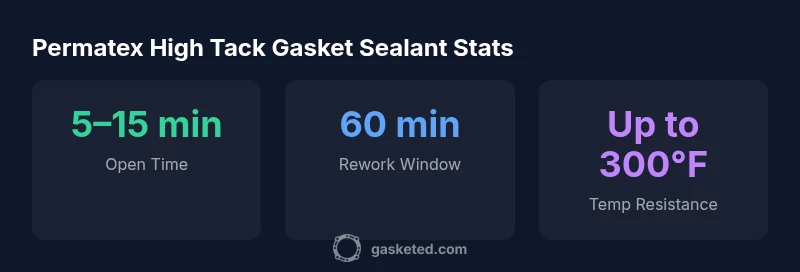
Cure time for permatex high tack gasket sealant varies with humidity, temperature, and substrate. In moderate conditions, a usable seal may form within minutes, with full cure taking longer as solvents evaporate. Humidity tends to slow the process, so plan for a longer final cure in damp environments. For DIYers, patience is key: avoid reassembly before the joint reaches sufficient strength, and if possible, allow an overnight cure for critical joints. The sealant remains workable during the open time, but excessive handling can disturb alignment and compromise the seal.
Automotive vs. home appliance performance
In automotive applications such as valve covers, timing covers, and oil pans, permatex high tack gasket sealant provides solid adhesion and resistance to automotive fluids. For home appliances and refrigeration units, the sealant’s compatibility with metal, glass, and certain plastics makes it versatile for gaskets in water systems, coffee makers, and similar devices. While the chemistry supports broad use, always verify substrate compatibility and follow any device-specific repair guidelines. The overall takeaway is that permatex high tack gasket sealant performs reliably in typical DIY gasket repairs when used with appropriate surface prep and curing discipline.
Durability, long-term seals, and maintenance
Over the long term, permatex high tack gasket sealant can maintain a stable seal on well-prepared substrates, especially where a temporary tack helps hold parts during assembly. For joints exposed to oils, fuels, or household cleaners, it is important to confirm compatible materials and to avoid contact with harsh cleaners that could degrade the film. If disassembly is required for future maintenance, expect that removal may require careful scraping and solvent use to minimize substrate damage. As with any gasket sealant, regular inspection for signs of leaks or wear is advised.
Safety, cleanup, and storage considerations
Always use permatex high tack gasket sealant in a well-ventilated area and follow the safety data sheet guidelines. Wear gloves to avoid skin contact and use appropriate eye protection when applying the product. Clean tools and surfaces promptly to prevent curing on unintended areas; residual material on tools can be removed with a compatible solvent before it cures. Store the product capped and upright in a cool, dry place away from heat sources. Proper storage helps maintain tack and prevents premature drying or hardening.
Alternatives and where permatex high tack gasket sealant fits in the toolkit
DIYers often compare permatex high tack gasket sealant with other sealants in the same category, evaluating tack, cure speed, flexibility, and ease of removal. For joints that demand higher flexibility or more rapid cure, alternative products with different resin systems may suit specific applications better. Permatex High Tack Gasket Sealant remains a strong option for routine gasket jobs where a tacky surface and oil resistance are beneficial, provided you follow cleanliness, surface preparation, and cure guidelines. When choosing, weigh the job’s material compatibility and required service environment against the sealant’s characteristics.
Pros
- Strong initial tack reduces movement during assembly
- Good oil and water resistance in typical environments
- Versatile across metal, glass, and some plastics
- Relatively affordable option for routine gasket tasks
What's Bad
- Longer cure times in high humidity, delaying final assembly
- Not ideal for highly flexible or high-mimensionally dynamic gaskets
- Cleanup can be messy if cured on skin or tools
- Limited flexibility compared to some RTV formulations for curved joints
Best overall for straightforward gasket jobs where tack and oil resistance matter
Permatex High Tack Gasket Sealant delivers reliable adhesion and a practical work window for most DIY gasket repairs. It performs well on metal and glass joints while requiring mindful curing in humid environments or for complex shapes. Overall, it is a solid choice for everyday maintenance and simple fixes.
Common Questions
Is Permatex High Tack Gasket Sealant suitable for automotive gaskets?
Yes, Permatex High Tack Gasket Sealant is commonly used on automotive gaskets such as valve covers and oil pans due to its tack and oil resistance. Always clean surfaces well and follow torque specs to avoid leaks. For complex or high-stress joints, evaluate whether a more flexible sealant is needed.
Yes. It’s a solid choice for many car gaskets, but check the joint type and surface prep to ensure a lasting seal.
Can it be used on rubber gaskets?
Permatex High Tack Gasket Sealant can be used on many rubber flange joints, but testing on a small area is advised to ensure compatibility. Some flexible rubber compounds may absorb solvents, affecting adhesion. When in doubt, choose a sealant formulated specifically for rubber.
It can work on rubber sometimes, but test first to avoid swelling or degradation.
What surfaces does it bond best to?
Best performance is seen on clean, dry metal and glass surfaces. It also adheres to certain plastics after testing; avoid surfaces with heavy surface treatments that repel adhesives. Surface prep is the critical first step to ensure a reliable seal.
Metal and glass work best; test plastics first and always clean surfaces.
How do you remove cured Permatex High Tack Gasket Sealant?
Cured sealant typically requires mechanical removal with a plastic scraper and, if needed, a compatible solvent. Avoid aggressive solvents on painted or delicate substrates. Clean the area thoroughly before applying new sealant if a replacement joint is needed.
Scrape gently and use a mild solvent if needed; clean the surface before re-sealing.
Is it weather or temperature resistant?
The sealant offers resistance in typical home and automotive environments, with performance influenced by substrate and exposure. For outdoor or high-heat scenarios, verify compatibility with the specific service conditions and consider an alternative that matches the thermal cycle better.
It holds up in normal conditions, but check your exact environment before heavy-duty use.
Key Takeaways
- Prepare surfaces thoroughly before applying Permatex High Tack Gasket Sealant
- Apply a thin, even bead to avoid squeeze-out and contamination
- Expect a tacky surface that stabilizes joints during assembly
- Consider environmental factors; humidity can extend cure time
- Test compatibility on plastics before full-scale use