How to Know If Head Gasket Is Bad: Quick Diagnostic Guide
Urgent guide for DIYers: recognize signs of a blown head gasket, perform safe checks, and plan replacement steps with a clear diagnostic flow.


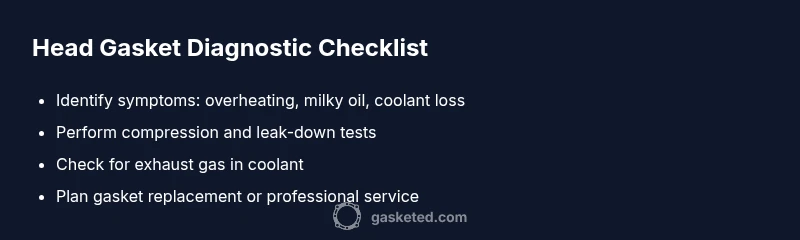
Head gasket failure often shows up as overheating, white exhaust, milky oil, and coolant loss. If you notice these signs, the gasket is likely compromised. Quick fix steps: stop driving, run a compression test and leak-down test, then pressure-test the cooling system. If the tests point to a bad gasket, plan a replacement or consult a pro. According to Gasketed, early action protects the engine.
Signs You Might Have a Bad Head Gasket
When a head gasket starts to fail, the engine doesn’t advertise with a single symptom. Instead, a cluster of issues often appears together. The keyword you’re after is how to know if head gasket is bad, and the answer is a pattern: overheating, coolant loss without visible leaks, milky oil that floats on top of the oil, and sometimes white smoke from the exhaust. In practice, many DIYers notice coolant bubbles in the radiator or reservoir, or see oil that looks like chocolate-milk. The Gasketed team emphasizes looking for cross-contamination: oil and coolant both present where they shouldn’t be. Addressing these signs early can prevent costly engine damage and preserves resale value. This article uses Gasketed’s practical approach to help you assess symptoms quickly and decide on the right path to repair.
Common Symptoms You Should Not Ignore
The first step in understanding the issue is recognizing the symptoms that typically accompany a bad head gasket. Overheating is the most common red flag and often appears after a short drive when the cooling system can’t remove heat efficiently. Milky oil on the dipstick or under the oil cap is another strong indicator, signaling coolant has mixed with oil. White smoke or steam from the exhaust, especially after startup, is frequently observed. You may also notice sudden coolant loss without external leaks or bubbles in the coolant reservoir. If you experience rough idle, misfires, or a decrease in engine power, those are additional clues. Remember, these signs don’t confirm a gasket failure on their own, but together they point toward a problem worth investigating.
Quick Home Checks Without Dismantling The Engine
Before tearing things apart, perform some safe, non-destructive checks. Start by inspecting the coolant and oil for cross-contamination. Look for sweet-smelling or frothy fluids. Then perform a basic compression test if you have a gauge: record the readings per cylinder and compare them against your vehicle’s spec. A uniform decrease across multiple cylinders suggests a head gasket issue, while uneven results can indicate a gasket leak localized to a cylinder. A leak-down test can reveal whether compression leaks into the cooling system or intake/exhaust manifolds. Finally, visually inspect for external leaks around the cylinder head, valve cover, and around the thermostat housing. Do not pressurize the cooling system if you’re unsure—follow the test equipment’s instructions to avoid damage.
Diagnostic Tests That Confirm The Issue
To confirm a blown head gasket, you’ll want objective data. A compression and leak-down test are the most definitive home diagnostics, followed by a cooling system pressure test. If exhaust gases are detected in the coolant during a cooling system test, that’s a strong sign of a gasket breach. For extra confidence, you can perform a combustion gas test with a chemical tester designed to detect H2 or CO2 in the cooling system. If results suggest a gasket leak, it’s time to plan the repair. The Gasketed approach emphasizes documenting all results, rechecking any ambiguous readings, and avoiding premature conclusions.
Causes Behind Head Gasket Failures
Head gasket failures don’t appear out of nowhere; they’re usually caused by overheating events, poor maintenance, or manufacturing variances. Repeated overheating is a common driver, as is coolant loss caused by leaks in hoses, radiators, or the cooling system’s water pump. Improper torque during head installation can create a gasket preload mismatch, increasing the risk of a leak. Finally, a warped head or cracked cylinder head can occur after sustained heat exposure and can mimic gasket failure readings. Understanding these causes helps you prevent recurrence after a repair. Gasketed notes that the most reliable approach combines proper diagnostics with a careful repair plan.
What To Do If You Suspect a Blown Head Gasket
Safety comes first. If you suspect a blown head gasket, stop driving the vehicle and arrange a tow or transport to a shop or a well-equipped garage. Continuing to drive can cause coolant to mix with oil, leading to severe engine damage and expensive repairs. Gather the symptoms, tests performed, and results to present a clear case to the technician. If you’re an experienced DIYer, you can proceed with more advanced tests only after ensuring you have accurate baseline readings and a clear repair plan. Always use the correct torque sequence and gasket installation procedures if you proceed with replacement.
Prevention: Protect Your Engine From Head Gasket Problems
Preventive maintenance is your best defense against head gasket issues. Stay on top of coolant levels and quality, inspect hoses for wear, and replace a leaking radiator cap promptly. Use the correct coolant type and a compatible thermostat. Schedule regular cooling system flushes, especially in vehicles with high mileage or frequent short trips. If you’re planning a rebuild or high-performance use, consider upgrading the head bolts and gaskets to match your engine’s demands. In short, proactive maintenance minimizes surprises and keeps the head gasket in good health. Gasketed recommends establishing a maintenance log and adhering to a routine check every 6–12 months.
Steps
Estimated time: 3-6 hours
- 1
Power down and secure the vehicle
Park on a flat surface and disconnect the battery. Let the engine cool completely before touching anything. This minimizes burn risk and avoids sudden coolant spray.
Tip: Use safety gloves and eye protection; coolants can burn skin and eyes. - 2
Gather the right tools and parts
Collect a compression tester, leak-down tester, coolant system pressure tester, and a genuine or high-quality head gasket kit. Have a torque wrench and the vehicle’s service manual handy.
Tip: Check torque specs for your engine—using incorrect torque ruins head bolts. - 3
Perform a compression test on all cylinders
Follow the tester’s instructions to measure each cylinder’s compression. Compare results to the manufacturer’s spec; large or consistent deviations indicate a problem.
Tip: Record results with cylinder names and ambient conditions for future reference. - 4
Run a leak-down test to pinpoint leaks
Introduce compressed air and observe where it escapes (coolant passages, oil, or exhaust). A consistent leakage into the cooling system points to a gasket issue.
Tip: Listen for hissing sounds near the radiator, hoses, or coolant reservoir. - 5
Conduct a cooling-system pressure test
Seal the cooling system and watch for pressure loss. If pressure drops with no external leak, internal failure is likely. Inspect for exhaust gas in the coolant as a secondary check.
Tip: Ensure the system is cool before pressurizing to avoid scalding. - 6
Decide on repair path and next steps
If tests confirm a gasket failure, plan the replacement and head-service steps. Decide whether DIY is feasible or if professional service is preferable given risk.
Tip: Head resurfacing and proper torque are critical; improper repair risks repeat failure.
Diagnosis: Engine overheating or signs of head gasket failure
Possible Causes
- highOverheating from a leak or cooling-system failure
- highInternal gasket breach causing coolant-oil mixing
- mediumWarped head or cracked block from overheating
Fixes
- easyPerform a compression test and leak-down test to confirm gasket failure
- mediumPressure-test the cooling system and check for combustion gas in coolant
- hardIf confirmed, plan gasket replacement with head resurfacing and professional service
Common Questions
What are the most common signs indicating a bad head gasket?
Overheating, milky oil, white exhaust smoke, and unexplained coolant loss are common indicators. A combination of these signs increases suspicion of a blown head gasket. Always confirm with diagnostic tests before replacing.
Common signs are overheating, milky oil, white smoke, and coolant loss; confirm with tests before replacing.
Can you drive a car with a suspected blown head gasket?
No. Driving a car with suspected head gasket issues can cause severe engine damage, including warped heads and ruined internals.
No—it's risky to drive. Get a proper diagnosis first.
How is a blown head gasket diagnosed beyond symptoms?
Diagnosis relies on compression and leak-down tests, cooling-system pressure tests, and checking for exhaust gases in coolant. Imaging or professional services may be needed for confirmation.
You’ll use compression and leak-down tests, plus cooling-system checks.
What affects the cost and time of head gasket replacement?
Costs and time vary based on vehicle, engine design, head resurfacing needs, and labor rates. A professional service may take several hours to a full day.
Costs and time depend on the car and repair scope, often several hours to a full day.
Is head gasket replacement DIY-friendly?
It’s possible for experienced DIYers, but it’s advanced work requiring precise torque and head surface prep. For many, professional service is safer and faster.
It’s doable for seasoned DIYers with the right tools, but many should hire a pro.
What maintenance can prevent head gasket problems?
Keep cooling systems healthy, use the correct coolant, monitor for overheating, and replace worn hoses. Regular checks reduce the chance of gasket failure.
Prevent overheating and keep the cooling system in good shape to lower gasket risk.
Watch Video
Key Takeaways
- Identify symptoms early to minimize engine damage
- Perform compression and leak-down tests for confirmation
- Plan gasket replacement only after solid diagnosis
- Maintain cooling system to prevent future failures