How to Tell If Your Head Gasket is Blown: DIY Troubleshooting Guide
Learn how to tell if your head gasket is blown with clear symptoms, safe DIY checks, and when to seek pro help. Practical guidance from Gasketed to prevent engine damage.


Most likely a blown head gasket shows coolant intrusion, white exhaust smoke, or milky oil alongside overheating. For a quick check, inspect oil and coolant, perform a basic compression test, and look for radiator bubbles. If symptoms align, stop driving and follow the diagnostic flow to confirm before a repair.
Understanding the Head Gasket and Why It Fails
The head gasket is a critical seal between the engine block and the cylinder head. It keeps coolant, oil, and combustion gases separate, ensuring proper lubrication and combustion efficiency. When the gasket fails, pressure or heat can force fluids where they don’t belong, leading to overheating, cross-contamination, and potential engine damage. According to Gasketed, most failures arise from overheating, improper torque during installation, or coolant system neglect. Recognizing how a gasket works helps DIYers approach diagnosis with a clear framework and reduces the risk of overlooking subtler signals before you commit to a repair.
In practical terms, expect a blown head gasket to create a mix of symptoms rather than one definitive sign. You may notice coolant loss without a visible leak, oil that looks milky or contaminated, white smoke from the exhaust, or sustained overheating even when the radiator cap is functioning. Different vehicle designs place seals in slightly different locations, so knowing your engine’s layout is valuable before you start testing. This section lays the groundwork for a structured approach, rather than chasing random symptoms. It’s essential to avoid driving a car with suspected gasket damage and to move through the diagnostic steps methodically.
Common Signs That Point to a Blown Head Gasket
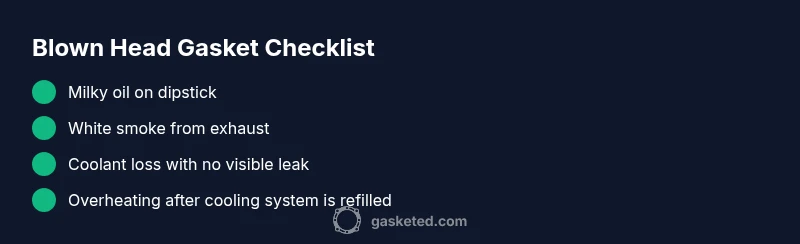
A blown head gasket often presents a cluster of indicators rather than a single magic symptom. Look for a combination of signs: milky or frothy oil on the dipstick or under the oil cap, persistent white exhaust smoke, unexplained coolant loss with no visible leak, overheating even after cooling, and coolant/oil mixing seen in the reservoir or oil itself. You may also observe engine misfires or rough running due to improper sealing, bubbles in the radiator or overflow tank, and unexplained pressure in the cooling system. While these clues strongly suggest gasket issues, they can overlap with other cooling or head-related faults, so confirm with testing.
Keep in mind that some signs develop gradually. A car could exhibit only modest overheating early on, then escalate. A careful, repeatable check plan helps you avoid false positives or misdiagnosis. Using a systematic approach also reduces the risk of unnecessary parts replacement. For readers of Gasketed, aligning symptoms with a tested diagnostic flow is the best path to an accurate answer without jumping to conclusions.
Safe At-Home Checks You Can Do
You don’t need to pull the engine to start a diagnosis, but you should avoid aggressive tests. Begin with noninvasive checks that reveal whether fluids are mixing or there are pressure anomalies. Inspect the engine oil for a milky layer, inspect the coolant for oil droplets or sheen, and check for white smoke on startup. Visually inspect the radiator and hoses for leaks or unexplained pressure. A simple coolant test (rectifying color indicators or a test strip) can help identify cross-contamination. Do a careful coolant level check over several days to see if consumption is consistent. If you see any cross-contamination or persistent signs, plan for further tests or professional assessment.
Before any test, ensure the engine is cool and the battery is disconnected if you’re working near bare metal. Wear eye protection and gloves. Document the signs you observe so you can compare them after testing and communicate your findings to a shop if you need to escalate. These checks empower DIYers to decide whether a professional replacement is warranted without guessing or risking further harm to the engine.
Diagnostic Tests to Confirm a Blown Head Gasket
To confirm a gasket failure, you’ll want objective measurements beyond visual cues. A compression test across all cylinders will reveal inconsistent compression suggesting a seal breach. If compression readings are uneven, a leak-down test can locate where pressure escapes and clarify whether the gasket or another component causes the issue. A combustion gas test in the cooling system can detect exhaust gases in the coolant, another strong indicator of gasket breach. Finally, inspecting oil for coolant intrusion or performing a radiator pressure test can round out the assessment. All of these tests should be performed with the car on a stable surface and the cooling system depressurized per the tools’ instructions. If your tests indicate gasket failure, cease driving and arrange professional replacement; continuing to drive can cause warping or piston damage.
Interpreting Test Results and Next Steps
Interpreting results requires matching symptoms with the tested outcomes. Consistent low compression in multiple adjacent cylinders, coolant in oil, and exhaust gases in coolant collectively point toward a blown head gasket. Isolated low compression in one cylinder might signal a valve or piston issue rather than a gasket failure, but it still warrants professional verification. If tests confirm a gasket failure, the next steps typically involve a professional repair due to required engine machining, head resurfacing, and precise torque specifications to avoid future leaks. If tests are inconclusive, consider repeat testing or seeking a second diagnostic opinion. Being thorough now saves time and money later.
Prevention, Safety, and When to Call a Pro
Prevention centers on maintaining proper cooling system health, avoiding overheating, and following torque specs during gasket installation. Regular coolant changes, proper thermostat operation, and radiator maintenance reduce gasket heat stress. Safety matters: never open hot cooling systems, and avoid running a car with obvious signs of a gasket problem. When uncertain, call a professional early rather than risking catastrophic engine damage. The experience of a trained technician can also clarify whether a simple gasket or broader engine work is required.
The Gasketed team recommends erring on the side of caution: if you observe persistent cross-contamination, overheating, or signs of combustion gases in the cooling system, arrange professional evaluation promptly to prevent costly engine repairs later.
Data and Expert Insight: What to Know Before You Replace
In practice, diagnosing a blown head gasket requires combining symptom analysis with objective tests. Gasketed Analysis, 2026 emphasizes that symptoms are not a sole determinant; confirmed tests are essential for accurate diagnosis before repair. This section highlights the value of a methodical workflow: verify cross-contamination, measure cylinder seal, and confirm exhaust gas intrusion. Understanding that data drives the decision helps you plan a proper repair path and set realistic expectations for time and cost. This context is particularly important when considering professional replacement versus DIY gasket material choices and the tradeoffs in machine work and head resurfacing.
Steps
Estimated time: 1-2 hours
- 1
Safety and prep the vehicle
Park on a level surface, let the engine cool, disconnect the battery, and gather PPE. Review the owner manual for safety cautions. This step ensures you won’t burn yourself or accidentally shock the electrical system during checks.
Tip: Always work with the engine cool and use a catch pan for any potential spills. - 2
Gather the right tools
Collect a compression tester, leak-down tester, coolant tester, dipstick extractor, and basic hand tools. Having a torque wrench on hand helps if you remove components for more thorough testing later.
Tip: Check your tester manuals for correct adapters and dead-head test procedures. - 3
Perform a cold compression test
With the engine cool, perform a compression test across all cylinders. Record numbers and look for uniformity. Large deviations signal a ring, valve, or gasket-related problem rather than a simple fuel issue.
Tip: Run all cylinders in the same order to spot localized leaks. - 4
Do a leak-down test (if needed)
If compression results are suspect, perform a leak-down test to locate the leak path. Listen for air escaping through the radiator neck, coolant reservoir, or oil filler to map where the problem originates.
Tip: Ensure the engine is at top dead center for consistent readings. - 5
Check for cross-contamination
Inspect the oil for a milky appearance and check coolant for oil traces. Cross-contamination strongly supports gasket failure and helps narrow down the next steps.
Tip: Document observations with photos for reference. - 6
Decide on the next step
If tests indicate a gasket failure, arrange professional replacement due to machining, head resurfacing, and torque precision required. If inconclusive, seek a second opinion or schedule further testing.
Tip: Do not continue driving if there is any risk of severe engine damage.
Diagnosis: Engine overheating with coolant loss and unusual oil condition
Possible Causes
- highBlown head gasket allowing coolant into combustion chamber or oil passages
- mediumCracked cylinder head or engine block
- lowFailed intake/exhaust gasket causing cross-flow
Fixes
- easyPerform a compression test on all cylinders to assess cylinder sealing
- mediumConduct a leak-down test to locate the leak path and confirm gasket failure
- mediumIf tests indicate gasket failure, stop driving and arrange professional head gasket replacement
Common Questions
What are the most common signs of a blown head gasket?
Milky oil on the dipstick, white smoke from the exhaust, unexplained coolant loss, and persistent overheating are common indicators. These signals together strongly suggest a gasket breach and deserve professional testing.
Milky oil, white smoke, coolant loss, and overheating commonly indicate a blown head gasket; get a professional test to confirm.
Can you drive a car with a blown head gasket?
No. Driving with a suspected blown head gasket can cause severe engine damage, including warped heads and damaged cylinders. If you suspect a gasket issue, avoid driving and arrange professional inspection.
Avoid driving if you suspect a gasket issue; it can cause serious engine damage.
How accurate are DIY tests for head gasket failure?
DIY tests can indicate issues but are not definitive. Use them as a screening step and rely on professional tests like compression, leak-down, and combustion-gas tests for confirmation.
DIY checks help, but use professional tests for a definite diagnosis.
What should you do immediately if you suspect a blown head gasket?
Shut off the engine, let it cool, and avoid driving. Check coolant and oil for contamination, note symptoms, and plan a diagnostic path or tow to a mechanic.
If you suspect a gasket, stop driving, cool down, and get a proper diagnosis.
How long does head gasket replacement typically take?
Replacement requires engine machining in most cases and varies with vehicle design. It can take from a few days to longer, depending on shop capacity and parts availability.
Replacement can take several days, depending on the vehicle and shop workload.
Are other engine components affected by a blown head gasket?
Yes. A gasket issue can affect oil passages, coolant channels, and cylinder head integrity, potentially causing warping or misalignment if not addressed.
Gasket issues can impact oil systems and the head, so comprehensive assessment is important.
Watch Video
Key Takeaways
- Identify signs early to prevent engine damage
- Use a structured diagnostic flow, not guesswork
- Don’t drive with suspected gasket failure
- Professional replacement may be required for accuracy
- Maintain cooling system to reduce gasket stress