Is It Safe to Drive with a Leaking Head Gasket? Practical Guide
Urgent guidance for DIYers: can you drive with a leaking head gasket? Learn signs, immediate steps, safe diagnostics, and how to protect your engine from costly damage.


Is It Safe to Drive with a Leaking Head Gasket? Not safe. A head gasket leak can rapidly worsen, leading to coolant loss, oil contamination, and engine overheating. If you notice overheating, white smoke, milky oil, or visible coolant loss, pull over safely and avoid driving. Tow the car to a qualified shop immediately to prevent catastrophic damage.
What a head gasket does and why leaks matter
The head gasket sits between the engine block and cylinder head, sealing the coolant passages and oil channels from combustion. A leak can allow coolant to mix with oil, or combustion gases to escape into the cooling system, causing pressure changes and overheating. According to Gasketed, even small external leaks can escalate quickly, threatening the cylinder head, engine block, and long-term reliability. Factors like heat, poor cooling, and improper torque can worsen a budding leak. Understanding the gasket’s role helps DIYers recognize why a leak is more than a minor drip. The safest approach is to treat any suspected leak as a potentially serious issue and plan a diagnostic path with professional help when needed.
Beyond the drama of a single puddle, a leaking head gasket disrupts core performance: it can reduce compression, lower coolant efficiency, and contaminate oil, all of which degrade lubrication and heat removal. If you’re chasing symptoms like frequent overheating, unexplained coolant loss, or odd oil appearances, you’re not alone—head gasket issues are one of the most intimidating gasket-related repairs for homeowners. The key is to act quickly, but safely, to avoid escalating damage and costs.
Is it ok to drive with a leaking head gasket?
No. Driving with a confirmed or suspected head gasket leak risks rapid engine damage, including warped heads, cracked cylinders, and contaminated oil. In practice, even a small external leak can lead to overheating during a city drive or a long highway run, and internal leaks can compromise compression and power. If you’re already noticing coolant loss or overheating, move the vehicle only to a safe location and arrange towing. The safest plan is to avoid driving and get a professional diagnosis as soon as possible. The cost and complexity of a gasket replacement increase with extended driving, heat cycles, and cooling-system neglect. If you must move the car short distances, keep engine speed low, monitor gauges closely, and avoid high-load conditions. The Gasketed team emphasizes prioritizing safety and professional inspection over “one more mile.”
Common signs of a head gasket leak
- Sudden overheating or rising temperature gauge without obvious cause
- Milky, frothy, or contaminated oil on the dipstick or under the oil cap
- White smoke or blue-taint in exhaust, especially after startup
- Persistent coolant loss with no visible external leak or puddle
- Bubbles or froth in the coolant reservoir or radiator
- Oil and coolant both appearing contaminated or mixing in the engine bay
These symptoms often appear together, but even a single sign warrants a professional check. Don’t rely on guessing—head gasket failures are expensive when ignored and can lead to multiple other failures.
How driving can worsen the damage
Heat cycles from overheating attack the cylinder head and gasket interface, potentially warping the head or cracking the engine block. Oil that’s contaminated with coolant loses its lubricating properties, accelerating bearing wear. Internal leaks can reduce compression, leading to misfires and poor fuel economy. External leaks may spill coolant onto hot exhaust, causing steam and potential fire risk. Each mile driven with a leak compounds the risk of catastrophic failure and expensive repairs. Early action, not escalation, is the best defense against costly outcomes.
Safe diagnostic steps you can take (without starting the engine)
- Visually inspect for obvious external coolant leaks around hoses, radiator, water pump, and the radiator cap. Look for wet spots, crusty residue, or green/orange coolant traces.
- Check coolant reservoir levels when the engine is cold; note if the level drops quickly over hours or days.
- Inspect engine oil for a milky, chocolate-brown emulsion that can indicate coolant mixing. A simple dipstick check can reveal this soon.
- Observe exhaust for persistent white smoke on startup; note any unusual odors that could indicate coolant burning.
- Do not attempt to pressurize the cooling system or remove the radiator cap while hot. If you must add coolant, only do so when completely cold and with the cap removed slowly under controlled conditions.
If you notice any of these signs, do not drive further. Schedule a tow to a qualified shop and plan a thorough diagnostic to confirm whether the gasket is the culprit.
Immediate steps if you suspect a leak
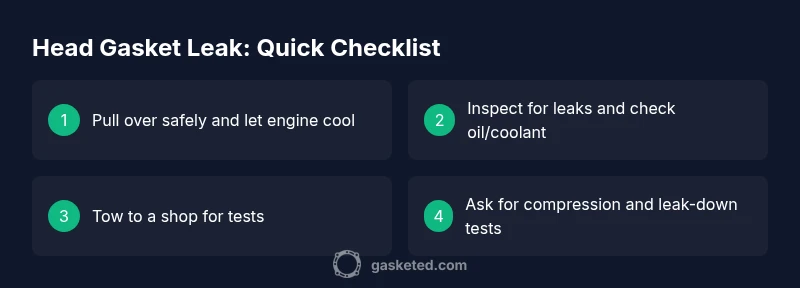
- Safely pull over to a secure location and turn off the engine. Allow the engine to cool before inspecting further.
- Check for visible leaks and monitor the temperature gauge or warning lights. If the gauge climbs or you see steam, do not restart or drive again. A tow is warranted.
- Check oil level and appearance. Milky oil means coolant has entered the lubrication system, which demands immediate professional service.
- Do not remove the radiator cap when hot; if you must add coolant, use only the cold-season ratcheting step after cooling down completely.
- Contact a tow service and arrange transport to a qualified mechanic who can perform a cooling-system pressure test, a compression test, and a leak-down test to confirm gasket integrity.
Taking these precautions helps minimize damage and protects your engine’s long-term health.
What to expect at the shop
A qualified shop will perform a suite of tests to confirm a head gasket leak: a compression or leak-down test to assess cylinder sealing, a cooling-system pressure test to identify external leaks, a chemical test to detect coolant in the oil, and a visual inspection of oil, coolant, and exhaust. If the gasket is confirmed leaking, the repair typically involves replacing the head gasket (and often resurfacing the head and sometimes replacing associated components). The repair duration depends on engine design, accessibility, and the extent of damage, but be prepared for a significant repair window and a plan for labor costs, parts, and potential machine shop work.
DIY attempts here are risky; gasket replacement is a complex, multi-step job requiring specialized tools and torque specifications. The Gasketed team advises focusing on safety and professional repair rather than experimental home fixes when a leak is suspected.
Prevention and maintenance tips
- Regularly inspect the cooling system, hoses, clamps, and the radiator for wear and leaks. Address small leaks promptly before they worsen.
- Maintain proper coolant levels and use the coolant type recommended by your vehicle manufacturer. Flush the cooling system at intervals specified by the owner’s manual.
- Monitor oil quality and consistency; replace engine oil and filter on schedule to prevent contaminants from compromising lubrication.
- Avoid overheating by ensuring your radiator fans operate correctly, thermostat functions, and water pump is timed with the belt drive.
- Schedule proactive engine inspections if you notice any early symptoms, even if they seem minor. Proactivity saves money and prevents downtime.
Quick recap for drivers
Head gasket leaks are serious and will not get better on their own. Prioritize safety, limit driving, and obtain a professional diagnosis to plan the repair, protect engine integrity, and minimize repair costs. Remember that the sooner you recognize and act on the signs, the better your long-term engine health and vehicle reliability will be.
Steps
Estimated time: 90-120 minutes
- 1
Pull over safely and let the engine cool
Find a safe spot, turn on hazards, and power down the engine. Let it cool completely before inspecting for leaks or opening the hood. Do not restart or drive while hot.
Tip: Use gloves and be mindful of hot surfaces; cooling takes time, and rushing can cause burns. - 2
Check for visible leaks and monitor gauges
Look for damp spots around hoses, radiator, and the engine bay. Check the temperature gauge and listen for unusual sounds. Note any unusual smells or steam, as these indicate pressure and heat issues.
Tip: Take photos of any puddles or discoloration to show the mechanic. - 3
Inspect oil and coolant compatibility
Inspect the oil on the dipstick; milky or frothy appearance suggests coolant intrusion. Check the coolant reservoir level; if it’s rapidly dropping, it indicates a leak or poor cooling.
Tip: Do not attempt to seal a suspected leak with additives; such products can complicate diagnostics. - 4
Arrange towing to a qualified shop
Do not drive to the shop if you suspect a gasket leak or if the car is overheating. Call a tow service and provide the shop with your car’s symptoms and any warning lights.
Tip: If you must call a tow, ask for a recovery service with proper vehicle handling and towing safety. - 5
Prepare for diagnostic tests at the shop
Ask the mechanic to perform a compression or leak-down test, a cooling-system pressure test, and a chemical test for coolant in the oil to confirm a gasket issue. Bring any maintenance records and notes from your observations.
Tip: Write down the sequence of symptoms and when they started to help the tech pinpoint the problem.
Diagnosis: Engine overheats quickly or shows coolant/oil contamination with suspected gasket leak
Possible Causes
- highActual head gasket leak (internal or external)
- mediumExternal coolant leak from radiator, hoses, or water pump
- lowLow coolant due to prior leak or cap failure
Fixes
- easySafely pull over and stop engine; do not drive further until inspected
- easyVisually inspect for leaks and monitor coolant/oil levels
- easyTow to a qualified shop for mechanical diagnosis and tests (compression/leak-down)
- mediumAt the shop, request a thorough head gasket test and plan replacement if needed
Common Questions
Is it safe to drive to a shop if the car only loses a small amount of coolant?
Small coolant loss can quickly become a larger issue if the leak worsens or if overheating occurs. If you must move the vehicle, do so only to reach safety and a nearby shop, and avoid highway speeds or heavy loads. Always prioritize a tow for a proper diagnosis.
Small coolant loss can quickly become a bigger problem. If in doubt, tow to a shop and avoid driving.
What are the early signs of a blown head gasket?
Look for overheating, milky oil, white exhaust, and sudden coolant loss. You may also notice loss of power or rough idling. These symptoms warrant immediate testing by a qualified mechanic.
Overheating, milky oil, white exhaust, and sudden coolant loss are warning signs that should be checked by a pro.
Can a leaking head gasket be repaired without removing the engine?
In some cases a gasket can be replaced without full engine removal, but many modern engines require head removal and resurfacing for a proper fix. The exact approach depends on engine design and damage extent.
Sometimes repair without removing the engine is possible, but often the head must come off for a proper seal.
Will a leak always cause the engine to overheat?
Not always. A leak may be slow and not immediately cause overheating, but it raises the risk over time and with driving conditions. Any leak should be treated seriously and diagnosed promptly.
Leaks raise the risk of overheating, even if it isn’t immediate. Treat it seriously and get it checked.
Should I try to use a gasket sealant as a temporary fix?
Sealants can provide a temporary stopgap in some external leaks but are not a fix for a real gasket failure. They can complicate diagnostics and may fail under heat, so rely on a professional repair instead.
Sealants aren’t a real fix for a gasket; they can hide the problem and complicate repairs. Get a professional diagnosis.
How long does a head gasket replacement typically take?
Time varies by engine design and shop workload. Replacing a head gasket is a major job, often taking several hours to a day or more, depending on head resurfacing needs and component replacements.
Replacement times vary, often spanning several hours to a full day depending on the engine and parts.
Watch Video
Key Takeaways
- Avoid driving long distances with a suspected gasket leak.
- Tow to a shop for definitive diagnosis and repair planning.
- Expect tests like compression and leak-down to confirm gasket integrity.
- Prevent future leaks with regular coolant maintenance and inspections.