Why Do Head Gaskets Blow on Subarus? Causes, Fixes, and Prevention
Learn why head gaskets fail on Subaru engines and how to diagnose, repair, and prevent future failures with practical, DIY-friendly guidance.


The most common cause behind head gasket failure on Subarus is overheating caused by cooling-system issues or coolant leaks, compounded by age and repeated thermal cycles. If you’re asking why this happens in the Subaru family, plan for a full gasket replacement once you’ve addressed underlying cooling problems. Stop driving if you suspect a leak and start a systematic diagnosis.
Why the issue is a recurring concern in Subarus
What many DIYers ask begins with the question why do head gaskets blow on subarus. The short answer is a combination of design realities, cooling-system stress, and wear over time. Subaru's boxer engines circulate coolant through tightly packed passages where the head, block, and exhaust boundaries meet. If overheating or coolant leaks occur, the gasket endures repeated thermal cycling that weakens the seal. According to Gasketed, these failures are often the result of a cascade rather than a single bad part. The practical takeaway is to diagnose cooling problems early, address them decisively, and perform the gasket repair with proper machining and bolt replacement when needed. This article lays out the main culprits, how to spot them, and what to do next, with practical, DIY-friendly guidance.
Subaru engine design and the head gasket interface
Subaru's flat-four and flat-six engines place the head gasket in a location that experiences both oil and coolant pressures, alongside intense thermal cycles. The unique layout means the gasket must seal multiple coolant channels that cross through the head and block. When seals fail, oil can mix with coolant, or coolant can contaminate oil, signaling a gasket breach. Modern gaskets use composite materials and coatings designed for heat and pressure, but age, overheating, and improper assembly can compromise them. Because the head surface must be perfectly flat, even minor warping can destroy the seal. These design traits contribute to a higher maintenance burden if cooling or timing components aren’t maintained. Understanding the geometry helps homeowners avoid common mistakes during diagnosis and repair.
Common culprits that trigger gasket breach
- Overheating due to cooling-system failure (leaking radiator, bad thermostat, or failing water pump) can push the gasket beyond its sealing capacity.
- Coolant leaks and poor circulation reduce cooling efficiency, increasing the risk of local hot spots near the gasket.
- Improper reassembly or insufficient head-bolt replacement during previous work can leave the seal under uneven load.
- Warped heads or decks caused by prior overheating can render a gasket unable to seal correctly.
- Contaminated oil or coolant signals gasket failure and can accelerate wear of adjacent seals and passages.
Early signs to watch for
Recognizing the warning signs early helps prevent catastrophic damage. Look for ongoing overheating indicators, milky oil on the dipstick, or a sludgy coolant reservoir. White exhaust smoke and unexplained coolant loss without visible leaks are telltale signs. If coolant or oil become contaminated with each other, or if you notice a sweet smell in the exhaust, a gasket issue is likely. In Subarus, a symptom cluster often includes persistent misfires or rough running on one or more cylinders, especially after a hot run. Always compare oil and coolant conditions side-by-side to establish cross-contamination.
How to safely diagnose without full disassembly
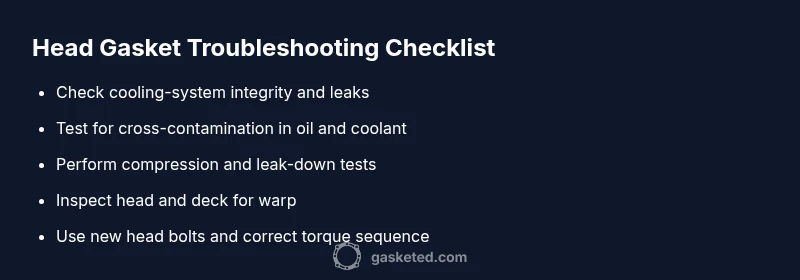
Begin with non-destructive checks first: inspect for external coolant leaks and verify radiator, hoses, and clamps are in good condition. Perform a compression or leak-down test to assess cylinder sealing, then analyze coolant for exhaust gas using a certified test kit. A chemical test can detect trace combustion gases in the coolant, indicating a breach. Inspect oil visually for a milky appearance, which suggests coolant mixing. If these tests point toward a gasket issue, plan further steps carefully, recognizing that internal engine work may be required.
Safety and prevention before you begin
Safety comes first when diagnosing head gasket issues. Wear eye protection, gloves, and a respirator if you’re dealing with coolant additives or exhaust gases. Depressurize the cooling system and disconnect the battery before any disassembly. Maintain a clean workspace to prevent debris from entering sensitive passages. Remember that improper handling can cause further damage; when in doubt, pause and consult a repair manual or a professional.
When DIY makes sense vs. when to call a professional
If you’re comfortable with basic automotive repair and have access to a proper torque wrench, a head gasket replacement is within reach for experienced DIYers who are prepared for a lengthy process. Subarus often require precision machining and head resurfacing; neglecting this step can lead to repeat failure. For most homeowners, hiring a shop with a dedicated head-gasket service is the safer option, especially if the head or block shows warpage or if proper equipment is unavailable. Use this guide to assess your skill level and the job’s scope before proceeding.
Step-by-step repair overview
A head gasket replacement involves several critical phases: removing engine components, cleaning mating surfaces, inspecting for damage, installing new gaskets with a correct torque pattern, and verifying all systems function post-repair. The process often requires machining to restore flatness, replacing related seals, and resealing coolant passages. Plan for a long job, ensure compatible replacement parts, and follow the manufacturer torque specs precisely. Maintenance afterward—cooling-system service, valve cover gaskets, and oil changes—helps prevent recurrence.
Prevention: long-term maintenance to avoid recurrence
Routine cooling-system maintenance is the best defense against gasket failures. Regularly replace worn hoses, test the thermostat and water pump, and keep coolant fresh. Clean or replace radiator caps and ensure proper coolant concentration per the service manual. Regular oil analysis can catch early signs of contamination. For Subaru engines, consistent inspection of the cooling system and timely repairs reduce the risk of gasket breaches and keep the engine running reliably.
Steps
Estimated time: 8-12 hours
- 1
Confirm symptoms and safety
Verify overheating signs and coolant/oil contamination before any disassembly. Remove power sources and secure the vehicle to prevent accidental starts.
Tip: Document all symptoms and take photos for reference during reassembly. - 2
Gather tools and protective gear
Assemble a clean workspace, torque wrench, service manual, and replacement gasket kit. Have fresh coolant and oil ready. Safety first.
Tip: Use a magnetic tray to keep fasteners organized and labeled. - 3
Drain fluids and prepare the engine
Carefully drain coolant and engine oil, disposing of them properly. Relieve pressure and disconnect the battery.
Tip: Label hoses to simplify reassembly; wear eye protection to prevent splashes. - 4
Remove accessories and access the head
Detached belts, manifolds, and other components to access the cylinder head. Keep track of removed parts and gaskets.
Tip: Work methodically to avoid losing small hardware inside the engine bay. - 5
Inspect mating surfaces
Check the head and block surfaces for warpage, scoring, or debris. Use a straight edge and feeler gauges as per the service manual.
Tip: If warping is detected, plan for head resurfacing by a machine shop. - 6
Install new gasket set and hardware
Apply the new gasket according to manufacturer torque specs and sequence. Replace studs/bolts with new ones if recommended.
Tip: Follow the exact torque pattern; uneven seating will compromise the seal. - 7
Reassemble and fill fluids
Reassemble all components, refill coolant and oil, and purge air from the cooling system. Ensure proper fluid levels.
Tip: Bleed the cooling system correctly to avoid air pockets. - 8
Test, verify, and monitor
Start the engine, perform a pressure test, and monitor for leaks and overheating. Check for exhaust in coolant and confirm no cross-contamination.
Tip: Run the engine at operating temperature and monitor for changes over time.
Diagnosis: Engine overheating, milky oil, or coolant/oil contamination with signs of exhaust in the coolant
Possible Causes
- highOverheating due to cooling-system failure (leaking radiator, failed thermostat, or water pump)
- mediumHead gasket wear from aging and thermal cycles
- lowCoolant intrusion into oil or oil intrusion into coolant from degraded seals
Fixes
- easyInspect and repair cooling-system leaks; replace faulty components
- easyPerform a compression or leak-down test to confirm gasket failure
- hardSchedule a full head gasket replacement with machine-shop resurfacing if needed
Common Questions
What are the most common signs of a blown head gasket in a Subaru?
Common signs include overheating, milky oil, coolant loss without external leaks, exhaust smoke, and occasional misfires. A coolant/oil cross-contamination signal is especially telling in Subarus.
Look for overheating, milky oil, and coolant in the oil. If you notice cross-contamination, a head gasket issue is likely.
Can a head gasket be repaired without removing the engine?
In most cases, a blown head gasket requires removing the cylinder head for inspection and replacement. Some specialized cases may allow less invasive repairs, but reliability is often best with full replacement.
Usually the head must be removed for a proper repair, though some limited cases exist.
How long does Subaru head gasket replacement take?
Replacement is a substantial job that can take a full day or more in a shop, depending on head condition, resurfacing needs, and other repairs needed. Planning for downtime is important.
It's a lengthy job that can take a full day or more in a shop.
Is it safe to drive a Subaru with a suspected blown head gasket?
Driving a car with a suspected gasket issue risks overheating and further engine damage. If overheating or contamination is suspected, stop driving and arrange professional inspection.
If you suspect a gasket problem, stop driving and get it checked.
What maintenance can prevent head gasket failures in Subarus?
Regular cooling-system service, timely replacement of worn hoses and water pump, and using the correct coolant type can reduce failure risk. Regular inspections help catch problems early.
Maintain the cooling system and replace worn parts on schedule.
Watch Video
Key Takeaways
- Diagnose cooling issues before gasket work
- Subaru boxer engines demand precise resurfacing if needed
- Plan for professional help if warping is present
- Address underlying causes to prevent recurrence
- Maintain cooling system for long-term reliability