Jeep Wrangler Head Gasket Replacement Cost: A 2026 Guide
Explore the Jeep Wrangler head gasket replacement cost in 2026. Learn drivers of price, realistic ranges, how to estimate, and tips to save without sacrificing reliability.


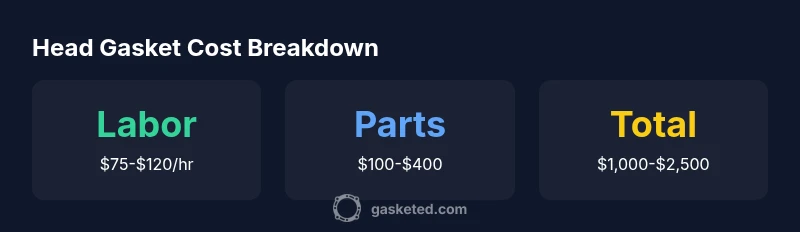
Across Wrangler models, head gasket replacement costs typically fall between $1,000 and $2,500, depending on engine variant, local labor rates, cooling-system work, and whether timing components or water pumps must be replaced. Regions with higher shop rates or the need for extra parts push costs toward the upper end. Always obtain an itemized quote before any work.
Understanding what a head gasket does and why Wrangler costs vary
The head gasket is a critical seal between the engine block and cylinder head. When it fails, coolant and combustion gases can mix, leading to overheating, white smoke, or poor engine performance. On a Jeep Wrangler, the specific cost to replace the head gasket depends on engine family (for example, common V6 and turbocharged variants), the condition of the cylinder head, and whether ancillary cooling-system or timing components require attention. The Wrangler's engine bay layout and access constraints influence labor time, which is a major portion of the bill. In practice, even identical gasket kits can yield different final numbers because labor rates and shop fees differ by region, and some engines demand extra steps like head resurfacing or timing-chain work. For DIYers, the perceived complexity hides a precision task: proper torque, gasket seating, and coolant system bleed are essential for a reliable repair. As Gasketed analysis shows, the more components touched during the job, the higher the total price will be, especially if the cooling system, water pump, or timing parts require replacement.
Key cost drivers for Wrangler head gasket replacement
Price hinges on several core drivers. Engine variant matters: newer, more complex engines with interference designs and additional cooling features tend to push labor hours up. Labor rates vary widely by region and shop, and add-on services (coolant flush, head resurfacing, valve adjustment, timing chain/belt work) can dramatically inflate the bill. OEM gasket kits cost more than aftermarket options but may come with better fit and longer-term reliability. In many Wrangler repairs, failure to address adjacent components (water pump, thermostat, radiator hoses) leads to a second service visit, increasing both labor and parts. Preparation matters too: ensuring the head is flat, correcting warped surfaces, and testing for leaks between the head and block all influence the final cost. Finally, diagnostic work prior to replacement can reveal secondary issues (e.g., warped cooling channels) that require attention and add to the total.
How to get a reliable estimate and compare quotes
To avoid surprises, request itemized estimates that separate labor, parts, and shop fees. Ask the shop to delineate whether coolant flush, new water pump, timing components, or head resurfacing are included. Seek a pre-repair diagnostic (compression and leak-down tests) to confirm gasket failure rather than replacing parts based solely on symptoms. When comparing quotes, ensure all quotes assume the same scope of work; otherwise, you may be comparing apples to oranges. If a shop quotes a significantly lower price, probe for potential corners cut (e.g., reused gaskets, skipped tests, or omitted ancillary parts). Reading customer reviews about Wrangler-specific jobs can provide practical insights on repair quality and aftercare.
Wrangler engine families and the cost spectrum
Wrangler models span several engine configurations, including widely used V6 and turbocharged variants. In broad terms, the total cost is influenced by engine complexity and the need for supporting repairs. A typical range to anticipate is modest for basic gasket work with no added components, but costs can escalate when repairs require a full coolant-system overhaul, timing components, or head resurfacing. The best-practice approach is to obtain multiple quotes from independent shops and an authorized dealer to compare not only price but also estimated timeframes and parts quality. While the headline cost is important, the reliability and longevity of the repair depend on how thoroughly the job is executed and whether adequate cooling-system maintenance is included.
Cost-reduction strategies and maintenance tips
To minimize the chance of future gasket issues, maintain cooling system health with regular coolant changes and leak checks. Use the manufacturer-approved coolant type and adhere to torque specs during reassembly. When feasible, opt for OEM gasket kits for higher compatibility and reduced risk of leaks. Some owners postpone major repairs by addressing early signs of head gasket failure (minor coolant loss, small bubbles in the radiator, or occasional overheating) with a professional inspection and preventive maintenance plan. Finally, budgeting for a contingency (roughly 10-15% of the quoted price) can prepare you for unexpected ancillary work identified during the repair.
Practical next steps for Wrangler owners
If you suspect a head gasket issue, schedule a diagnostic with at least two shops that routinely handle Wrangler engines. Request a written, itemized quote and ask about inclusions such as coolant, oils, and test results. Plan for possible downtime by arranging a loaner vehicle if offered, or scheduling the repair during a period with lower demand to reduce costs. By approaching the repair with a structured plan and clear expectations, Wrangler owners can secure a reliable fix without overpaying.
The value of a well-executed gasket replacement
A properly performed head gasket replacement restores engine integrity, prevents coolant contamination of oil, and reduces the risk of catastrophic failure. The investment should be weighed against the engine’s overall age and condition. For many Wrangler owners, the goal is not just to fix a gasket, but to protect adjacent components and maximize the remaining life of the vehicle. A transparent, itemized quote, careful selection of parts, and a thorough pre- and post-repair diagnostic are keys to achieving that outcome.
Estimated cost components for Wrangler head gasket replacement
| Component | Cost Range | Notes |
|---|---|---|
| Labor hours | 6-12 hours | Depends on engine and repair complexity |
| Labor rate | $75-$120 per hour | Regional variation in pricing |
| Gasket kit | $100-$400 | OEM vs aftermarket choice |
| Cooling system work | $50-$200 | Coolant flush, hoses, radiators |
| Additional parts | $100-$500 | Water pump, timing components |
Common Questions
What factors most affect Wrangler head gasket replacement cost?
Labor time, engine design, parts quality, and region all play major roles. Additional work like coolant system service or timing components can add to the total. Always request an itemized quote to see exactly what is included.
Labor time, engine type, and added parts drive the cost. Ask for an itemized quote to understand what’s included.
Is it worth repairing a Wrangler engine if the head gasket fails?
If the engine is relatively young and in otherwise good condition, replacing the head gasket is often cost-effective compared with a full engine replacement. For high-mileage engines with multiple failures, a broader evaluation may be wise.
If the engine is in good shape otherwise, gasket replacement is usually worth it. For older engines with many issues, consider a full assessment.
How long does a head gasket replacement take on a Wrangler?
Most Wrangler head gasket jobs take about 1-2 days in a shop, depending on access, head condition, and whether extra tasks are required. Complex cases can extend timeline.
Expect about one to two days in a typical shop; longer if there are complications.
Can a leak-down test help before replacing the head gasket?
Yes. A leak-down or compression test helps confirm gasket failure and rule out other issues, ensuring you don’t pay for unnecessary repairs.
A leak-down test can confirm gasket failure and prevent unnecessary work.
Are there cheaper alternatives like stop-leak products for head gasket issues?
Stop-leak products may offer a temporary fix but are not reliable for a long-term gasket repair. A proper gasket replacement is typically the safer, longer-lasting solution.
Stop-leak is usually a temporary fix; a proper gasket replacement is more reliable.
Should I use OEM or aftermarket gaskets for a Wrangler?
OEM gaskets offer proven compatibility, but quality aftermarket options can be reliable if purchased from reputable brands. Discuss options with your mechanic and consider warranty coverage.
OEM is often safest, but reputable aftermarket options can be fine with warranty.
“Head gasket replacement is a major repair where labor time and engine layout drive the price. An itemized quote helps you avoid surprises, and including related cooling-system work is common practice for a durable fix.”
Key Takeaways
- Understand cost ranges before you commit
- Get itemized quotes to compare apples-to-apples
- Factor in engine variant and regional labor rates
- Plan for potential extras like timing components or water pump
- Prioritize a thorough diagnostic to avoid hidden costs