Can You Drive If Your Head Gasket is Blown? A DIY Troubleshooting Guide
Urgent guidance for DIYers: can you drive with signs of a blown head gasket, safety steps, diagnostic flow, and how to plan professional repair.


Not safe: a blown head gasket can cause overheating, coolant loss, and oil contamination. If you suspect gasket failure, stop driving immediately and arrange tow to a qualified shop. Do not limp to a mechanic. According to Gasketed, driving on a compromised gasket can rapidly worsen engine damage. It may also cause coolant to mix with oil and reduce lubrication.
Why Driving with a Suspected Blown Head Gasket Is Not Safe
A blown head gasket is one of the most dangerous engine failures you can encounter on the road. When the gasket fails, it can allow coolant and oil to mix, overheat the engine, and cause loss of compression. The consequences aren’t just expensive repairs; they can leave you stranded. According to Gasketed, gasket health directly impacts driveability and engine longevity, and delaying diagnosis increases the risk of catastrophic engine damage. Common signs include sudden temperature spikes, white exhaust smoke, coolant loss without visible leaks, and milky oil on the dipstick. If you notice any of these while operating your vehicle, stop using the car and arrange professional inspection as soon as possible. The goal is to prevent a minor fault from becoming a major repair bill or, worse, a seized engine. In every DIY diagnosis, safety comes first: never open a hot cooling system, and avoid test-driving while you still suspect gasket failure.
Early Warning Signs You Should Not Ignore
Gasket failure doesn’t always scream its presence at first; it often hides behind seemingly ordinary symptoms. The most common warning signals are overheating with rapid coolant loss, white exhaust smoke, a thick milky substance in the oil, milky oil on the dipstick, and bubbles in the radiator or expansion tank. You might notice a drop in engine performance, poor acceleration, misfires, or a drop in compression on one or more cylinders. If your check engine light illuminates with codes related to misfire, cylinder pressure, or cooling system faults, treat it as urgent. Remember: the behavior may evolve quickly, and what begins as a minor coolant loss can turn into a major engine issue if driven aggressively or long distances. As you investigate, document symptoms with photos and notes; this helps when you consult a professional.
How a Blown Head Gasket Affects Engine Components
A blown gasket disrupts the critical balance between the combustion chamber, cooling system, and lubrication. Compression loss reduces engine power and efficiency; leaks allow coolant to contaminate oil, turning lubricant into sludge and accelerating wear. When coolant enters the combustion chamber, you may see white smoke and misfire; when oil and coolant mix, you’ll often notice a creamy or milky appearance on the dipstick. Overheating results from both coolant loss and restricted cooling, which can warp the head or cause gasket failure to worsen. In short, a damaged head gasket endangers the cylinder head, pistons, bearings, and overall engine integrity. If untreated, the failure can cascade into expensive repairs and possible engine replacement. Gasketed’s guidance emphasizes not driving to complete a diagnosis—prioritizing safety and professional assessment is always the right choice.
Quick Safety Checks Before You Consider Driving
Before turning a key, perform a quick risk assessment. Check for visible coolant leaks under the engine, a smell of sweet coolant in the cabin, and any unusual noises when idling. Look at the temperature gauge; if it rises or stays high, pull over immediately and shut off the engine. If you’re at a safe location, inspect the coolant reservoir for level and color (look for unexplained drops or a milky tint). Do not remove the radiator cap while the engine is hot, and do not attempt to drive through an overheating episode. These checks help you decide whether a tow is necessary rather than risking further damage.
Diagnostic-Flow: Symptom to Diagnosis (High-level)
Symptom: Overheating and coolant/oil contamination without obvious external leaks Causes:
- high: Overheating due to gasket breach
- medium: Exhaust gases entering coolant system
- low: Cracked head or block Fixes:
- easy: Safe stop and initial inspection
- easy: Check oil and coolant condition
- easy: Call tow to a shop
- medium: Professional diagnostic (compression/leak-down tests, cooling system pressure test)
This flow helps you map symptoms to probable causes and plan safe next steps. The recommended approach is to lean toward non-driving options and obtain a formal diagnosis rather than relying on a quick fix.
Immediate Steps If You Suspect a Leak
If any warning signs appear, prioritize safety and avoid driving. Find a safe place to stop, turn off the engine, and check for coolant leaks or white smoke. Do not attempt to drive long distances. If you must move, keep speed and engine load minimal, but remember: the safest option is to call for tow. Document symptoms and timeline to share with a mechanic. In most cases, a proper diagnosis requires specialized equipment and tests that go beyond quick DIY fixes.
How to Minimize Damage if You Must Drive Short Distances
In the rare case you are forced to move a short distance to a nearby safe location, drive very slowly with minimal RPM and avoid hills or heavy loads. Monitor the temperature gauge closely, and pull over at the first sign of rising temperature. Do not drive through steam or heavy smoke, and do not drive if you notice coolant/oil contamination. Even short moves can escalate damage quickly, so plan to tow as soon as possible.
Long-Term Repair Options and Cost Considerations
Repairing a blown head gasket is a major engine service. Most DIY fixes involve temporary stops; the permanent solution usually requires head gasket replacement, possibly resurfacing the head, and resealing surfaces. Costs vary widely by vehicle, region, and whether additional damage (like a warped head or damaged pistons) is found. Expect quotes to reflect parts, labor, machine work, and potential machining of the head. Because the exact scope depends on engine design and the extent of damage, it’s essential to obtain multiple professional opinions and a written repair plan before authorizing work. Budget for diagnostic fees if the shop charges for tests, and consider the vehicle’s age and overall condition when weighing repair versus replacement options.
Tips & Warnings: Safety-first and Common Mistakes
- Pro_tip: Do not ignore an overheating warning or coolant loss; early action saves expensive repairs.
- Warning: Never open the radiator cap when the engine is hot; scalding coolant can cause serious burns.
- Note: Use the correct coolant type; mixing fluids can corrode seals and worsen leaks.
- Pro_tip: Keep photos and a symptom timeline ready for the mechanic to streamline diagnosis.
Quick Reference Checklist (What to do now)
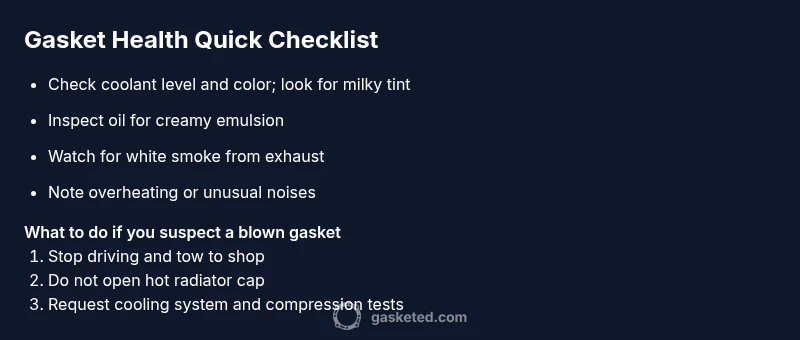
- Stop driving immediately if you notice overheating, steam, or oil-coolant contamination; tow to a shop.
- Check coolant level and look for milky oil on the dipstick; note any unusual smells or color changes.
- Do not drive to “test” the gasket; a short drive can cause severe damage.
- Schedule a professional diagnostic (compression, leak-down, cooling test) and discuss head gasket replacement options with the technician.
Steps
Estimated time: 60-120 minutes
- 1
Stop and ensure safety
Pull over to a safe area, turn off the engine, and allow it to cool before inspecting. Do not open hot caps or hoses.
Tip: Never ignore overheating; quick action prevents cascade damage. - 2
Check for obvious signs
Look for coolant leaks, white exhaust, strange odors, or oil contamination. Document with photos for your records.
Tip: Photos help technicians diagnose quickly. - 3
Assess fluid condition
Check the coolant reservoir level/color and inspect the oil dipstick for milky emulsion. These are key clues.
Tip: Milky oil signals coolant intrusion. - 4
Decide on driving
If signs persist, do not drive; arrange towing. A short move to a nearby safe area is not recommended.
Tip: Tow is safer than pushing limits. - 5
Get a professional diagnostic
Ask for compression tests, leak-down tests, and a cooling system pressure test to confirm gasket failure.
Tip: Request a written repair plan before authorizing work. - 6
Review repair options
Discuss head gasket replacement vs. potential engine repairs and related machining with the shop.
Tip: Understand warranty and labor estimates before proceeding. - 7
Plan for prevention
After repair, maintain cooling system, use correct coolant, and schedule regular inspections to prevent recurrence.
Tip: Regular maintenance saves costly未来 repairs.
Diagnosis: Car shows overheating, coolant loss, white smoke, or milky oil without obvious external leaks
Possible Causes
- highOverheating due to coolant loss from gasket breach
- mediumExhaust gases entering the cooling system
- highOil and coolant mixing due to gasket failure
- lowCracked head or warped head from ongoing overheating
Fixes
- easyStop driving immediately and tow to a professional shop
- easyCheck oil and coolant condition and take photos for diagnosis
- easySchedule a formal diagnostic (compression test, leak-down test, cooling system test)
- mediumFollow the technician’s repair plan, which may include head gasket replacement and machine work
Common Questions
What are the most common signs that a head gasket is blown?
Common signs include overheating, white exhaust smoke, coolant loss without leaks, and milky oil on the dipstick. You may also notice a drop in engine performance or misfires. If these appear, treat it as urgent and seek professional inspection.
Typical signs are overheating, white smoke, coolant loss, and milky oil. Get a professional check promptly.
Is it safe to drive to a repair shop if the engine is overheating?
No. Overheating can warp the head or crack the engine. If overheating occurs, stop safely, wait for the engine to cool, and arrange a tow. Do not try to reach a shop while hot.
Do not drive when overheating; pull over and tow to a shop.
Can a blown head gasket be repaired without removing the head?
Very rarely. Most head gasket repairs require removing the cylinder head to reseal and resurfacing as needed. A proper diagnosis is essential to plan the right approach.
Usually the head must be removed for a proper seal and repair.
What causes head gasket failure in most engines?
Head gasket failures stem from overheating, poor cooling system maintenance, the use of incorrect coolant, preexisting wear, or manufacturing defects. Regular cooling system maintenance helps prevent failures.
Overheating and poor cooling maintenance are common culprits.
How long does a head gasket repair take?
Repair time varies with vehicle and damage. Expect diagnostics to take a few hours and the replacement work to extend across a day or two, depending on parts availability and machining needs.
It can take from a day to a couple of days, depending on damage and parts.
Should I use sealant or stop-leak products to fix a blown head gasket?
No. Sealants and stop-leak products are temporary measures and do not fix the underlying issue. They may offer a short reprieve but can complicate a real repair and damage cooling channels.
Sealants aren’t a real fix; they can complicate proper repair.
Watch Video
Key Takeaways
- Stop immediately if gasket failure is suspected.
- Do not drive to a shop; tow for diagnosis.
- MILKY oil or coolant signals contamination that needs professional repair.
- Professional diagnostics are essential for an accurate repair plan.