Blown Head Gasket Symptoms: A DIY Homeowner Guide
Identify common blown head gasket symptoms and learn a practical, safe DIY approach to testing, diagnosing, and deciding when to call a pro. Gasketed provides expert guidance for homeowners.


Most likely you’re seeing blown head gasket symptoms. Quick fix: stop driving, check for coolant loss, milky oil, white exhaust, and bubbling in the radiator, then run a compression test. According to Gasketed, early signs merit a professional diagnosis to prevent serious engine damage. This compact check helps you decide if a pro must intervene now or if you can plan ahead.
blown head gasket symptoms
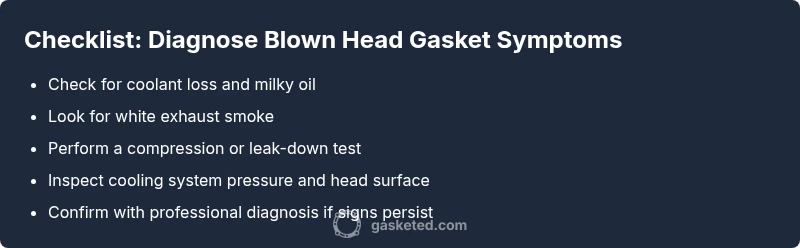
Blown head gasket symptoms are a telltale cluster of signals that indicate the head gasket between the engine block and cylinder head may be failing. In many engines, the first sign is coolant loss without an obvious leak, followed by milky oil that looks washboarded or emulsified. You may also notice white exhaust smoke that persists after the engine warms up, overheating that isn’t cured by topping off coolant, or sudden pressure in the cooling system. The phrase blown head gasket symptoms covers a spectrum rather than a single symptom, and multiple signs appearing together strongly suggest a gasket issue. According to Gasketed, the most reliable early indicators are coolant loss, milky oil, and white exhaust, but never ignore overheating or unexplained power loss. If you observe even a subset of these cues, treat it seriously and begin a diagnostic sequence rather than assuming a minor problem. Early recognition can save you from expensive repairs and extensive engine damage.
Key signs to watch for:
- Coolant depletion without a visible leak
- Oil that looks milky or frothy
- White or blue-white exhaust smoke during idle or startup
- Unexplained overheating or temperature spikes
- Bubbles or steam in the radiator or overflow reservoir
- Sudden loss of engine power or misfires
- Increased fuel consumption and rough idle
In practice, several of these symptoms together are far more convincing than a single clue. Use a cautious, stepwise approach to verify the issue, and involve a professional if you’re unsure. A measured response reduces risk and buys you time for an accurate repair plan.
How a blown head gasket happens
A head gasket failure is usually a result of overheating, pre-existing head warping, or core engine stresses that force the gasket to fail under pressure. Repeated overheating can cause the cylinder head to warp or crack, which compromises the seal. Over time, improper torque on the head bolts, poor maintenance, or using a mismatched gasket set can worsen the problem. It’s common for owners to blame a single event, like running at high temperature once, but a combination of stressors typically leads to a failure.
Another frequent contributor is a cooling system that doesn’t work correctly. A clogged radiator, a stuck thermostat, or a water pump issue can overheat the engine and accelerate gasket damage. In some cases, a gasket might fail gradually, with subtle signs that become more noticeable as the engine cools and heats. Recognize that once the gasket shows signs, the underlying head or block integrity should also be checked for warping or cracking. Gasketed’s guidance emphasizes addressing root causes, not just the symptom, to avoid repeating the failure after repair.
How to test for blown head gasket symptoms
Testing is about separating gasket issues from other common causes of overheating and oil contamination. Begin with non-destructive checks and progress to more definitive diagnostics.
- Compression test: Compare cylinder compression with a gauge to identify low readings that align with a leaking head gasket.
- Leak-down test: A controlled pressurization test helps locate the path of leakage—into cooling passages, oil galleries, or the combustion chamber.
- Chemical test (block test): A special fluid detects exhaust gases in the cooling system, indicating combustion gases are leaking into coolant.
- Oil analysis: Look for coolant traces in the oil, which appear as milky particles or an unusual viscosity.
- Visual and physical checks: Inspect the radiator for bubbles during idle, check for milky residue on the oil cap, and examine the coolant for oil contamination.
If test results point to a gasket breach, plan for professional service. While some DIY diagnostics can indicate a problem, repairing a blown head gasket typically requires engine disassembly, head resurfacing if needed, and precise torque sequencing to ensure a proper seal. Remember, the goal is to confirm the failure and prevent further damage, not to push past warning signs.
Quick checks you can do safely
These quick, non-invasive checks help you decide whether you should proceed with deeper diagnostics or call a pro.
- Never open a hot cooling system or radiator cap; pressure boiling can cause burns. Allow the engine to cool completely before inspecting.
- Look for coolant loss markers such as unexplained puddles, colored stains, or sweet smell around the engine bay.
- Check oil color and consistency; milky oil indicates coolant mixing.
- Observe exhaust: sustained white smoke after startup is a red flag, particularly when accompanied by overheating.
- Listen for rough running, misfires, or cooling system noises that coincide with overheating.
If you confirm several signs, plan a formal test with the right equipment. Safety and careful documentation are your first steps.
DIY vs professional repair: when to call a pro
Deciding between DIY and professional repair hinges on the scope of the issue and your experience. A blown head gasket is a major repair that often involves removing the cylinder head, inspecting for warping or cracks, and possibly replacing the head or engine components. If you have access to a full tool set, a clean, well-lit workspace, and previous gasket replacement experience, you might handle the initial teardown and gasket replacement. However, even experienced DIYers typically rely on a machine shop for head resurfacing and precision torque.
Professional evaluation is especially prudent if you observe any of the following:
- Significant overheating and coolant/oil contamination
- Visible head warp or apparent cracks
- Uncertain test results or multiple test failures
- Limited time or access to proper equipment
Gasketed emphasizes that a correct repair is critical: an improperly sealed head gasket can cause recurring failures, higher repair costs, and potential engine damage. If in doubt, seek a professional diagnosis early to avoid costly missteps.
Preventing blown head gasket symptoms in the future
Prevention starts with a well-maintained cooling system and careful operation. Small habits maintain gasket health and extend engine life.
- Regular coolant flushes and using the recommended coolant type for your vehicle
- Maintain proper cooling system pressure by keeping the radiator cap and pressure relief components in good condition
- Check the thermostat and water pump for proper operation; replace worn parts before they fail
- Use high-quality gasket sets and torque sequences specified by the manufacturer
- Monitor engine temperature during heavy loads and long climbs; address overheating early
- Keep oil clean and at the correct level to reduce additional engine stress
A proactive approach reduces the risk of gasket issues and gives you more predictable maintenance cycles.
Next steps if you suspect a gasket issue
If you’ve identified blown head gasket symptoms and confirmed a gasket breach through tests, plan the repair with a clear strategy. Gather a detailed parts list (gasket set, head bolts if required, coolant, oil, sealant, and consumables), arrange for a torque wrench, and consider machining the head if needed. Schedule the work with a trusted mechanic if you lack the space or the tools for a proper job. Finally, after reassembly, perform comprehensive tests again to ensure the cooling system remains leak-free and the engine maintains proper compression. A careful, staged approach reduces risk and helps sustain vehicle reliability.
Verdict: quick recap for action
Recognize blown head gasket symptoms early, perform safe tests to confirm, and choose between a DIY teardown (if you’re skilled) or professional gasket repair. The key is to avoid running the engine when symptoms are present, as extended operation can cause severe damage. With the right approach, you can restore reliability while protecting your engine.
Final note on driving with suspected gasket issues
If you suspect a blown head gasket, minimize driving to avoid worsening the issue. A short tow to a shop or a home garage is often safer than risking further damage on the road. Professional advice is invaluable for assessing head surface conditions and ensuring a proper seal on reassembly.
Steps
Estimated time: 6-12 hours
- 1
Confirm symptoms with tests
Begin with non-destructive checks (oil, coolant, exhaust) and perform a compression test to quantify engine health. Document all readings and anomalies.
Tip: Record all test results with vehicle mileage and conditions for reference. - 2
Prepare workspace and safety protocol
Disconnect the battery, drain cooling system as needed, and set up a clean, well-lit workspace. Gather a complete gasket kit, torque wrench, and replacement head bolts if required.
Tip: Never work on an engine with the cooling system pressurized or while hot. - 3
Disassemble to access the head
Remove intake/exhaust manifolds, accessories, and the cylinder head cover as needed to access the head. Keep fasteners organized and note torque patterns.
Tip: Label hoses and sensors to ease reassembly. - 4
Inspect and surface the head
Inspect the head for warping or cracks; have the block and head surface checked for flatness. If warped, take the head to a machine shop for resurfacing.
Tip: Any warp beyond manufacturer spec requires professional resurfacing. - 5
Install new head gasket and reassemble
Install the gasket with the correct orientation and torque in the manufacturer’s sequence. Refit cooling and oil systems, then replace gaskets, seals, and plugs as needed.
Tip: Use fresh coolant and oil; refill levels precisely. - 6
Test, bleed air, and verify leaks
Reassemble completely, bleed cooling system to remove air pockets, and run the engine at idle to check for leaks. Recheck compression and ensure coolant returns to normal levels.
Tip: Take your time bleeding and verifying temperatures; a quick job can miss leaks.
Diagnosis: Engine overheating with coolant loss, milky oil, or white exhaust
Possible Causes
- highHead gasket breach allowing coolant and combustion gases to mix
- mediumCracked or warped cylinder head or engine block
- lowCooling system fault (stuck thermostat, water pump, or radiator issue)
Fixes
- hardRun compression and leak-down tests; inspect head and gasket for breach
- hardMachine shop inspection for head warp or cracks; resurfacing as needed
- hardReplace head gasket and ensure correct torque sequence; fix cooling system
Common Questions
What are the most common blown head gasket symptoms?
Common symptoms include coolant loss, milky oil, white exhaust, overheating, and reduced engine power. Multiple signs together strongly suggest a gasket issue.
Common signs are coolant loss, milky oil, white exhaust, overheating, and rough running, especially when several occur together.
Can a car run with a blown head gasket?
Running a car with a suspected head gasket leak is risky and can cause severe engine damage. It’s best to stop driving and have it diagnosed.
No, driving with a suspected head gasket leak can cause serious engine damage; have it diagnosed before continuing.
Should I use sealants or stop-leaks to fix a blown head gasket?
Sealants can provide a temporary, partial seal but are not a permanent fix for a blown head gasket. They may mask symptoms or complicate proper repair.
Sealants are not a real fix; they might mask the problem but won't repair a blown gasket.
Is the repair worth it, and how do costs vary?
Repair quality affects vehicle value and reliability. Costs vary by vehicle and labor rates, but a gasket replacement is a major job that often requires machine shop work.
Repair cost varies a lot; a gasket replacement is a major job that may require a shop for head work.
Can I drive to a shop if I suspect a gasket issue?
If you suspect a gasket issue, limit driving and arrange for a tow or roadside transport to avoid further damage.
Avoid driving; arrange a tow to a shop to prevent further engine damage.
What maintenance helps prevent blown head gasket symptoms?
Maintain cooling system health, use the right coolant, monitor temperature, and replace worn seals or gaskets before they fail. Regular inspections reduce the risk of gasket issues.
Keep the cooling system healthy and inspect seals regularly to prevent gasket problems.
Watch Video
Key Takeaways
- Identify key blown head gasket symptoms early
- Do not drive with suspected gasket failure
- Compression tests help confirm the diagnosis
- Repair is major; professional service is common
- Prevent future issues with a well-maintained cooling system