Signs Head Gasket Is Blown: Urgent Troubleshooting Guide
Learn the urgent signs your head gasket may be blown, what they mean, and how to diagnose safely. Quick checks, tests, and when to call a pro for repair.


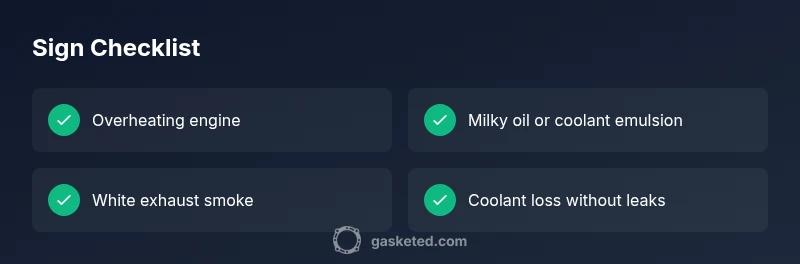
Common signs that the head gasket is blown include overheating, milky or chocolate-colored oil, white exhaust smoke, coolant loss with no visible leaks, rough idle or loss of power, and emulsified coolant in the oil. If you notice these together, don’t ignore them. Start with quick at-home checks: monitor coolant levels, inspect oil for a coolant film, and consider a compression test with proper equipment.
What is a head gasket and why it blows
The head gasket sits between the engine block and the cylinder head, acting as a seal for coolant, oil, and combustion gases. When it fails, those fluids can mix or escape into places they shouldn’t, compromising engine cooling and lubrication. Signs head gasket is blown can appear suddenly or develop over days, and they often mimic other problems, so careful diagnosis matters. Understanding how the gasket works helps you spot early indicators and prevent further damage. In DIY terms, recognizing the problem early gives you a safer path to repair and saves you from costly failures down the line.
Common signs your head gasket is blown
- Overheating engine: Frequent or severe overheating is a red flag. If the thermostat and radiator are functioning but the gauge still climbs, the gasket may be allowing coolant into the combustion chamber or restricting cooling passages. This is one of the most important signs head gasket is blown to watch for.
- Milky oil or oil-coolant emulsion: Oil that looks like a chocolate milkshake means coolant is leaking into the oil system, lubricating oil becomes thin and ineffective, and metal wear accelerates.
- White exhaust smoke: Thick, sweet-smelling white smoke that continues after startup often indicates burning coolant in the combustion chamber.
- Coolant loss with no leaks: If you’re constantly topping off coolant but see no external leaks, coolant could be seeping into the combustion chamber or engine via a breached gasket.
- Rough idle or misfires: A blown head gasket can cause improper compression in cylinders, leading to rough running, engine misfires, and vibrations.
- Bubbles in the radiator or coolant reservoir: Combustion gas entering the cooling system can create visible bubbles as the engine runs.
- Oil in the coolant or coolant in the oil: Cross-contamination between oil and coolant is a severe sign and often indicates a gasket failure requiring immediate service.
- External signs near the engine: Puddles of coolant, sweet smell around the engine bay, or white crust on the engine block.
How these signs connect to actual failure
When the head gasket blows, the seal that separates coolant, oil, and combustion gases breaks down. Coolant may leak into cylinders and burn off as steam, causing overheating and white exhaust smoke. Oil can mix with coolant, producing a milky appearance and reducing lubrication. Conversely, combustion gases can enter the cooling system, raising pressure and causing leaks or bubbles. These symptoms collectively indicate a blown head gasket rather than a minor leak elsewhere, but confirmation requires testing because other issues can mimic some signs head gasket is blown.
At-home checks you can perform safely
Before you pull apart your engine, perform these non-invasive checks to gather clues without risking injury. Always wait for the engine to cool before inspecting.
- Check coolant level and look for sudden drops, unusual color, or sweet smell.
- Inspect motor oil for a milky layer or a gelatinous residue that indicates coolant mixing.
- Look for white smoke from the exhaust, especially on startup or during acceleration.
- Check for a local coolant leak under the vehicle or around the radiator and hoses.
- Smell the oil; coolant contamination has a distinct sweet odor in some formulations. These checks help you determine if signs head gasket is blown are present before you test further.
Diagnostic tests you can perform at home
If basic checks raise concerns, consider non-destructive tests before disassembly. These are more reliable indicators when diagnosing signs head gasket is blown, but they require proper tools and precautions.
- Compression test: Measures how well each cylinder holds air pressure. A significant variation between cylinders suggests a gasket breach affecting compression.
- Leak-down test: Pressurizes each cylinder to quantify how quickly air leaks past the rings, valves, or head gasket. High leakage points to a seal issue, potentially a blown head gasket.
- Combustion gas in the cooling system test: A chemical test kit detects exhaust gases in the coolant, which strongly indicates a multi-cylinder gasket breach. Do not run the engine long during testing to avoid overheating and damage.
- Visual inspection of dipstick and expansion tank: If you see consistent signs of coolant loss or oil-coolant emulsification, this supports the possibility of a head gasket issue. If the test results are inconclusive, stop driving and seek professional evaluation.
When to involve a professional and what to expect
A blown head gasket is a serious fault that often requires disassembly and machine work. If your diagnostics suggest a gasket breach, plan to stop driving to prevent further damage. A shop will typically perform a more comprehensive heat-cycle test, combustion gas test, and a full coolant/oil analysis, followed by head removal and gasket replacement if confirmed. Expect engine downtime and variable costs depending on the vehicle and region. The Gasketed team recommends seeking a qualified technician when you suspect a blown head gasket to ensure proper torque specs, head resurfacing if needed, and reassembly with correct gasket material.
Prevention and maintenance to avoid future failures
Preventing a future gasket failure centers on cooling system maintenance and careful operation. Regular coolant changes with the manufacturer’s recommended specification help protect head gaskets from corrosion. Keep the cooling system free of leaks and use the correct head gasket material and torque sequence when reassembling. Address problems such as overheating promptly, replace worn hoses, and monitor oil and coolant levels monthly. A well-maintained cooling system and careful driving habits reduce the risk of signs head gasket is blown appearing again.
Quick call to action: what to do next
If you’ve observed multiple signs head gasket is blown, do not ignore them. Schedule a professional inspection or a diagnostic service to confirm the issue and plan repairs. While some home checks can provide clues, a blown head gasket typically requires professional engine work. Early diagnosis preserves engine longevity and reduces the chance of catastrophic failures.
Steps
Estimated time: 1-3 hours for tests; full gasket repair may require longer in a shop
- 1
Gather safety gear and tools
Park on a flat surface, allow the engine to cool, and collect PPE. Gather a flashlight, a coolant tester, oil dipstick, a compression tester, and a leak-down tester. Safety first prevents injuries and accidental burns when inspecting a hot engine.
Tip: Always wear gloves and eye protection when handling fluids. - 2
Check exterior signs first
Look for puddles, crust around hoses, or damp spots. Note any sweet smell from coolant, which can indicate leaks. Document any visible issues before starting tests.
Tip: Take photos of any leaks to reference during service. - 3
Inspect oil and coolant condition
Lift the dipstick and inspect for a milky film. Check the coolant reservoir for emulsified content and abnormal color. Record findings to compare with future tests.
Tip: Colourtone changes in fluids are often more telling than raw readings. - 4
Perform a compression test
Disable the ignition system, remove spark plug wires, and connect the compression tester to each cylinder. Compare the readings to the service manual; large disparities can indicate gasket issues.
Tip: Warm engines can yield higher but more accurate readings; follow the tool's instructions. - 5
Consider a leak-down test
If compression results are uneven, a leak-down test helps isolate the source of leakage. Listen for air escaping through the radiator filler neck or exhaust for additional clues.
Tip: Doing this with the engine at top dead center on the compression stroke improves accuracy. - 6
Chemical test for combustion gases
Use a specialized kit to sample coolant and detect exhaust gas presence. A positive reading strongly suggests a gasket breach, but interpret with other tests.
Tip: High-quality test kits yield more reliable results; ensure the test is within its shelf life.
Diagnosis: Engine overheating with coolant/oil anomalies and potential white exhaust
Possible Causes
- highCoolant system blockage or leak causing overheating
- highHead gasket breach allowing coolant to enter cylinders
- lowCracked head or warped head due to overheating
Fixes
- easyCheck for obvious external leaks and confirm coolant level trends over 24-72 hours
- mediumPerform a compression test and/or leak-down test to assess seal integrity
- mediumUse a combustion-gas test to detect exhaust in the cooling system
- easyIf gasket failure is confirmed, stop driving and arrange professional head gasket repair
Common Questions
What are the most common signs of a blown head gasket?
Overheating, milky oil, white exhaust smoke, unexplained coolant loss, and rough engine performance are among the most common signs head gasket is blown. Look for several symptoms together to reduce false positives.
The most common signs include overheating, milky oil, white smoke, coolant loss, and rough running. Check several symptoms together for accuracy.
Can you drive a car with a blown head gasket?
No. Driving with a suspected blown head gasket can cause severe engine damage, including warped heads and cracked blocks. If you suspect a failure, limit use and arrange professional diagnosis promptly.
It's not safe to drive when you suspect a blown head gasket. Limit driving and seek professional help as soon as possible.
How is a blown head gasket diagnosed at home?
Home diagnostics include checking oil and coolant, compression testing, leak-down testing, and chemical tests for exhaust gases in the coolant. However, confirmation and proper repair require a professional mechanic.
You can perform basic tests like compression or leak-down tests, but final confirmation and repair should be handled by a pro.
What is the typical cost to repair a blown head gasket?
Repair costs vary widely based on vehicle and region. Expect a professional evaluation to determine whether the head gasket, head, or related components require service, with estimates provided by the shop.
Costs vary a lot by car and region; you’ll get a detailed estimate after diagnosis.
How long does a head gasket repair take in a shop?
Head gasket replacement is a major job that requires disassembly and resurfacing, often taking a full day or more in a shop. Scheduling should account for time and potential parts availability.
In a shop, expect a full day or more for a complete head gasket replacement.
Watch Video
Key Takeaways
- Identify multiple signs head gasket is blown before assuming failure
- Use safe, non-destructive tests first to avoid needless disassembly
- Professional diagnosis is often required for confirmation and proper repair
- Maintenance and early detection prevent costly engine damage
- Document symptoms and seek prompt service when suspicion is high