What Are Signs of a Bad Head Gasket? Quick Troubleshoot Guide
Learn the urgent signs of a blown head gasket, how to verify symptoms, and practical, safety-conscious steps to diagnose and fix the issue before damage.


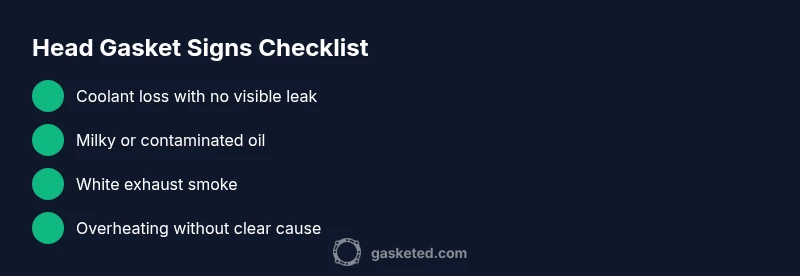
Common signs of a bad head gasket include coolant loss without a visible leak, milky oil, white smoke from the exhaust, overheating, and bubbles in the radiator. When several signs appear together, it’s a red flag that the head gasket may be failing. Quick checks: pressure test the cooling system and perform a compression test to confirm; if confirmed, plan professional repair.
What is a head gasket and why signs matter
The head gasket sits between the engine block and the cylinder head, sealing combustion, coolant, and oil passages. When it fails, you don’t always get a single dramatic symptom; instead, you often see a cluster of telltale signs that indicate a problem across systems. According to Gasketed, understanding these signals early helps DIYers and homeowners act quickly to limit damage and avoid expensive repairs. In this guide, we focus on what are signs of a bad head gasket and how to approach validation safely. Treat any combination of coolant loss, oil contamination, overheating, and unusual exhaust as urgent cues rather than isolated quirks.
Because head gasket failure can mimic other common issues (like a faulty thermostat or a failing water pump), it’s important to look for a pattern rather than a single symptom. For DIY gasket repair, the key is to document symptoms, perform safe tests, and decide whether a home fix is feasible or if a pro is required. The stakes are high: a neglected blown head gasket can warp the head, crack the block, and compromise engine reliability. With the right approach, you can identify the signs early and plan a repair strategy that protects your engine.
Common signs of a bad head gasket
Identifying the signs of a bad head gasket is not about chasing a single clue; it’s about recognizing a pattern across cooling, oil, and exhaust systems. Look for persistent coolant loss with no external leak, oil that looks milky or contaminated, white exhaust smoke even when the engine is steady, overheating without a clear cause, and unexpected bubbles in the radiator or coolant reservoir. You may also notice a rough idle, misfires in multiple cylinders, or a slight loss of compression in one or more cylinders. If you see several of these together, the likelihood of a blown head gasket increases significantly. Remember, early detection can prevent costly damage like a warped head or engine block failure. For DIY enthusiasts, methodical testing is essential to avoid misdiagnosis.
How overheating and coolant loss relate to gasket failure
Overheating is both a symptom and a contributor when a head gasket starts to fail. When the gasket loses its seal, combustion heat can infiltrate coolant passages, causing the cooling system to work harder and temperatures to spike. Simultaneously, coolant can leak into the combustion chamber or oil passages, creating misfires, milky oil, and white smoke. The relationship is cyclical: overheating can accelerate gasket wear, and a compromised gasket can cause further overheating. Understanding this interplay helps you separate gasket-related issues from unrelated problems like a stuck thermostat or a failing water pump.
Other related signs and confounding issues
Several symptoms can mimic the same problem or mask a gasket failure. A flaky fuel system, worn rings, a cracked cylinder head, or a faulty PCV valve can produce white smoke, rough running, or odd oil coloration. You might also see coolant in the oil without a gasket problem, or vice versa. To avoid misdiagnosis, look for cross-system clues: simultaneous coolant loss, oil contamination, and exhaust smoke strongly point toward a gasket issue. Always compare symptom patterns over time rather than relying on a single observation.
In DIY scenarios, it helps to rule out common culprits first: thermostat failure, water pump leaks, and intake manifold gasket issues. If symptoms persist despite addressing these, your odds of a gasket-related problem rise and warrant a more rigorous diagnostic approach.
How to verify suspected signs safely
Safety first: never work on a hot engine. Start with non-invasive checks that can point you in the right direction. Check coolant levels and oil for signs of cross-contamination. Use a flashlight to inspect hoses for cracks and leaks, and observe under the vehicle for coolant drips. A cooling system pressure test can reveal external and internal leaks without disassembly. A compression test or leak-down test across cylinders can confirm whether there is cross-contamination between the coolant and combustion chambers. Oil analysis can sometimes show coolant in the oil, indicating a gasket issue. Document every symptom and test result to support your final assessment.
Diagnostic pathway for signs of a blown head gasket
This section walks through a practical diagnostic flow that starts with obvious symptoms and ends with a repair plan. First, confirm symptoms across coolant, oil, and exhaust systems. Next, test for leaks with a cooling system pressure test. If leaks are found or symptoms persist, perform a compression or leak-down test to identify affected cylinders. If tests indicate a gasket breach, consider professional replacement, keeping in mind that additional steps like head resurfacing may be required. Finally, re-test after the repair to ensure all systems hold pressure and temperatures stabilize.
What to do today if you suspect a failing gasket
If you notice multiple signs, stop driving the vehicle and arrange a professional inspection to avoid catastrophic engine damage. Drain and cool the cooling system if you must move the car, but do not open hot caps. Gather symptom notes, test results, and any recent maintenance history to share with a mechanic. Decide between a DIY approach if you have the tools and skills or schedule professional service for a precise gasket replacement and head resurfacing if needed.
Prevention and maintenance to avoid future gasket problems
Prevention is about consistent care. Regularly check coolant levels and oil condition, replace aging hoses, and maintain proper coolant quality. Address overheating promptly by inspecting the thermostat, water pump, and radiator. When performing any gasket-related repair, use the correct head bolt torque sequence and ensure the head is correctly resurfaced if required. Consider using quality gasket sealants only if recommended by the manufacturer or a trusted guide, and keep a maintenance log for future reference.
Steps
Estimated time: 4-8 hours
- 1
Secure the vehicle and safety prep
Park on a level surface, disconnect the battery, and allow the engine to cool completely. Wear eye protection and gloves, and clear the workspace to prevent accidents. Gather the tools you’ll need for testing and inspection before you start.
Tip: Always work with a cool engine to avoid burns and scalding coolant. - 2
Document and inspect symptoms
Note coolant loss, oil color, exhaust smoke, and any overheating incidents. Visually inspect for leaks around the radiator, hoses, and the head area. This baseline helps you interpret test results later.
Tip: Take photos of any leaks and oil contamination for reference. - 3
Perform a cooling system pressure test
Attach a pressure tester to the radiator cap opening or pressure port and bring the system to pressure. Look for steady pressure and listen for leaks. A drop in pressure indicates a leak path that could involve the gasket.
Tip: Compare pressure loss with the engine off and the cap removed to avoid misreading. - 4
Run a compression or leak-down test
Testing each cylinder for compression and leakage helps identify cross-contamination between coolant and combustion chambers. Low readings on one or more cylinders or high leakage points toward gasket failure.
Tip: Rotate the engine in the correct direction and record readings for all cylinders. - 5
Evaluate results and decide on repair
If tests indicate gasket failure, plan the repair path: gasket replacement and potential head resurfacing. If results are inconclusive, consider professional evaluation to avoid costly mistakes.
Tip: Avoid rushing to replace parts without confirmation to prevent wasted effort. - 6
Plan repair and test again
If you proceed with replacement, follow a proper torque sequence and use clean surfaces. Reassemble, refill coolant and oil, and re-test to ensure the issue is resolved.
Tip: Double-check torque specs from the manufacturer or a credible guide.
Diagnosis: Suspected head gasket failure based on multiple signs (coolant loss, milky oil, white exhaust smoke, overheating).
Possible Causes
- highOverheating that warped the head or damaged the gasket
- mediumImproper torque or head bolt failure
- lowPre-existing engine damage (cracked head, warped block)
Fixes
- easyCooling system pressure test to confirm leak paths
- mediumCompression or leak-down test across cylinders to identify cross-contamination
- hardHead gasket replacement and head resurfacing if needed, with reassembly and torque checks
Common Questions
What exactly does a head gasket do?
The head gasket seals the combustion chamber, coolant passages, and oil passages between the engine block and cylinder head. When it fails, you may see multiple symptoms across cooling, oil, and exhaust systems. Proper diagnosis is essential before replacement to avoid wasted parts and further damage.
The head gasket seals important passages between the block and head; failure affects combustion, coolant, and oil flow.
Can you drive a car with a suspected bad head gasket?
Not advised. Driving with a suspected blown head gasket can cause severe engine damage, including warped heads and radiator failure. If you notice symptoms, limit use and seek inspection.
Don't drive far with a suspected gasket issue; have it inspected promptly.
Will a blown head gasket always cause coolant loss?
Not always. Some leaks stay internal, but signs like milky oil, white exhaust smoke, and overheating point toward a gasket problem. External coolant loss isn't required for a gasket issue to exist.
Coolant loss isn't always visible; look for other signs like milky oil and exhaust smoke.
How can I verify signs without disassembling the engine?
Start with a cooling system pressure test, external leak checks, and an oil analysis for cross-contamination. A subsequent compression test helps identify affected cylinders without full disassembly.
Begin with pressure tests and oil checks before taking the engine apart.
Is head gasket replacement expensive?
Costs vary by vehicle and location; there are parts and labor considerations. Get multiple quotes and ask about head resurfacing if needed.
Costs depend on the car and shop; shop around for quotes and potential head work.
What is the difference between a blown head gasket and a warped head?
A blown gasket is failure of the seal between the head and block, while a warped head is a physical distortion of the head. Both can cause similar symptoms, but proper testing distinguishes them.
A blown gasket is a seal failure; a warped head is a physical distortion—diagnose to tell them apart.
Watch Video
Key Takeaways
- Identify multiple signs early to limit damage
- Use cooling system and compression tests to confirm
- Avoid driving long distances with suspected gasket failure
- Consult a pro for replacement if DIY isn’t feasible