What to Check for a Blown Head Gasket: A DIY Guide
Urgent DIY guide: learn what to check for blown head gasket symptoms, how to test safely, and when to call a pro. Clear steps, practical tips, and a diagnostic flow to avoid costly mistakes in 2026.


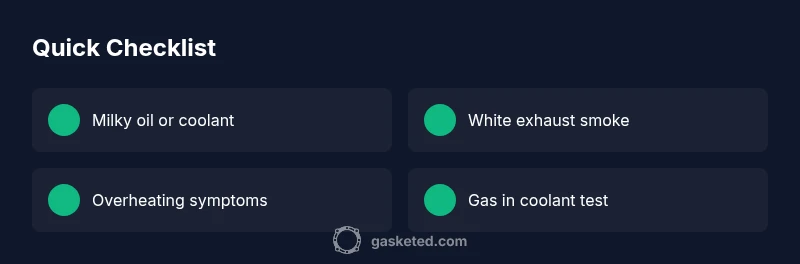
The most common sign of a blown head gasket is coolant contamination with oil or white exhaust smoke, usually with overheating. Quick checks: 1) inspect oil and coolant for cross-contamination; 2) perform a compression test on all cylinders; 3) check for exhaust gas in the cooling system. If these indicate failure, stop driving and pursue professional diagnosis.
What is a head gasket and why it fails
The cylinder head gasket sits between the engine block and the cylinder head, sealing coolant, oil, and combustion gases to keep them separate. When it fails, you can lose compression, allow coolant to leak into cylinders, or permit oil to contaminate the cooling system. Common causes include overheating, a warped head, worn gasket material, improper torque during installation, and age. Early signs may be subtle, but blown head gasket failures typically trigger visible indicators: milky oil on the dipstick or under the filler cap, coolant loss without an obvious external leak, white exhaust smoke, and unexpected overheating. For homeowners asking what to check for blown head gasket, the emphasis is on surface symptoms and simple tests you can perform before committing to major repairs. If the engine shows severe overheating or obvious coolant/oil contamination, stop driving and seek professional evaluation; gasket replacement is labor-intensive and can require machine work.
Signs that point to a blown head gasket
Beyond heat, look for cross-contamination indicators and failure indicators that commonly occur together. Milky residue on oil dipsticks or under the oil filler cap signals oil and coolant mixing. An unexplained coolant drop with no visible leak hints at internal leakage. White or gray exhaust smoke that persists after startup suggests combustion gases entering the exhaust. A sudden rise in engine temperature, overheating under light load, or misfiring cylinders also raises red flags. For what to check for blown head gasket, keep a mental checklist: fluid colors, exhaust plume, and compression behavior. A thorough visual inspection paired with a basic test plan can prevent unnecessary detours and guide you toward the correct next step: professional evaluation when symptoms point to gasket failure.
Quick safety and preliminary checks you can perform
Always work with the engine cool and with protective gear. Never open a hot radiator cap or pressurized reservoir; pressurized coolant can cause severe burns. With the engine cold, inspect the exterior for leaks around the gasket surface and hose connections. Check the oil for a creamy, milky appearance and inspect the coolant for oil sheen, both of which indicate cross-contamination. Look for white smoke at startup or misfires across cylinders. If you have a compression tester, perform a baseline test on all cylinders; similar readings or a noticeably lower reading on one cylinder raises suspicion. Document readings, colors, and symptoms; this data helps a shop diagnose the issue faster.
For the DIY reader: these checks are practical, low-risk steps that help narrow the problem. If you find cross-contamination or gas in the cooling system, treat it as a serious issue and plan professional service rather than further testing.
Diagnostic flow: symptom → diagnosis → solutions
Begin with the most telling symptoms: overheating, coolant/oil contamination, and white smoke. If present, the likelihood of a gasket problem is high, but other issues (failed thermostat, cracked head, warped block) can mimic symptoms. Diagnosis should proceed with a compression test and a leak-down test to measure cylinder seal and determine if compression losses are consistent with a gasket leak. If the tests show compromised compression on multiple cylinders or gas presence in the cooling system, the gasket is likely blown. Solutions range from gasket repair (which often requires machining and engine disassembly) to full engine replacement depending on the damage. In many cases, a professional shop will perform a head gasket replacement, inspect the cylinder head for warping, and verify the cooling system is restored to proper specification. This flow helps you plan the next steps and avoid missing critical checks.
Step-by-step: basic checks you can perform before a mechanic
- Stop driving and let the engine cool completely before touching anything. 2) Visually inspect oil and coolant for cross-contamination; note any color changes or emulsions. 3) Look for external leaks around the gasket surface and along hoses. 4) Check for white smoke from the exhaust and listening for misfires. 5) If safe, perform a compression test on all cylinders; compare results to detect abnormal variations. 6) Record the data and prepare to discuss results with a shop; plan for tow if overheating is ongoing.
Prevention and maintenance to reduce risk
Regular cooling system maintenance is the best defense. Keep coolant at the proper level and type, replace aging hoses and the thermostat, and address leaks promptly. Avoid running the engine hot; diagnose abnormal temperature rises early. Use torque specs from the vehicle manufacturer when any gasket work is performed, and ensure surfaces are clean and free of old gasket material. A well-maintained cooling system reduces the risk of head gasket failures and extends engine life. By staying proactive, you can catch issues before they balloon into expensive repairs.
The decision point: when to replace or repair
If tests indicate a blown head gasket, replacement is usually necessary. In some cases, the cylinder head may be warped or cracked, requiring machining or even a full engine rebuild. Temporary sealants are not a fix for a true gasket failure and should not be used as a long-term solution. The decision often hinges on the extent of damage and the specific engine design. A professional diagnosis helps determine whether a gasket replacement, head machining, or a more extensive rebuild is warranted.
What to expect during professional service
A certified mechanic will confirm the diagnosis, inspect the cylinder head for warping or damage, and remove the old gasket. They will clean the mating surfaces, install a new gasket with proper torque specifications, and reassemble the engine with careful timing checks. After assembly, a pressure test of the cooling system and a leak-down or compression test verify that seals are holding. Expect restoration of coolant flow and a return to normal combustion under steady-state testing. While costly and time-consuming, a proper gasket replacement is essential to prevent further damage and ensure engine longevity.
Steps
Estimated time: 1-2 hours
- 1
Stop, cool, and secure the vehicle
Pull over safely, switch off the engine, and allow it to cool completely before touching any components. This prevents burns and accidental pressurization when inspecting cooling components.
Tip: Never open a hot radiator cap; use a towel and wait until pressure equalizes. - 2
Check oil and coolant for contamination
Inspect the oil for a milky appearance and the coolant for oil sheen or emulsified mixture. Cross-contamination is a strong indicator of gasket failure.
Tip: Document color changes with photos for your records. - 3
Inspect for external leaks
Look around the gasket surface, water pump, hoses, and radiator for fresh leaks or crusty residue that indicates a leak path.
Tip: Tighten only to manufacturer specs; overtightening can damage seals. - 4
Perform a compression test
If safe, use a compression tester to measure each cylinder. Similar readings across cylinders suggest a non-gasket issue; a single low reading points to specific cylinder trouble.
Tip: Wipe the spark plug wells and remove all ignition coils for an accurate gauge reading. - 5
Consider a gas-in-coolant test
A chemical test that detects exhaust gases in the coolant provides strong evidence of a gasket leak. This test complements compression data.
Tip: Only perform with the engine cooled; follow kit instructions precisely. - 6
Decide on next steps
If tests indicate gasket failure, plan for professional replacement and head inspection. If results are inconclusive, seek a trusted mechanic for a deeper diagnostic.
Tip: Keep notes and photos to streamline the shop visit.
Diagnosis: Engine overheating with coolant/oil contamination
Possible Causes
- highBlown head gasket allowing coolant and oil to mix
- mediumExternal coolant leak from gasket surface or hose failure
- lowCracked cylinder head or warped engine block
Fixes
- easyStop driving immediately and perform a conservative diagnostic to confirm gasket failure; avoid further damage
- mediumConduct a compression test and a leak-down test to assess cylinder integrity; note results for the shop
- hardIf gasket failure is confirmed, plan professional head gasket replacement and head inspection, as DIY replacement is high risk
Common Questions
Can a blown head gasket be repaired without removing the engine?
In most cases, head gasket replacement requires removing the cylinder head and disassembling parts of the engine. Some precursors like surface cleaning can be done without full engine removal, but a proper fix typically involves engine work.
Most fixes require removing the head and disassembling parts of the engine for a proper gasket replacement.
What are the most common signs of a blown head gasket?
Milky oil from the dipstick or filler cap, unexplained coolant loss, white smoke from the exhaust, persistent overheating, and sudden misfires across cylinders are among the most common signs.
Common signs include milky oil, coolant loss, white exhaust smoke, and overheating.
What tests confirm a blown head gasket?
A compression test, a leak-down test, and a combustion gas test (block test) are the standard confirmatory diagnostics to verify gasket failure.
Compression, leak-down, and gas-in-coolant tests confirm gasket failure.
How much does a head gasket replacement usually cost?
Costs vary widely by vehicle and region; replacement is labor-intensive and can involve head inspection or machining. Consult a trusted shop for a detailed estimate.
Costs vary a lot; expect a professional assessment for an accurate estimate.
Can you drive a car with a blown head gasket?
No. Driving can cause extensive engine damage. If you suspect a gasket failure, stop driving and tow the vehicle to a shop for diagnosis.
Do not drive it; tow it to a mechanic for diagnosis.
What maintenance helps prevent head gasket failures?
Keep cooling system components in good condition, monitor temperature, fix leaks early, and avoid overheating to reduce gasket-related failures.
Maintain cooling system and avoid overheating to prevent gasket failures.
Watch Video
Key Takeaways
- Start with visual checks for cross-contamination.
- Use compression and leak-down tests to confirm gasket issues.
- Do not attempt DIY gasket replacement if you are unsure; professional service is often required.
- Maintain the cooling system to reduce future risk.
- Document symptoms and tests for a smooth shop visit.