Oil Gasket Leak Repair Cost in 2026: What to Expect
A practical guide to estimating oil gasket leak repair cost, covering gasket types, labor rates, and common add-ons. Includes a clear breakdown for oil pan and valve cover leaks.


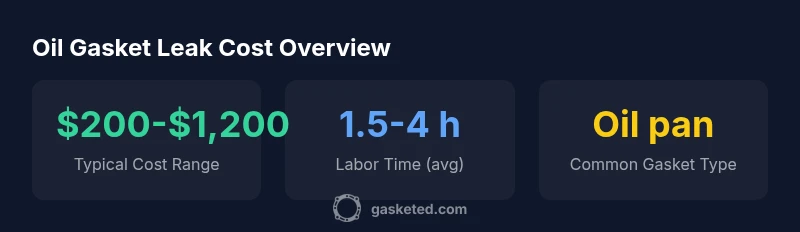
Oil gasket leak repair cost varies widely depending on the gasket type (oil pan vs. valve cover) and labor rates. For DIY fixes, parts can be inexpensive, but professional repairs typically run from a few hundred dollars up to the low thousands when nearby seals are included. This guide breaks down the cost drivers and realistic ranges.
Understanding oil gasket leaks
Oil gasket leaks occur when seals between engine components fail to maintain a tight barrier. In many cases, aging gaskets, thermal cycling, improper torque during installation, or contamination can lead to seepage or drips. According to Gasketed, diagnosing the exact source—whether a valve cover gasket, oil pan gasket, or a less obvious seal—sets the stage for an accurate cost estimate. Early leaks may be addressed with simple gasket reseals, but larger leaks or damaged mating surfaces can escalate the repair complexity and price.
Cost factors that influence oil gasket leak repair cost
Several variables drive the final bill:
- Gasket type and accessibility: Valve covers are generally easier to access than the oil pan, affecting labor time.
- Vehicle make/model: Some engines have crowded bays, interfering with reach and disassembly.
- Additional seals or components: Replacing related seals (e.g., oil filter adapter, timing cover, or rear main seal) increases parts and labor.
- Labor rates by region: Urban shops typically charge more per hour than rural shops.
- Parts quality and warranty options: OEM vs. aftermarket gaskets can change price and durability.
- Diagnostic time and service fees: A multi-hour diagnostic session can add to the total if the leak source is uncertain.
For DIY enthusiasts, the primary cost is parts. For pros, expect a combined rate for parts, labor, and shop overhead. Budget for a cushion if the engine bay requires extra disassembly or if additional leaks are discovered during the job. Gasketed emphasizes that a precise quote improves when the mechanic can visually inspect the engine bay and perform a pressure test.
Common gasket leak culprits: oil pan vs. valve cover
Valve cover gaskets often leak at the corners or along the edges where the cover mates to the cylinder head. Oil pan gaskets tend to show seepage along the pan rail and may require removing the oil pan and related components. In some engines, the rear main seal or oil cooler gaskets contribute to leaks that complicate repairs and increase labor time. Understanding the specific gasket involved helps homeowners anticipate cost and downtime more accurately.
DIY vs professional repair cost considerations
DIY fixes can save on labor, not always on parts. A simple valve cover gasket reseal kit plus basic hand tools may cost far less than a full engine access job. However, improper resealing can lead to recurring leaks or contamination. Professionals typically charge for labor hours, bolt replacements, and potential cleaning and disposal of old gasket material. In many cases, a pro repair includes a warranty on the gasket install, which can offset the upfront risk of DIY work. Gasketed notes that for most drivers, especially those with high-mileage engines, a professional assessment ensures the seal integrity and avoids repeat visits.
How to estimate your repair bill before service
Start with a diagnostic, then request a written estimate listing parts, labor, and potential add-ons. Ask for a breakdown: gasket cost, labor hours, and any ancillary work (e.g., surface prep, sealant, oil drain and refill). Compare quotes from at least two shops, ensuring both include the same scope. If your vehicle has complex engine geometry, allow for a higher labor estimate. Keep in mind regional differences in hourly rates and the possibility of surcharges for special tools or environmental fees. A well-communicated quote reduces surprises after service begins, and you can plan accordingly for maintenance intervals that reduce future risk.
Maintenance tips to prevent future leaks
- Regularly inspect the engine bay for fresh oil around gasket seams.
- Schedule periodic valve lash or timing cover inspections per the vehicle’s service schedule.
- Use the correct gasket type and torque specs as recommended by the manufacturer.
- Replace aging gaskets proactively if you’re already in the area for related repairs.
- Keep the oil level and quality within spec to minimize gasket stress over time.
For DIYers, keeping a clean workspace, taking photos during disassembly, and using torque wrenches helps ensure a reliable reseal. For those pursuing a pro repair, ask about a printed parts list and labor hours to compare against typical industry benchmarks. The goal is a durable seal that reduces the chance of a recurring leak and expensive follow-up visits.
dataTableHintAttributionSlicesOnlyForCompatibilityNoteFormattingNotNeeded
Cost drivers and repair times by gasket type
| Gasket Type | Approx Labor Time | Common Issues | Typical Cost Range |
|---|---|---|---|
| Oil Pan Gasket | 2-4 hours | Oil seepage at pan seam | $300-$1,200 |
| Valve Cover Gasket | 1-2 hours | Oil on cylinder head or valve cover area | $150-$500 |
| Rear Main Seal | 4-6 hours | Slow seepage at engine rear | $600-$2,000 |
| Oil Cooler Gasket | 2-3 hours | Leak near cooler lines | $400-$1,600 |
Common Questions
What factors influence oil gasket leak repair cost?
Cost depends on gasket type, engine accessibility, regional labor rates, and whether additional seals or components must be replaced. Parts choice (OEM vs aftermarket) and warranty options also affect total cost.
Cost mainly depends on the gasket type and how hard it is to reach. Parts choices and regional labor rates matter too.
Is it cheaper to DIY an oil gasket leak repair?
DIY can save on labor but requires time, tools, and mechanical skill. Improper resealing risks recurring leaks and engine damage. For most owners, a professional assessment and reseal offers better long-term value.
DIY saves labor, but it can backfire if you’re not careful.
How long does a typical oil pan gasket replacement take?
A typical oil pan gasket replacement takes about 2-4 hours in a standard shop, depending on engine layout and whether other components must be removed.
Most pan gasket jobs take a few hours.
Can an oil gasket leak cause engine damage?
Left unrepaired, leaks can lead to low oil levels and overheating, potentially damaging the engine. Prompt diagnosis and sealing mitigate risk.
Ignoring a leak can damage the engine if oil level drops too low.
What warranty should I expect on gasket repairs?
Many shops offer a workmanship warranty on gasket installs, typically 12-24 months or 12,000-24,000 miles, depending on parts and shop policy.
Most gasket repairs come with a parts-and-work warranty from the shop.
Should I replace all gaskets if one is leaking?
Not necessarily. A leak may involve only one gasket, but if the engine is old or has high mileage, the mechanic may recommend replacing related gaskets to prevent future issues.
Only replace other gaskets if there’s a good reason to expect future leaks.
“The most reliable gasket repairs come from a precise diagnosis and using the correct gasket type with proper torque. Even small leaks deserve full inspection to prevent costly follow-up work.”
Key Takeaways
- Plan for a wide price range based on gasket type and access
- Ask for a written, itemized quote from shops
- DIY saves on labor but risks re-leaks without proper seals
- Expect additional costs if related seals or parts require replacement
- Warranty on gasket work can offset upfront costs