Oil Pan Gasket Leak: Diagnosis, Repair, and Prevention
Urgent guide to identify and repair an oil pan gasket leak. Learn signs, safety steps, tools, and a step-by-step repair plan from Gasketed (2026).


Most likely culprit: a failing oil pan gasket or loose drain bolts that allow engine oil to seep from the oil pan. Quick fix: clean the area, snug or replace the gasket and bolts, then recheck the oil level. If the leak persists, replace the gasket and have a professional inspect the oil pan for warping or damage.
What is an oil pan gasket leak?
An oil pan gasket leak is exactly what it sounds like: engine oil escaping at the gasket that seals the oil pan to the engine block. This leak can appear as small drips or a steady slow flow of oil under the front of the engine. According to Gasketed, oil pan gasket leaks are a common maintenance issue that often signals aging gaskets or improper torque when the pan was installed or serviced. The oil pan gasket is designed to be a durable seal, but heat cycles, road vibration, and the weight of the engine can gradually degrade the seal. Recognizing the leak early can prevent oil loss, engine damage, and costly repairs. The primary symptom is oil spots beneath the engine, accompanied by a low oil level warning or burning oil smell if the oil contacts hot exhaust components. Oil pan gasket leaks are not always dramatic; sometimes they’re slow seepage that gradually increases with engine heat and operation.
Why leaks happen: common causes
Leaks around the oil pan gasket usually arise from one or more predictable factors. A worn gasket that has hardened with age is a primary culprit, especially on higher-mileage vehicles. Improper torque during installation can leave uneven pressure along the gasket, creating paths for seepage. A warped or damaged oil pan flange, a dented pan, or a damaged sealing surface can also compromise the seal even if the gasket itself looks intact. In some cases, a failed or missing drain plug washer can allow oil to smear along the gasket area, giving the appearance of a gasket leak. Regular heat cycles from engine operation, as well as frequent oil changes performed without proper cleaning and re-sealing, can accelerate gasket wear. Understanding these causes helps prioritize the repair steps rather than guessing at components.
Risks of ignoring an oil pan gasket leak
Ignoring a leak can lead to low engine oil, which is dangerous and may cause oil starvation to critical engine bearings. Prolonged exposure to leaking oil can degrade other components, contaminate belts and pulleys, and increase the risk of an engine fire if oil contacts hot exhaust surfaces. Oil on the road surface behind your vehicle is a safety concern for other drivers as well. If the leak is significant, you may also notice the engine oil level warning, oil smell inside the cabin, or smoke from the engine bay. Addressing the leak promptly reduces the chance of major damage and expensive repairs, and helps protect your vehicle’s resale value. Gasketed analysis emphasizes that early intervention minimizes escalation and keeps maintenance costs lower over the life of the vehicle.
Quick diagnostic checks you can do safely
Start with simple, non-invasive checks before disassembly.
- Inspect the area around the oil pan and gasket for fresh oil. Look for the exact seep path along the gasket flange.
- Check the drain plug and its washer for seepage. Tighten to the manufacturer torque spec if needed and replace worn washers.
- Clean the area with degreaser and recheck after a short drive to see where fresh oil appears.
- Look for oil accumulation on the pan edge and along the gasket line after removing the splash shield if present.
- If you suspect the pan flange is deformed, gently run a straight edge along the flange to identify high or low spots.
If the leak persists after these checks, it’s time to move to a gasket replacement. Remember to always work on a cool engine and use a suitable oil pan to catch drips. For persistent leaks, professional assessment is recommended to confirm gasket integrity and rule out a cracked pan or warped surface.
Step-by-step repair overview
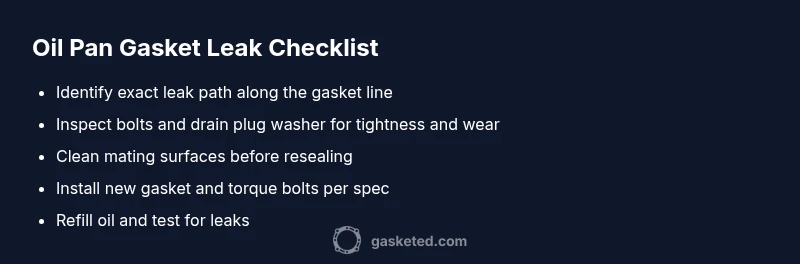
Repairing an oil pan gasket leak is a typical DIY task for hobbyists with basic mechanical skills. The process generally involves removing the oil pan, cleaning mating surfaces, installing a new gasket, and reassembling with correct torque. The exact steps depend on your vehicle make and model, so consult the service manual for torque specs and gasket material recommendations. In most cases, you’ll replace the gasket and re-torque the pan bolts in a criss-cross pattern to ensure even compression. After reassembly, you’ll refill the engine with the correct oil grade and run the engine to check for leaks. This overview emphasizes methodical work and clean surfaces to prevent future leaks.
Safety, tools, and precautions
Working around hot oil and rotating engine components requires careful safety planning. Always disconnect the battery if you’ll be near electrical connections and support the vehicle securely on jack stands. Use gloves, eye protection, and a drip pan large enough to capture all oil. Keep used oil in a suitable container for recycling and never dispose of it down drains. Tools commonly used include a torque wrench, a scraper or gasket remover, sealant (if recommended by the maker), and a clean lint-free cloth for surface prep. Misleading torque can damage the oil pan, so follow the exact torque specs from the service manual.
Prevention tips to avoid future leaks
- Schedule regular gasket inspections during oil changes and coolant work.
- Use a clean, compatible gasket material and proper sealants only as recommended by the maker.
- Re-torque oil pan bolts periodically to maintain even compression.
- Address engine heat and vibration sources that can affect sealing surfaces.
- Clean the oil pan mating surfaces thoroughly before reassembly to ensure a reliable seal.
Steps
Estimated time: 1-2 hours
- 1
Prepare and safety
Park on a level surface, let the engine cool completely, and disconnect the battery if you’ll be working near electrical components. Gather all tools and a large drain pan. Wear gloves and eye protection.
Tip: Have a helper available and use a sturdy jack and stands for safety. - 2
Locate leak and gather parts
Identify the exact leak path and inspect the drain plug, pan bolts, and gasket area. Take photos to reference gasket orientation when ordering a replacement.
Tip: Label bolts by position to avoid mixing them during reassembly. - 3
Drain oil (if needed)
If you’ll be removing the pan, drain the oil into a suitable container before loosening bolts to minimize spills.
Tip: Remember to dispose of used oil at an appropriate collection point. - 4
Remove oil pan and gasket
Carefully unbolt the pan in a criss-cross pattern, then remove the old gasket. Clean the mating surfaces thoroughly and inspect the flange for damage.
Tip: Use a scraper to remove old sealant without gouging the metal. - 5
Install new gasket and reseal
Place the new gasket correctly, apply any sealant only if recommended by the vehicle maker, and reinstall the pan. Tighten bolts in a criss-cross pattern to the specified torque.
Tip: Avoid overtightening; damage to the gasket or pan is common from over-clamping. - 6
Refill oil and test
Refill with the correct oil type and level, start the engine, and check for leaks around the pan and gasket area. Recheck after a short drive.
Tip: If leaks persist, re-check gasket seating and torque, and consider a professional inspection.
Diagnosis: Oil leaks under the vehicle or visible seepage at the oil pan area
Possible Causes
- highLoose or overtightened oil pan bolts
- highWorn oil pan gasket due to age or heat cycles
- mediumWarped/damaged oil pan flange or damaged seal surface
- lowDamaged oil pan or failed gasket sealant
Fixes
- easyTighten bolts to manufacturer torque spec and inspect for seepage
- mediumReplace oil pan gasket and re-torque bolts to spec
- hardInspect/repair warped pan flange or replace the oil pan
- mediumReplace damaged oil pan and reseal if surfaces are compromised
Common Questions
What are the signs of an oil pan gasket leak?
Common signs include oil spots under the car, a puddle near the front of the engine, a burning oil smell, and a dropping oil level gauge. Inspect the oil pan area to confirm the gasket as the source.
Look for oil spots under the front of the engine and a drop in oil level. Inspect the oil pan area to confirm the gasket as the source.
Can I drive my car if I have an oil pan gasket leak?
Driving with a leak is risky. Oil loss can lead to low oil pressure and engine damage. If you notice significant leaking, have the vehicle towed or serviced promptly.
Driving with a leak is risky; get it checked soon to avoid engine damage.
Is there a temporary sealant repair for an oil pan gasket leak?
Sealants can provide a temporary stopgap in some situations, but they are not a permanent fix. Follow manufacturer guidance and plan a full gasket replacement for a lasting seal.
Sealants may slow a leak temporarily, but a full gasket replacement is usually necessary for a lasting fix.
How long do oil pan gaskets last?
Gasket life varies with vehicle design, maintenance, and operating conditions. Regular inspection and timely replacement when signs of wear appear are key to preventing leaks.
Gasket life varies; regular checks help you replace before a major leak develops.
Should I replace the oil pan if it's warped or damaged?
Yes. A warped or damaged pan can compromise the seal even with a new gasket. Replacing or repairing the pan restores a proper sealing surface.
If the pan is warped, replace it to ensure a good seal.
Watch Video
Key Takeaways
- Inspect gasket and bolts for proper seal.
- Follow torque specs to prevent leaks.
- Test for leaks after replacement.
- Prevent future leaks with regular gasket maintenance.