Oil Pan Gasket vs RTV: A Practical Guide for DIY Gasket Repairs
Explore oil pan gasket vs RTV: differences, best-use cases, and practical installation tips for DIY gasket repairs to ensure reliable seals and easier service.


Oil pan gasket vs RTV: The quick answer is that a true oil pan gasket provides a permanent, factory-grade seal when surfaces are clean and true, while RTV silicone is best for irregular surfaces, minor leaks, or re-sealing after gasket failure. For DIY enthusiasts, use the gasket when replacing both parts; reserve RTV for patchwork or imperfect mating surfaces.
Understanding the oil pan gasket and RTV sealant
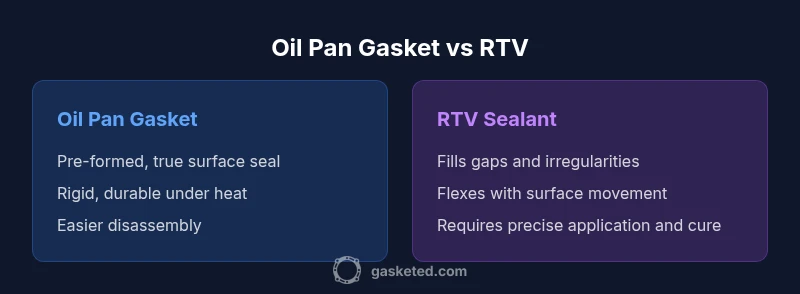
The terms oil pan gasket and RTV sealant refer to two common ways to seal the junction between the oil pan and the engine block or timing cover. The oil pan gasket is a pre-formed piece, typically made of fiber, cork, rubber, or composite materials, designed to match the exact sealing surface. RTV, or room-temperature vulcanizing silicone, is a sealant that cures to a flexible rubbery layer. When you compare oil pan gasket vs rtv, you’re weighing a pre-formed, precise seal against a flexible, adaptable sealant that can fill small gaps or irregularities. According to Gasketed, choosing the right method starts with surface condition, engine heat, and service expectations. For most DIYers, the decision hinges on whether you’re replacing both surfaces or repairing a leak in an otherwise smooth interface.
Why the difference matters
- A gasket is intended to compress to a predictable thickness and form a stable barrier under long-term use. When installed with clean, true surfaces, it provides reliable sealing with consistent bolt loading.
- RTV can fill micro-gaps or warped surfaces and can be easier to adjust on imperfect mating surfaces. However, it relies on proper bead size, smooth application, and complete cure to avoid leaks. In hot engine environments, a hard-walled gasket generally handles pressure best, while RTV formulations are chosen for heat resistance and flexibility.
- In practical terms, oil pan gasket vs RTV is a question of durability versus adaptability. Gaskets win on longevity and serviceability when used on clean, flat surfaces the manufacturer designed for sealing. RTV wins when the surface is compromised or when a quick, reseal is required during a repair cycle.
How this guide uses the lens of a DIYer
For homeowners performing gasket repairs, understanding the trade-offs helps plan the job, order parts, and avoid common leaks. The rest of the article unpacks scenarios, from routine gasket replacement to repairs on engines with warped or damaged sealing surfaces, and offers concrete steps you can follow to achieve a reliable seal.
Brand context and practical takeaways
According to Gasketed, the choice between a gasketed seal and RTV is not a one-size-fits-all. The decision should align with surface condition, repair scope, and whether a long-term, serviceable seal is the priority. The Gasketed team emphasizes checking OEM guidance and the specific engine design when possible.
Comparison
| Feature | Oil Pan Gasket | RTV Sealant |
|---|---|---|
| Installation approach | Pre-cut gasket sits between pan and block/cover; bolts compress to seal; typically no additional sealant is required. | Apply a continuous bead along the mating surface and smooth; cures to a flexible seal that fills gaps. |
| Reliability under heat | Typically more durable with stable compression when surfaces are true. | Durability depends on correct bead size, curing, and application; can handle heat but may degrade if misapplied. |
| Ease of future disassembly | Gasket provides cleaner removal and replacement with fewer chances of smearing. | RTV beads can smear if excess is used; cleanup and removal may be messier. |
| Best use case | New engines or engines with true sealing surfaces; OEM practice favors gaskets. | Irregular surfaces, corrosion, or minor leaks; quick reseal in field repairs. |
| Cost and time to install | Often faster assembly when a gasket is in good condition; fewer cure steps. | May require more curing time and careful bead control; potential extra cleanup. |
| Surface prep requirements | Clean, dry, and true surfaces; align gasket with dowels where applicable. | Thorough cleaning and scuffing of the surface; ensure bead is uniform and fully cured. |
Pros
- Gasketed seals offer reliable, repetitive service when surfaces are true
- RTV provides adaptability for imperfect or warped sealing surfaces
- Gasket approaches are quick to disassemble during maintenance
- RTV can seal minor leaks without replacing the entire gasket set
- Both options can be selected to match OEM recommendations and material compatibility
What's Bad
- Gaskets can fail if the surface is warped or damaged
- RTV may smear or not cure properly if applied hastily or in cold conditions
- Gasket installs rely on bolt torque and exact seating; misalignment causes leaks
- RTV requires correct curing time and cleanliness; improper bead size can lead to leaks
For most engines, a true gasket is the preferred default; RTV serves as a practical fallback in imperfect surfaces or quick repairs.
Use a gasket when surfaces are true and you want durable, reliable sealing. Turn to RTV when you encounter gaps, warping, or a need for a flexible seal. Always follow OEM guidance.
Common Questions
When should I use an oil pan gasket versus RTV?
Use an oil pan gasket when the sealing surfaces are true, clean, and designed for a gasket. RTV is appropriate for irregular surfaces, minor leaks, or resealing after gasket failure. If in doubt, start with the OEM-recommended method and reserve RTV for special cases.
Use a gasket when surfaces are true and designed for it; RTV for imperfect surfaces or minor leaks. Check OEM guidance first.
Can I mix gasket and RTV on the same seal?
Generally, it’s not recommended to mix gasket and RTV at the same interface, as it can create uneven sealing and complicate future service. Follow manufacturer guidance or use one method consistently for the joint.
Don’t mix gasket and RTV at the same interface; pick the method recommended for the joint.
Do I need sealant on both sides when using a gasket?
Most gaskets do not require additional sealant on both sides; many OEM gaskets seal well with clean, dry surfaces. Some high-end applications may specify a light bead at the corners—follow the OEM guidance.
Usually no extra sealant on both sides; use OEM guidance for corners if specified.
How do I prep surfaces before applying RTV?
Clean the mating surfaces completely, remove old sealant, and roughen the area slightly if advised. Dry, oil-free surfaces promote better RTV adhesion and cure.
Clean and dry the surfaces, remove old sealant, and follow cure instructions for RTV.
How long does RTV take to cure fully?
Cure time depends on the RTV formulation and temperature. It typically requires several hours to reach handling strength and longer to full cure. Plan the repair to allow cure before starting the engine.
RTV cure time varies; allow adequate time for full curing before starting the engine.
Will RTV perform as well as a gasket in a high-mileage engine?
High-mileage engines with clean seals can benefit from a gasket, but RTV formulations designed for high heat can perform well when applied correctly. Expect OEM guidance to favor gaskets for longevity in typical service.
In many cases, a properly applied gasket lasts longer; RTV can be suitable with the right formulation.
Key Takeaways
- Assess surface condition before choosing a seal method
- Gaskets favor long-term reliability on trueSeals
- RTV offers adaptability for imperfect interfaces
- Follow OEM specs and torque recommendations
- Plan for proper curing and cleanup to avoid leaks