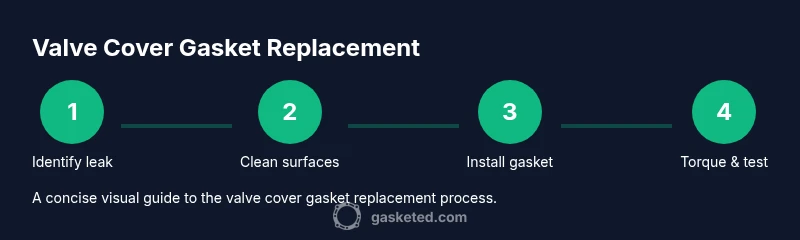
Seal Valve Cover Gasket: A DIY Guide
Master the seal: replace or reseal your valve cover gasket with a practical, step-by-step guide that covers tools, torque specs, and troubleshooting to prevent oil leaks.


To seal a valve cover gasket, start by locating oil leaks around the valve cover, then clean the mating surfaces and replace the gasket with a new, compatible seal. Use the manufacturer's torque specs for the valve cover bolts, replace any damaged components, and recheck for leaks after starting the engine. This routine protects reliability and prevents engine damage.
What a valve cover gasket is and why sealing matters
A valve cover gasket sits between the valve cover and the cylinder head, sealing the top of the engine’s cylinder head and keeping oil from escaping. A good seal prevents leaks, which can contaminate ignition components, foul spark plugs, and cause a misfire or reduced oil pressure. According to Gasketed, ensuring a proper seal on a valve cover gasket reduces oil leaks and protects engine performance. The gasket material, the fit, and how you torque the fasteners all influence reliability. Modern engines typically use a rubber or silicone gasket that conforms to the head and cover once compressed, forming a reliable seal across temperature changes and engine vibrations. When the seal fails, it is usually due to aging rubber, over-tightening, or surface damage that prevents proper contact.
Signs you need to seal or replace the valve cover gasket
Oil leaks around the valve cover usually appear as a thin, shiny trail along the engine’s side or onto the exhaust manifold, sometimes accompanied by a burnt oil smell. You may notice oil on the spark plug wells or coil packs, or you might see dirt buildup around a damp area under the valve cover. A leaking gasket can also allow contaminants into the camshaft area, which can degrade performance. Gasketed analysis suggests that even small gasket wear can lead to increased oil consumption and minor misfires over time, so addressing leaks early helps maintain engine efficiency and longevity.
Choosing the right gasket: material, shape, and sealant options
Valve cover gaskets come in several materials, including rubber, silicone, cork, and composite blends. The choice depends on engine design, heat exposure, and the presence of integrated seals for the valve covers. High-mileage engines may use cork-like compounds, while newer engines favor silicone or reinforced rubber for better heat resistance. Some engines require a gasket with integrated seals for the oil galleries; others permit a gasket plus a small amount of RTV sealant. Always check the OEM specification for your engine. A quality gasket that matches the exact valve cover shape and bolt pattern is essential for a durable seal.
Tools and steps you should gather before starting
Before you begin, gather tools, a clean workspace, and replacement parts. Look up your vehicle’s service manual to confirm torque specs and any special procedure. The right tools help prevent damage to the valve cover or head, as well as ensure a proper seal. While assembly speeds up with practice, precision is more important than speed when it comes to achieving a long-lasting seal. If in doubt, replace both the gasket and any associated seals for the ignition or PCV system that are near the gasket line.
Cleaning and preparing the surfaces
Surface preparation is critical for a good seal. Remove the valve cover and thoroughly clean the sealing surfaces on both the valve cover and the cylinder head. Use a plastic scraper to remove old gasket material without scratching the metal. Wipe both surfaces with a degreaser or brake cleaner and let them dry completely before installing the new gasket. Any residual oil, dirt, or debris can prevent a uniform seal and lead to leaks. Inspect the surfaces for nicks or deformations; if you see damage, address it before proceeding, as a damaged surface will compromise seal integrity.
Replacing the gasket: sealants, timing, and re-torque
Place the new gasket onto the valve cover or head as specified by the OEM. If the installation requires silicone sealant, apply a thin, uniform bead only at the indicated points; do not underfill or overfill, as excess sealant can smear and glue the gasket incorrectly. Align all inside oil passages and bolt holes, then reinstall the valve cover. Tighten bolts in a criss-cross pattern per the manufacturer’s torque specification, typically in small increments to avoid warping. After initial tightening, recheck torque to ensure a uniform seal while the engine is cool. This careful approach minimizes leaks and prevents distortions.
Reassembly and final leak test
With the gasket seated and bolts torqued to spec, reattach any components you removed (spark plug wires, intake duct, or accessory brackets). Reconnect the battery and start the engine, watching for leaks around the valve cover as the engine reaches operating temperature. A quick idle test followed by a short drive helps reveal any seepage. If you detect a leak, you may need to reseal or re-torque in small increments after the engine cools. Always perform a post-test clean-up so you can observe any future leaks clearly.
Common mistakes to avoid
Avoid reusing an old gasket if it’s deformed or cracked; this is a common source of sudden leaks. Do not over-tighten valve cover bolts — this can crush the gasket or warp the cover. Be careful not to contaminate the seal with oil or primer; a contaminated surface can compromise adhesion and sealing. Skipping surface cleaning or applying excessive sealant can also cause gaps and leaks. Finally, never ignore a persistent oil smell or visible seepage around the gasket area; address it promptly to protect engine health.
Aftercare and maintenance to extend gasket life
Regularly inspect the valve cover area for signs of oil leaks or gasket wear, especially after engine work or coolant changes. Clean the area around the valve cover during servicing to spot drips early. If you live in a region with extreme temperatures, consider periodic rechecks of torque since bolts can loosen over time with thermal cycling. Maintaining a clean engine bay helps you detect leaks quickly and reduces the risk of long-term engine damage.
Tools & Materials
- Torque wrench(Ensure torque specs match OEM guidelines for your engine.)
- Socket set (metric and SAE)(Cover bolt heads and any accessory bolts around the valve cover.)
- Gasket scraper and plastic putty knife(Gently remove old gasket without scratching surfaces.)
- New valve cover gasket(Match part to engine model and OEM specification.)
- Gasket sealant or RTV (optional, see OEM)(Only use where OEM specifies; otherwise not needed.)
- Cleaning solvent (e.g., brake cleaner)(Use to remove oil residue on sealing surfaces.)
- Rags or lint-free towels(Keep the work area clean and dry.)
- Gloves and eye protection(Safety first during disassembly and cleaning.)
Steps
Estimated time: 90-120 minutes
- 1
Prepare and safety check
Park on a level surface, allow the engine to cool, disconnect the battery negative terminal, and gather your tools. This prevents accidental shorts and keeps you organized during disassembly.
Tip: Label wires or hoses as you remove them to ensure correct reassembly. - 2
Remove obstructing components
Loosen and remove any components that block access to the valve cover, such as the air intake duct or ignition coil packs. Keep track of how each part is routed for proper reinstallation.
Tip: Photograph the layout before removal to guide reassembly. - 3
Unbolt and lift the valve cover
Carefully loosen bolts in a criss-cross pattern, then lift the valve cover away from the head. Check for gasket residue in the groove and surface damage on both sides.
Tip: Do not pry with force; if it sticks, gently work it free to avoid warping. - 4
Clean mating surfaces
Use a plastic scraper and solvent to remove old gasket material from both surfaces. Wipe clean with lint-free towels and inspect for scratches or nicks.
Tip: Ensure the surfaces are completely dry before installing the new gasket. - 5
Install the new gasket
Place the new gasket into the groove on the valve cover or head, aligning all bolt holes. If OEM requires sealant, apply a thin bead at the specified points only.
Tip: Avoid stretching the gasket during placement to maintain even compression. - 6
Torque bolts to spec
Reinstall the valve cover and tighten bolts in a criss-cross sequence in small increments to the manufacturer’s torque value. Re-torque after cooling if specified by OEM.
Tip: Use a torque angle method if required by your engine’s spec. - 7
Reassemble and test
Reconnect all components, reconnect the battery, and start the engine. Let it idle and monitor for leaks; perform a short test drive and recheck after cooling.
Tip: Look for fresh oil around the gasket edge during the test drive.
Common Questions
Can I reuse a valve cover gasket after cleaning it?
Reusing a gasket is generally not recommended, especially if it shows cracks, hardening, or deformation. A new gasket ensures a reliable seal and reduces the risk of future leaks.
Usually not. If the gasket is cracked or deformed, replace it to prevent leaks.
Should I use RTV silicone with a new valve cover gasket?
Only use RTV if the OEM specifies it for your engine. Many modern gaskets are designed to seal without sealant, and adding silicone can fill gaps incorrectly or contaminate other seals.
Only use silicone if your manual says so; otherwise skip it.
What torque spec should I use for valve cover bolts?
Torque specs vary by engine; consult the vehicle service manual or OEM guide for the exact value and pattern. Use a calibrated torque wrench and recheck after cooling to ensure accuracy.
Check the manual for your engine’s exact torque pattern and value.
What are common signs of a blown valve cover gasket?
Common signs include fresh oil around the valve cover, burning oil smell, oil on spark plugs, and occasional misfires. A slow seepage may occur over time, especially after engine heat cycles.
Oil around the gasket area and the smell of burning oil usually mean a leak.
Do I need to remove the engine to access the gasket?
Most cars do not require removing the engine. Access depends on the engine layout; some models need removing nearby components for clearance. Always consult the service manual for your specific vehicle.
Usually not, but some engines require extra clearance; check your manual.
How can I prevent future valve cover gasket leaks?
Use the correct gasket material, torque bolts to spec, and ensure clean mating surfaces. Periodic inspections and avoiding oil contamination on the gasket area help prolong life.
Stick to OEM parts, torque correctly, and keep the area clean.
Watch Video
Key Takeaways
- Inspect the gasket and surfaces for wear before replacement
- Use the correct torque sequence and factory specs
- Clean surfaces thoroughly to ensure a reliable seal
- Test for leaks after reassembly and re-torque if needed