Valve Cover Gasket vs Head Gasket: A Practical Comparison
Compare valve cover gaskets and head gaskets: roles, symptoms, repair costs, and DIY vs pro fixes. Learn which gasket needs attention and when to call a pro.


Valve cover gasket vs head gasket: the valve cover gasket seals the valve cover to the head to stop oil leaks; the head gasket seals the head to the engine block to prevent coolant/oil leaks and compression loss. DIYers usually fix VC gaskets first, as they are typically quicker and cheaper, while head gasket work is more invasive and costly and often best handled by professionals.
Valve cover gasket vs head gasket: Framing the comparison
The phrase valve cover gasket vs head gasket is a common source of confusion for DIYers. Understanding the distinct roles and failure modes helps you diagnose leaks and plan repairs without guessing. According to Gasketed, these two gaskets live in different parts of the engine and seal different interfaces, so their symptoms, costs, and repair paths diverge. The valve cover gasket seals the valve cover to the cylinder head and primarily keeps oil from leaking onto engine components. The head gasket seals the cylinder head to the engine block and protects the combustion chamber and cooling system from cross-leaks. In practical terms, mistaking one for the other can lead to misdiagnosis and unnecessary work. This article breaks down the differences, offers practical tips, and provides a framework to decide when to DIY and when to call a pro.
Brand note: The Gasketed team emphasizes a clear understanding of gasket roles to avoid needless repairs and budget surprises.
Key differences at a glance
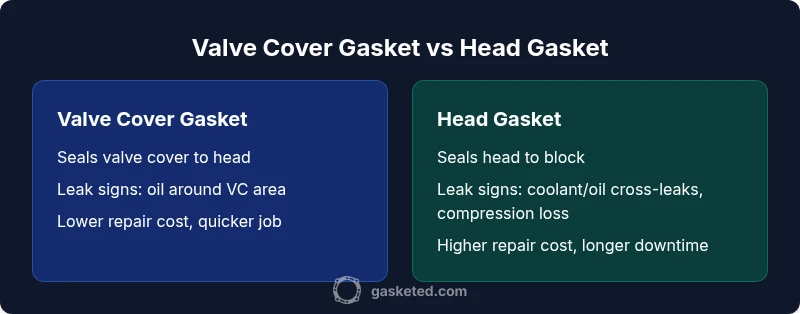
When you compare valve cover gasket vs head gasket side by side, several factors matter most: location, function, failure signs, and repair impact. Location: VC gasket sits between the valve cover and the cylinder head; head gasket sits between the head and the engine block. Function: VC gasket prevents oil leaks; head gasket prevents cross-leaks between coolant/oil and preserves compression. Failure signs: VC leaks show oil around the valve cover area; head gasket failures show coolant loss, white exhaust, milky oil, or misfires. Repair impact: VC gasket replacement is less invasive and faster; head gasket replacement is labor-intensive and costlier due to possible head removal and machining. These differences influence decision-making for DIY repairs, shop estimates, and maintenance planning. For most homeowners, understanding these core distinctions helps allocate time and budget efficiently.
Valve cover gasket: role, symptoms, and diagnosis
The valve cover gasket is a relatively simple seal that keeps engine oil contained around the top of the engine. Its failure usually manifests as an oil seep or drip around the valve cover area, an oily valve cover surface, or new oil spots on the driveway. Because the problem stays localized, diagnosis is often straightforward: clean the area, inspect for fresh oil, and verify that the leak stops after the gasket is reseated or replaced. Proper torque specs and sealant selection matter; over-tightening can damage the cover or gasket, while under-tightening allows leaks to persist. Routine maintenance, including periodic valve cover removal for inspection, is a good habit. The cost is typically lower than head gasket work, and many DIYers can complete the job with basic tools. Note that some engines require gasket sealants compatible with aged seals, and gasket material choices (plastic, cork, or rubber composites) influence longevity.
Head gasket: role, symptoms, and consequences
The head gasket is a critical seal between the engine block and cylinder head. Its failure is more dramatic and costly because it can allow coolant and oil to mix, or compression to leak, leading to overheating, misfires, and engine damage. Common signs include persistent coolant loss with no visible leaks, white exhaust, milky oil on the dipstick, rising engine temperature, and occasional misfire under load. Diagnosing a head gasket problem often requires pressure tests, coolant analysis, and sometimes more advanced diagnostics. Repairs are more involved: removing the cylinder head, verifying head warp, resurfacing, and replacing the gasket, with additional components possibly needing replacement. The consequences of a failed head gasket can be severe, potentially requiring machining and engine reassembly. The cost will reflect labor intensity and parts, making professional service a common path for many vehicles.
Brand note: Gasketed analysis reminds readers that head gasket issues tend to be costly when they occur, underscoring the value of early detection.
Costs, labor, and replacement timing
Costs for valve cover gasket replacement are generally far lower than for a head gasket job. Parts are modest, and labor times are shorter, especially on vehicles with accessible VC gaskets. Head gasket replacement, by contrast, can push total costs into the higher range due to head removal, potential machining, and additional parts like timing components and coolant. Timing considerations also matter: many engines require timing belt/chain alignment during head work, which adds complexity and risk if not performed properly. Replacement timing for either gasket depends on signs of wear, oil leaks, and cooling issues. In older engines, routine maintenance may extend gasket life, but a failure often demands attention quickly to avoid cascading damage. Gasket quality, engine design, and shop rates influence final numbers, so use ranges rather than fixed figures when budgeting. The key is to plan for labor hours, parts, and potential contingencies.
DIY considerations and safety
For DIYers, the valve cover gasket is often a good starting point due to its relatively simple access and lower risk. Basic tools, a torque wrench, and the correct gasket kit are typical requirements. Safety first: disconnect the battery to prevent shorts, ensure the engine is cool, and work in a clean, well-lit space. Follow torque specs precisely to avoid leaks or warping. If your engine uses a timing chain and head removal is anticipated, or if you find signs of coolant in oil, plan for professional service. Always check for flange warps or damaged sealing surfaces; minor damage can be repaired if addressed early, but larger imperfections may require head work. The decision to DIY should consider the scope, your mechanical skill, and available tools. Gasketed emphasizes that careful planning and following manufacturer torque specs greatly reduce risk. When in doubt, consult a guide or a local professional for a diagnostic.
Step-by-step checks you can perform at home
- Inspect visually for oil leaks around the valve cover; clean area; run engine and recheck.
- Check the oil level and condition; milky oil indicates coolant cross-contamination, which may involve the head gasket.
- Look for white exhaust smoke, overheating, and coolant loss.
- If you suspect a leak, reseat the valve cover gasket per torque specs and monitor.
- For head gasket concerns, perform a cooling-system pressure test and consult a pro.
Common myths and practical pitfalls
- Not all leaks around the valve cover indicate a failed VC gasket; some cases show a loose oil cap or a PCV issue.
- A head gasket failure does not always show obvious coolant leakage; internal cross-leaks can occur.
- DIY fixes may be faster but could mask the underlying issue and create misdiagnosis risk if tests are not thorough.
- Reusing old gaskets is not recommended; replacements ensure proper sealing and longevity.
Maintenance plan to prevent gasket failures
- Establish a routine to monitor oil and coolant levels; address leaks early.
- Keep the cooling system clean and functioning; a healthy cooling system reduces head gasket risk.
- Periodically inspect the valve cover area for seepage and torque VC bolts to spec.
- Use quality gaskets and sealants compatible with your engine design.
- Schedule professional engine diagnostic checks if you notice symptoms beyond simple leaks.
Authority sources
- National Institute of Standards and Technology (NIST) engineering guidelines on gasket materials and sealing surfaces
- Automotive Research Center (ARC) guides for internal combustion engine maintenance
- University automotive extension publications on engine gaskets and basic diagnostics
Conclusion and next steps
The valve cover gasket and head gasket are not interchangeable; they protect different engine interfaces with distinct failure modes. By treating VC gasket issues as a routine maintenance item and reserving head gasket work for signs of cross-leakage or compression loss, you can protect your engine and your budget. The Gasketed team recommends proactive inspection and timely service when symptoms arise, supported by careful diagnostics and professional assessment when needed.
Comparison
| Feature | Valve Cover Gasket | Head Gasket |
|---|---|---|
| Primary function | Seals valve cover to cylinder head to prevent oil leaks | Seals cylinder head to engine block to prevent coolant/oil leaks and maintain compression |
| Failure signs | Oil seepage at valve cover, oil spots on surfaces | Coolant loss, white exhaust, milky oil, misfires |
| Repair complexity | Relatively straightforward; reseal or replace gasket | Labor-intensive; may require head removal and machining |
| Durability & lifespan | Typically long with proper torque and maintenance | Duration depends on head/gasket condition; failures can be catastrophic |
| Typical cost (parts+labor) | Lower, often DIY-friendly | Higher, often requires professional service |
| Best for | Oil leak prevention and routine maintenance | Engine compression integrity and cooling system protection |
Pros
- Clear diagnostic path for leaks and maintenance
- VC gasket work is usually cheaper and quicker
- DIY-friendly with basic tools
- Head gasket failures, while rarer, are more severe when they occur
- Prevents oil leaks and keeps engine clean
What's Bad
- Head gasket replacement is expensive and time-consuming
- Misdiagnosis risk if signs overlap
- DIY risks if tools or torque specs are not followed precisely
- Head work may require timing checks and machining
Valve cover gasket issues usually take priority for quick wins, but head gasket problems demand careful professional evaluation
VC gasket problems are typically cheaper and faster to fix, making them a common first fix. Head gasket failures are more serious and costly, so proper diagnosis and professional service are advised when signs point to cross-leaks or compression loss.
Common Questions
What is the difference between a valve cover gasket and a head gasket?
The valve cover gasket seals the valve cover to the cylinder head to prevent oil leaks, while the head gasket seals the cylinder head to the engine block to prevent coolant/oil leaks and preserve compression. They operate in different parts of the engine and have distinct failure modes.
The valve cover gasket keeps oil in around the valve cover area, while the head gasket seals critical boundaries between head and block to prevent leaks and maintain compression.
Can you drive a car with a leaking head gasket?
Driving with a suspected head gasket leak is risky. If you notice coolant loss, white smoke, or milky oil, have the vehicle inspected promptly to prevent severe engine damage. In many cases, you should stop driving and seek professional evaluation.
If you suspect a head gasket leak, avoid driving long and get a professional check soon to protect the engine.
Are valve cover gasket leaks dangerous?
VC gasket leaks mainly cause oil loss and messy engine bays. They are generally less dangerous to the engine than head gasket leaks, but oil on hot exhaust components can pose a fire risk and reduce lubrication where needed.
VC leaks are usually more of a maintenance nuisance, but they should be fixed to prevent oil fires or misrouting of oil.
How long does VC gasket replacement take?
VC gasket replacement is typically a few hours for a DIYer, depending on engine layout and accessibility. It’s faster when components are easy to access and torque specs are straightforward.
Most DIY VC gasket jobs take a few hours, depending on access and tools.
Should I replace both gaskets at the same time?
If a head gasket is suspected, it’s prudent to assess the head and related components at the same time. However, VC gasket replacement can be done separately if only oil leaks are present and there are no signs of head gasket failure.
If the head gasket is suspected, have a professional check; VC gasket work can be done separately if only oil leaks are evident.
What are common signs of a head gasket failure?
Common signs include coolant loss without visible leaks, milky oil on the dipstick, white exhaust smoke, overheating, and occasional engine misfires under load. Diagnostic tests like pressure tests help confirm the issue.
Look for coolant loss, milky oil, overheating, and white smoke to clue in a head gasket problem.
What maintenance steps prevent gasket failures?
Regularly monitor oil and coolant levels, keep the cooling system clean, tighten valve cover bolts to spec, and use quality gaskets appropriate for your engine. Proactive diagnostics can catch problems before they escalate.
Regular checks, quality parts, and proactive diagnostics help prevent gasket failures.
Is DIY replacement feasible for head gaskets?
Head gasket replacement is a major job that often requires engine timing and head machining. If you lack the tooling or experience, it’s typically best handled by a shop with specialized equipment.
Head gasket work is usually best left to professionals unless you have substantial experience.
Key Takeaways
- Inspect valve cover areas regularly for oil leaks
- VC gasket repairs are usually quicker and cheaper than head gasket work
- Head gasket issues require attention to cooling, compression, and engine health
- DIY is feasible for VC gasket work with the right tools
- Always follow torque specs and use compatible gaskets