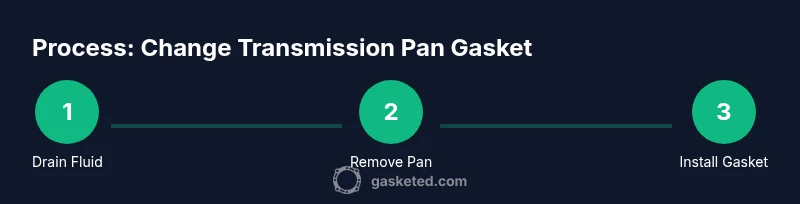
Changing Transmission Pan Gasket: DIY Guide for Homeowners
Learn to change a transmission pan gasket with our step-by-step DIY guide. Drain fluid, replace the gasket, clean surfaces, refill to spec, and test for leaks with safety tips for your transmission model.


By the end, you will drain the transmission fluid, detach the pan, install a new gasket (and seals if included), clean the mating surfaces, reseat the pan, refill to spec, and verify there are no leaks. This is a common DIY repair for many automatic transmissions and offers a solid foundation in gasket maintenance.
What a transmission pan gasket does and why it leaks
According to Gasketed, the transmission pan gasket seals the transmission fluid against the pan. Heat, vibration, and sediment can crack or deform the gasket over time, allowing fluid to escape and air to enter. Leaks in the pan area can mask deeper transmission problems, because fluid level and temperature affect operation. Before you begin, set up a clean workspace, verify you have the correct gasket kit for your model, and inspect the pan and sealing surface for obvious damage. If the sealing surface is dented or warped, you may need to repair or replace the pan instead of reusing it. Proper gasket seating is essential to long-term reliability.
Why the gasket matters for longevity and performance
The gasket ensures a precise seal between the transmission pan and the valve body area where fluid resides. A good gasket prevents fluid loss, maintains proper hydraulic pressure, and helps keep contaminants out. Even small leaks can lead to low fluid levels, which raises operating temperatures and can shorten transmission life. When replacing, ensure you’re not just swapping a worn gasket; examine the pan for nicks, scratches, or residual old gasket material that could prevent a clean seal. A clean, dry surface is your best ally for a leak-free outcome.
Compatibility, gasket types, and common DIY choices
Not all gaskets are the same. Some transmissions use a molded rubber gasket, others rely on RTV sealant in addition to a gasket, and some require a metal or cork-like gasket. Always consult the service manual for torque specs, sealant recommendations, and the correct gasket kit. If your kit includes a seal at the rear or a small O-ring, replace it to prevent a future leak. For many DIYers, a gasket kit plus a small amount of gasket sealant (when recommended) offers a reliable, cost-effective approach to gasket maintenance.
Safety and environment considerations during the repair
Drain the fluid in a well-ventilated area and collect it in a sealed container for proper disposal. Wear eye protection and gloves, as transmission fluid can irritate skin. Use a drip pan and towels to keep the workspace clean. After the repair, dispose of old gasket materials and fluid according to local regulations. Avoid spilling on driveways or soil, and never mix used fluid with other chemicals. A tidy workspace reduces the risk of drops and provides better visibility for reassembly.
Tools & Materials
- Pan gasket kit (specific to transmission model)(Ensure compatibility with your vehicle year, make, and model)
- Transmission fluid(Use the manufacturer-recommended type and viscosity)
- Drain pan(Large enough to hold the full fluid capacity)
- Socket wrench set and extensions(Sizes match pan bolts)
- Torque wrench(Torque to spec from service manual)
- Screwdrivers (flat and Phillips)(For pan screws and pry points)
- Brake cleaner or gasket remover(Clean mating surfaces thoroughly)
- Rags and a drip mat(Keep area tidy and absorb spills)
- Gloves and eye protection(Safety first)
- Gasket sealant (optional, per manual)(Only if the manual calls for it)
- Gasket scraper or plastic putty knife(Remove old gasket material without gouging)
Steps
Estimated time: 2-4 hours
- 1
Prepare the vehicle and drain fluid
Park on a level surface and engage the parking brake. Raise the vehicle safely if needed. Place a drain pan beneath the transmission drain plug or pan. Remove the drain plug to drain fluid or, if necessary, loosen bolts to drain from pan. Allow complete drainage before removing the pan.
Tip: If there is a large amount of fluid, plan for a second catch pan to avoid overflow. - 2
Disconnect electrical connectors and secure the area
Unplug any transmission sensors or wiring that may obstruct pan removal. Use a small tray to keep bolts organized as you loosen the pan bolts in a crisscross pattern.
Tip: Label bolts if you’re unsure which hole they came from to avoid misalignment on reassembly. - 3
Remove the pan bolts and detach the pan
Loosen all pan bolts in a star pattern and gradually loosen to avoid bending the pan gasket. Gently pry the pan away from the sealing surface, allowing residual fluid to escape into the drain pan.
Tip: Keep the bolt pattern in mind for reinstallation; note any bent or damaged bolts. - 4
Clean the pan and sealing surface
Carefully remove the old gasket material and clean both mating surfaces with a solvent. Ensure the surface is dry and free of oil, dirt, and residue that could compromise the new seal.
Tip: Do not gouge the sealing surface; use a plastic scraper if needed. - 5
Install the new gasket and inspect seals
Place the new gasket onto the pan or onto the sealing surface as instructed by the kit. Inspect any O-rings or seals and replace as needed. If the kit includes sealant, apply as directed by the manual.
Tip: Align gasket holes with pan holes to avoid misalignment when reinstalling bolts. - 6
Reattach the pan and torque the bolts
Reposition the pan and install bolts by hand before tightening. Tighten in a crisscross pattern to the recommended torque in the service manual. Wipe away any excess sealant or fluid that may squeeze out.
Tip: Finish by verifying all bolts are evenly torqued to spec to prevent leaks. - 7
Refill transmission fluid to the correct level
Reconnect any disconnected lines or sensors. Refill with the manufacturer-specified fluid type and quantity. Start the engine and run through a gear cycle to circulate fluid.
Tip: Check for leaks around the pan and drain plug after the first heat-up cycle. - 8
Check for leaks and test drive
With the vehicle securely supported, check for any signs of leaks around the pan and gasket area. Lower the vehicle and take a short test drive, then recheck fluid level and the pan area.
Tip: If you see a leak, re-tighten bolts in small increments and recheck after cooling. - 9
Final inspection and cleanup
Wipe down any spilled fluid. Double-check the torque on all bolts. Dispose of used fluid and old gasket material per local regulations.
Tip: Keep a record of the parts and torque specs for future maintenance.
Common Questions
What is a transmission pan gasket?
The transmission pan gasket seals the pan to the transmission housing, preventing fluid leaks. It is critical for maintaining proper fluid level and hydraulic pressure. Replacing it is a common DIY task when you notice leaks around the pan.
A transmission pan gasket seals the pan to the transmission to prevent leaks. Replacing it is a common DIY task when you see drips near the pan.
Can I reuse a gasket if it looks good?
In most cases, you should replace the gasket whenever you remove the pan. A reused gasket may not seal properly and could leak soon after installation. Follow your vehicle’s service manual recommendations.
Usually you should replace the gasket whenever you remove the pan. A reused gasket may leak after installation.
Do I need additional sealant with my gasket kit?
Some transmissions require a gasket with sealant or RTV in certain areas as specified by the manual. If your kit includes sealant recommendations, follow them precisely to avoid over-application.
Some kits need sealant in specific spots; follow the manual for where and how to apply it.
What torque should the pan bolts have?
Torque the pan bolts to the specification in the service manual. Too tight can warp the pan; too loose can cause leaks. Tighten in a crisscross pattern for an even seal.
Torque to the manual, using a crisscross pattern to avoid warping or leaks.
Is a transmission flush required after replacing the gasket?
Not always. A gasket replacement often requires a fluid top-up or drain to correct level. A full flush is only recommended if the manual or a diagnostic indicates contaminated fluid.
Usually not a full flush unless the manual says so or you suspect dirty fluid.
How soon can I test-drive after replacement?
Wait until the pan is sealed and fluid level is correct before driving. A short test drive after the initial fill helps verify no leaks and proper shifting.
Test drive after ensuring the seal is tight and the fluid level is correct.
Watch Video
Key Takeaways
- Drain and clean thoroughly to prevent leaks
- Use the correct gasket kit and torque specs
- Inspect the pan for damage and replace damaged seals
- Refill to spec and test for leaks after installation