Head Gasket: When to Replace and How to Do It
Learn when to replace your head gasket with expert guidance on symptoms, diagnostics, and the DIY vs professional path. Plan a safe, thorough replacement and protect your engine.


To know when to replace a head gasket, trust symptoms and test results over generic mileage. Replace the gasket if overheating returns after fixes, coolant loss with no external leak, milky oil, white exhaust smoke, or persistent compression loss. A failed leak-down or combustion-gas test confirms the need for replacement and prevents further engine damage.
Understanding head gaskets and why replacement timing matters
The head gasket is a critical seal between the engine block and the cylinder head. It prevents combustion pressures from entering cooling channels and keeps oil and coolant separate. When it fails, you can lose compression, contaminate coolant with oil, and cause overheating. Replacement timing matters because improper reassembly, missed warpage, or using a substandard gasket can lead to repeated failures. According to Gasketed, the head gasket's integrity depends on clean mating surfaces, correct torque, and proper cooling-system management. For DIYers, recognizing the value of a careful teardown and reassembly reduces the risk of engine damage and costly repairs down the line.
Recognizable symptoms that indicate you may need a new head gasket
Symptoms often overlap with other engine issues, so a thorough diagnostic approach is essential. Look for overheating that keeps returning, persistent coolant loss with no visible leaks, milky or frothy oil, white smoke from the exhaust, or a steady drop in compression across one or more cylinders. The Gasketed team notes that coolant and oil can cross-contaminate when the gasket fails, which is a strong signal to investigate further. If you observe these signs, start with non-destructive tests rather than assuming a blown gasket based on one symptom.
How to test for a failing head gasket (diagnostic steps)
Begin with the engine cold and safety in mind. A compression test assesses cylinder pressures; consistently low or uneven readings point to a gasket or head issue. A leak-down test helps quantify how much air leaks and where it escapes, which can indicate whether the leak is into the intake, exhaust, or cooling system. A chemical block test detects exhaust gases in the coolant, offering a confident indication of a breach. For accuracy, perform tests on a cooled engine, purge the cooling system, and document all observed symptoms for comparison.
Interpreting test results: what to do next
If compression and leak-down tests indicate a gasket failure, replacement is typically the recommended path, with a full surface inspection of the head and block for warping or cracks. If results are inconclusive, consider repeating tests or seeking professional evaluation to avoid premature, costly mistakes. Based on Gasketed research, follow a structured diagnostic flow and avoid rushing to replacement without solid confirmation. Accurate results save time and money and reduce the risk of repeating the failure.
How to weigh replacement vs repair: decision framework
Deciding between a full head gasket replacement and a repair route hinges on the extent of damage. If the cylinder head or block shows warping, cracking, or recurring leaks after a repair attempt, replacement is usually the safer long-term choice. If the surfaces are clean and true, and the gasket is available in a proper kit, replacement may be reasonable. Use manufacturer torque specs, verify head surface flatness, and consider the overall cost and reliability when making the call.
Practical steps to prepare for replacement
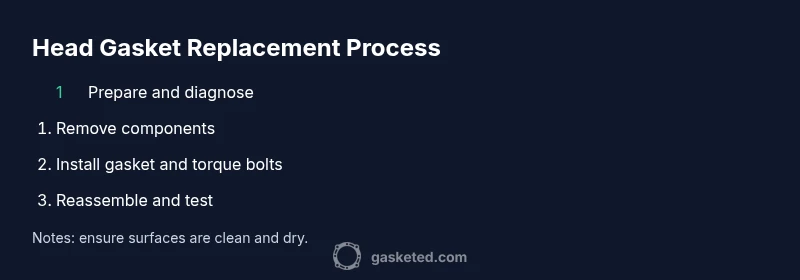
Before you begin, assemble a complete parts and tool list, and obtain the correct head gasket kit for your engine. Drain coolant and engine oil, then safely elevate and support the vehicle. Remove components necessary to access the cylinder head, mark timing components, and prepare a clean workspace. Verify you have the service manual or torque sequence chart and check the head and block surfaces for warping or damage before removing the old gasket. A careful teardown reduces risk and ensures that the replacement goes smoothly.
Common mistakes that delay or ruin a gasket replacement
Common missteps include rushing the teardown, failing to inspect the head and block for warp or cracks, neglecting to clean mating surfaces thoroughly, and skipping the correct torque pattern. Reusing old head bolts when new ones are required can lead to distortion or failure. Another frequent error is not bleeding the cooling system properly, which can cause air pockets and overheating after reassembly. Plan ahead and follow the service manual closely to avoid these issues.
After replacement: maintenance to protect the new gasket
After installing a new head gasket, verify all fasteners are torqued to spec and retightened after an initial heat cycle if the manual calls for it. Bleed the cooling system completely to remove air pockets, then refill with fresh coolant. Change the engine oil and filter to remove any contaminants from the teardown. Monitor for leaks and overheating during the first start-up and the first few days of operation. Regular inspection helps ensure a long life for the gasket.
Tools & Materials
- Torque wrench(Calibrated to engine-specific torque specs)
- Socket set (metric/standard)(Includes sockets, ratchet, and breaker bar)
- Head gasket replacement kit(Should include head gasket, dowels, and seals as needed)
- Gasket scraper (plastic or brass)(Avoid metal scrapers that can score surfaces)
- Engine oil, fresh(New oil for a full oil change after teardown)
- Coolant/antifreeze(New coolant suitable for your engine)
- Feeler gauge or straightedge(Check head/block surface flatness)
- Torque sequence chart or service manual(Follow manufacturer bolt order and specs)
- Gasket sealant (where required)(Only if manual specifies use on particular surfaces)
- Clean rags, degreaser, and solvent(For cleaning surfaces and parts)
Steps
Estimated time: 8-12 hours
- 1
Disconnect power
Disconnect the negative battery cable to prevent shocks or shorts during teardown. Ensure the vehicle cannot start unintentionally.
Tip: Double-check grounds and wear eye protection when working near wiring. - 2
Drain fluids
Drain engine oil and coolant to prevent spills when removing the head and gaskets. Catch fluids in proper containers for recycling.
Tip: Keep track of drained amounts to verify proper refill later. - 3
Access the head
Remove components obstructing the cylinder head (intake, exhaust, accessories) while documenting their positions for accurate reassembly.
Tip: Take photos or label parts to ensure correct placement later. - 4
Loosen head bolts
Loosen bolts in the reverse torque sequence from the manual. Do not remove them all at once; work gradually to relieve pressure evenly.
Tip: If bolts resist, apply steady, even force and avoid impacts. - 5
Inspect surfaces
Remove the old gasket and inspect the head and block surfaces for warping, cracks, or corrosion. Clean surfaces thoroughly before inspecting.
Tip: Use a straightedge across the surface to check for light gaps. - 6
Prepare for gasket install
Dry-fit the new gasket to confirm orientation and seating. Clean all oil and coolant passages; repair any damage before reassembly.
Tip: Lay out parts in order to minimize mistakes during installation. - 7
Install new gasket and components
Place the new gasket, align with dowels, and reinstall the cylinder head with new bolts if required by the kit. Reattach all components in their original locations.
Tip: Do not reuse old bolts if the manufacturer requires new ones. - 8
Torque and reassemble
Follow the manufacturer torque sequence and specifications precisely. Reinstall belts, hoses, sensors, and wiring as originally arranged.
Tip: Use a torque wrench rather than a clicker to ensure accuracy. - 9
Refill and test
Refill oil and coolant, bleed the cooling system, and perform a controlled start-up. Check for leaks and monitor temperatures closely at the first run.
Tip: Keep an eye on gauge readings and listen for abnormal noises.
Common Questions
What are the most common signs of a blown head gasket?
Common signs include overheating that returns, coolant in the oil or oil in the coolant, milky oil, white exhaust smoke, and sudden loss of compression. These symptoms often overlap with other issues, so use diagnostics to confirm.
Common signs include overheating, milky oil, and white exhaust smoke. Use tests to confirm before replacing.
Can you drive a car with a blown head gasket?
Driving a car with a suspected head gasket failure can cause severe engine damage. If you suspect a gasket problem, limit driving and arrange professional inspection soon.
It's risky to drive; get it checked soon to prevent serious damage.
Is head gasket replacement a DIY-friendly job for beginners?
Head gasket replacement is technically possible for capable DIYers with the right tools and service manual. Beginners should seek help from a qualified technician due to the critical tolerance requirements and safety risks.
It can be done by experienced DIYers with the right tools; beginners should consider pro help.
How long does a head gasket replacement typically take?
The replacement timeline varies by engine design and access complexity. Plan for a full day or more, allowing for disassembly, gasket installation, and testing.
Most replacements take a full day or longer, depending on the engine.
What maintenance should follow a gasket replacement?
Flush and replace coolant, inspect cooling components, and change the oil and filter. After the first heat cycle, recheck torque as specified and look for leaks during the test run.
Flush coolant, change oil, and recheck torque after the first heat cycle.
Can a leak-down test locate the leak direction?
Yes, a leak-down test can indicate whether the leak is in the combustion chamber, intake, or exhaust path, helping pinpoint gasket or head issues.
Leak-down tests help locate where the leak is coming from.
Watch Video
Key Takeaways
- Identify symptoms early to prevent further damage
- Use proper diagnostics before replacement
- Follow exact torque specs and bolt sequence
- Bleed cooling system thoroughly after reassembly
- Monitor for leaks during initial startup