How to Know When the Head Gasket Is Going: Signs and Steps
Urgent, practical guidance for DIYers on recognizing head gasket problems, diagnosing symptoms, and deciding when to repair or call a pro. Learn safe checks, tests, and prevention tips.


Steps to know when a head gasket is going: watch for overheating, white exhaust, coolant loss, oil contamination, and rough running. These signs often appear together after an overheating event. Start with a cooling system check, a compression test, and a professional inspection if symptoms persist.
Signs to Look For
If you're wondering how to know when head gasket is going, start with a few telltale symptoms that often show up together. According to Gasketed, the most common early indicators involve the cooling system and oil-coolant interactions. Look for persistent overheating, unexplained coolant loss, white exhaust smoke, milky oil on the dipstick, bubbles in the radiator, and rough engine performance. While each symptom alone can have other causes, several in combination strongly point to a gasket issue. Keep a log of when symptoms occur, how long they last, and any maintenance work that preceded them.
- Overheating or coolant loss that reoccurs after a full cool-down
- White or bluish exhaust smoke from the tailpipe
- Milky, frothy oil or oil that looks contaminated by coolant
- Bubbles or foam in the radiator or overflow tank
- Rough idle, misfires, or reduced power during acceleration
Remember: the presence of multiple signs increases the likelihood of a head gasket problem and warrants step-by-step testing.
How a Head Gasket Fails (What Happens Inside the Engine)
A head gasket seals the cylinder head to the engine block, keeping coolant, oil, and combustion gases in their respective pathways. When the gasket fails, exhaust gases can leak into the coolant passages or coolant can seep into cylinders. This breach causes overheating, coolant loss, and milky oil, and can accelerate corrosion of cooling channels and cylinder walls. Mechanical stress, severe overheating, or manufacturing defects can initiate failures around the gasket seating surfaces. Understanding this inside view helps explain why symptoms cluster and why symptom-based fixes are risky without proper testing. Gasketed emphasizes that the moment you see early signs, plan a measured diagnostic approach rather than improvising a repair.
Common Misreads and Home Tests
Many car owners mistake thermostat issues or water pump failures for head gasket problems. While those components can produce overlapping symptoms, exact patterns help differentiate them. For example, a stuck thermostat typically causes gradual overheating without milky oil, whereas a failing gasket often coincides with coolant in oil or exhaust gas in coolant. Home tests like checking coolant color, inspecting oil for coolant emulsification, and observing for white smoke are useful, but they don’t replace a calibrated diagnostic sequence. If in doubt, stop driving the vehicle to avoid further damage and seek a professional diagnosis.
Diagnostic Checks You Can Do Safely
Prioritize safety and do only non-risky checks before professional testing. Start with: 1) Coolant level and condition check—note color and smell; 2) Inspect oil for a creamy emulsion indicating coolant intrusion; 3) White smoke observation on startup (after engine cool-down); 4) Pressure test cooling system for leaks; 5) Use a spark plug and compression test if you have access to a basic toolset. These checks reduce guesswork and prepare you for more definitive tests like a leak-down test or an exhaust-gas-in-coolant test when you bring the car to a shop. Remember, pressurized cooling systems can burst hoses; release pressure only according to manufacturer guidance and with the system cooled.
Step-By-Step: Quick Path to a Decision
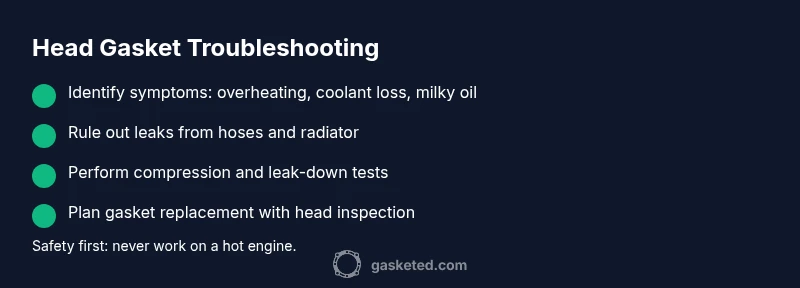
- Gather symptoms and document when they occur. 2) Confirm coolant loss is not from a leaky hose or radiator cap. 3) Check engine oil for coolant contamination and coolant for oil contamination. 4) Perform a compression or leak-down test to assess cylinder sealing. 5) If tests indicate a gasket issue, plan for gasket replacement with head inspection, gasket kit, resurfacing (if needed), and proper torquing procedures. 6) Decide whether to repair or replace the head and seek professional help if you see cross-contamination signs. 7) After repair, re-test to confirm sealing and restore proper cooling and lubrication.
Safety, Costs, and When to Hire a Pro
Working on head gaskets involves hot components, pressurized systems, and heavy engine parts. If you observe coolant in oil, white smoke, or significant overheating, avoid driving and contact a professional. Costs can vary based on engine design and shop rates, and include parts, gasket kit, head resurfacing, and labor. A critical risk of delaying repair is warped heads or engine damage. Use a reputable shop that can re-torque the head correctly and verify the cooling system integrity to prevent future failures.
Prevention: Extend Gasket Life and Maintenance Best Practices
Proactive maintenance is the best defense: maintain proper cooling system function with regular coolant changes, inspect hoses and the radiator, monitor temperature gauge, and address head gasket concerns early. Use OEM-recommended coolant and a good-quality gasket sealant only if advised by a professional. Address leaks promptly, keep the engine clean to monitor signs, and schedule routine compression checks if your vehicle has a history of overheating. By prioritizing cooling system reliability and timely repairs, you can extend the life of the head gasket and reduce the risk of future failures.
Steps
Estimated time: 2-4 hours
- 1
Document Symptoms
Record all signs: overheating incidents, coolant loss, oil contamination, and exhaust smoke. Note when symptoms occur relative to engine temperature and driving conditions.
Tip: Keep a log including dates and miles. - 2
Check for Obvious Leaks
Inspect hoses, radiator, and overflow tank for fresh leaks. Secure lids and caps, and ensure the cooling system is not sabotaging your readings.
Tip: Do not open a hot cooling system. - 3
Oil and Coolant Analysis
Look for milky oil or coolant with a frothy emulsion. This is a strong sign of cross-contamination from a gasket leak.
Tip: Wipe dipsticks clean and compare color changes over time. - 4
Compression/Leak-Down Test
A compression test across cylinders helps identify sealed vs. leaking rings or a gasket breach. A leak-down test can pinpoint exact leakage path.
Tip: If you lack equipment, visit a shop for accurate testing. - 5
Diagnostic Conclusion
If tests indicate gasket failure, plan replacement with resurfacing of the head if needed and verify torque specs after reassembly.
Tip: Avoid reassembly without proper torque sequence. - 6
Post-Repair Verification
Re-test for compression and coolant integrity. Ensure the engine reaches normal operating temperature without overheating.
Tip: Monitor temperature gauge closely after test drive.
Diagnosis: Engine overheating with coolant loss and possible oil contamination
Possible Causes
- highHead gasket failure allowing coolant and combustion gases to mix
- mediumWarped cylinder head or cracked head due to overheating
- lowCooling system blockage or worn water pump
Fixes
- easyPerform cooling-system pressure test and visual inspection for leaks
- mediumConduct compression or leak-down test to assess cylinder sealing
- hardPlan head gasket replacement with head resurfacing if required and proper torque sequence
Common Questions
What are the most reliable signs of a blown head gasket?
Common signs include persistent overheating, white exhaust smoke, coolant loss, milky oil, and unusual engine misfires. Look for multiple indicators together for higher confidence, and avoid drawing conclusions from a single symptom.
Key signs are overheating, white smoke, coolant in the oil, and milky oil. Look for several symptoms together before deciding to test further.
Can I diagnose a head gasket issue at home without special tools?
Some preliminary checks are possible at home, such as inspecting for oil-coolant emulsification and performing a simple temperature check. However, definitive diagnosis usually requires compression or leak-down tests and professional equipment.
You can do basic checks at home, but a reliable diagnosis typically needs professional tests.
Is milky oil always caused by a blown head gasket?
Milky oil can indicate coolant intrusion, which is a sign of gasket failure, but it can also result from other problems. A full set of tests is needed to confirm the gasket issue.
Milky oil suggests coolant in the oil, a sign of possible gasket issues, but it needs tests to confirm.
Should I drive the car if I suspect a blown head gasket?
If you suspect a blown head gasket, avoid driving the vehicle long distances. Driving can cause severe engine damage. Seek professional diagnosis promptly.
Don’t drive far if you suspect a gasket problem—get a professional check soon.
What does a head gasket replacement involve?
Replacement includes removing the cylinder head, resurfacing if needed, installing a new gasket kit, and correctly re-torquing all fasteners to spec. A test after reassembly confirms sealing.
Replacing a head gasket means removing the head, possibly resurfacing, installing a new gasket, and re-torquing to spec.
Can such repairs be done by a confident DIYer?
A head gasket job is advanced; it requires precise torque, gasket seating, and head resurfacing if needed. If you are not experienced with engine disassembly, consider professional service.
It’s a high-skill repair; consider professional help if you’re not experienced with engine work.
Watch Video
Key Takeaways
- Identify multiple signs before acting.
- Differentiate gasket issues from thermostat or water pump failures.
- Use safe testing and professional help when needed.
- Plan replacement with proper torque and resurfacing if required.
- Prevent recurrence with regular cooling-system maintenance.