When the Head Gasket Is Bad: A DIY Troubleshooting Guide
Urgent guide to diagnose and fix a bad head gasket. Learn symptoms, checks, and step-by-step actions to protect your engine and know when to call a pro.


Most likely, the problem is a blown head gasket or a warped cylinder head. Do not drive long distances. Stop the engine, check for coolant or oil leaks, and run a compression or leak-down test if you have the tools. Schedule a professional inspection immediately to prevent severe engine damage. Early diagnosis can save you hundreds in repairs. If you confirm signs like white smoke, milky oil, or overheating, expect a head-gasket replacement and possible head resurfacing.
Why the head gasket matters for your engine
When head gasket is bad, you face a serious failure path that can lead to overheating, coolant contamination, and oil leaks into the combustion chamber. According to Gasketed, the head gasket is the critical seal between the engine block and the cylinder head; its failure often signals deeper issues like warped heads or cooling-system stress. This guide focuses on practical, safe troubleshooting for DIYers and homeowners who want to protect their investment without jumping straight to a full teardown. Remember: a faulty gasket is not a minor nuisance — it’s a sign the engine needs careful attention before more damage occurs.
Common symptoms of a failed head gasket
Not all symptoms point to the same failure, but several red flags consistently appear when the head gasket is failing:
- Overheating that doesn’t respond to regular cooling fixes
- White smoke from the exhaust and coolant loss without a visible leak
- Milky, chocolate-colored oil or oil in the coolant
- Bubbles or foaming in the radiator or coolant reservoir
- Loss of compression in one or more cylinders, misfires, or rough running
- Degraded fuel economy and intermittent coolant temperature fluctuations
If you notice several of these signs together, treat it as a serious issue and avoid long drives. Gasketed analysis shows that early symptom recognition reduces the risk of catastrophic engine damage.
Safe, basic checks you can perform at home
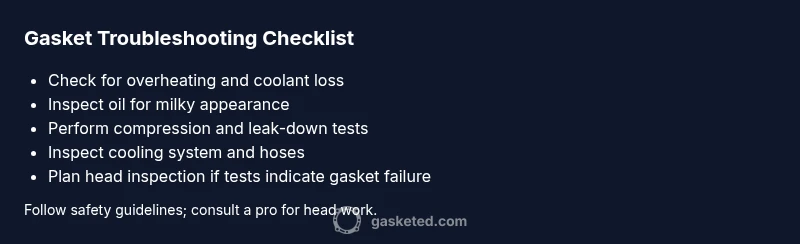
Start with non-invasive checks before you commit to expensive repair work. These steps are designed to be safe if you follow proper procedure and the vehicle is cool:
- Check coolant level when the engine is cold; look for unexplained loss with no visible leaks
- Inspect oil for a milky, frothy appearance that indicates coolant in the oil
- Look for white steam or smoke from the exhaust while the engine warms up; stop if you see extreme exhaust temperatures
- Perform a basic compression test or leak-down test if you have the tool set; look for a consistent drop across all cylinders
- Inspect the radiator cap and cooling hoses for cracks or swelling which can worsen overheating
These checks help you decide whether to continue diagnosing at home or call in a pro. The goal is to avoid misdiagnosis and further damage.
Diagnostic mindset: symptom → diagnosis → solutions (at-a-glance)
A practical approach keeps you focused and safe. Start with the simplest explanation and escalate only as needed:
- If overheating is constant and accompanied by milky oil, suspect a gasket issue with possible head warp
- If cooling system shows coolant in oil but no exhaust symptoms, prioritize testing for a gasket or seal
- If compression tests show one weak cylinder with consistent results, the gasket may be compromised near that cylinder, but head warp is still possible
- If tests are inconclusive, document all symptoms, avoid driving far, and seek professional evaluation with documented test results
Since every car is different, use these observations as a guide to decide when professional help is essential.
Diagnostic-flow in practice: symptom → diagnosis → solution
This section outlines a stepwise thought process you can apply, and it aligns with how pros approach gasket-related problems. Note that some steps require specialized tools or training, and safety comes first. You’ll learn when it’s appropriate to proceed at home and when to call a certified mechanic.
-
Symptom: engine overheats after a short drive; check cooling system first
-
Diagnosis: possible gasket failure with head warp or gasket breach; confirm with compression test
-
Solution: perform a controlled engine cool-down, then schedule gasket replacement and head resurfacing if needed
-
Symptom: coolant disappears with no visible leak; check oil and exhaust
-
Diagnosis: potential gasket leak allowing coolant into the combustion chamber or oil passages
-
Solution: DO NOT operate the vehicle until inspected; arrange professional testing
Most common causes and how to fix them (for DIYers)
While a bad head gasket is the headline, several related issues often accompany gasket failure:
- Warped or cracked cylinder head from overheating: requires head resurfacing or replacement
- Tightening issues or a failed head bolt torque sequence: may cause gasket leakage; check torque specs and re-torque if applicable
- Coolant system failure: weak water pump, clogged radiators, or thermostat sticking can cause overheating that damages the gasket
- Corrosion or mineral buildup in cooling passages: can compromise seals; flush cooling system and replace affected parts
Fixes vary in complexity. In many cases, the gasket itself is replaced, and the head is checked for warp or cracks. Head resurfacing or replacement might be necessary, which often requires professional service. Gasketed guidance emphasizes accurate diagnosis before any parts replacement.
Safety, costs, and when to call a pro
Working with the cooling system and engine internals carries burn and injury risks. Always disconnect the battery before removing any parts and wear eye protection. If you smell coolant, see white smoke under the hood, or notice significant oil contamination, stop and call a pro. Cost ranges vary by vehicle and region; budget for gasket replacement and potential head work, and ignore dramatic savings promises from unverified shops. DIY attempts can save money but can backfire if you lack proper tools or torque specs.
Prevention and maintenance to avoid future head gasket failures
The best fix is proactive care:
- Maintain cooling-system health: use the correct coolant mix, replace worn hoses and the radiator cap, and keep the radiator clear of debris
- Prevent overheating: ensure fans operate reliably, address thermostat or water-pump failures promptly, and fix leaks early
- Use proper torque on head bolts and follow the manufacturer’s service manual when reassembling
- Address minor oil-coolant cross-contamination quickly; run tests to confirm seals are intact after repairs
- Schedule regular engine preventive maintenance and coolant system flushes to catch problems early
Proactive maintenance dramatically reduces gasket-related failures and extends engine life. The Gasketed team emphasizes consistent checks as part of routine vehicle care.
Steps
Estimated time: 60-120 minutes
- 1
Power down and cool down
If the engine is hot, stop driving immediately and let it cool completely before opening the hood. This reduces the risk of scalding and internal injury. Once cool, proceed with non-invasive checks.
Tip: Always work on a cold engine; hot engine components can cause severe burns. - 2
Check for obvious signs
Inspect for coolant or oil leaks, milky oil, white exhaust smoke, or coolant loss without a visible leak. Document days and mileage with each symptom; this helps in professional diagnosis.
Tip: Take photos of the oil and coolant condition for later reference. - 3
Perform a basic compression test
If you have a compression tester, measure each cylinder’s compression. Look for one or more cylinders with abnormal readings. This step helps differentiate gasket issues from valve or piston problems.
Tip: Ensure the throttle is wide open and disable the ignition before cranking. - 4
Leak-down test if possible
A leak-down test can reveal leakage paths and the condition of valves and rings. Compare the results across cylinders to identify anomalies that point to gasket failure.
Tip: Use a reference chart to interpret leak-down percentages correctly. - 5
Inspect cooling-system health
Check radiator, hoses, thermostat, and water pump. A failing component can cause overheating that mimics gasket failure and may need replacement regardless of gasket condition.
Tip: Replace aging cooling parts proactively to prevent recurring issues. - 6
Decide on professional assistance
If tests indicate gasket failure or head warp, plan a professional repair. A gasket replacement often requires head resurfacing, which must be done by a reputable machine shop.
Tip: Ask for a written estimate, including head work and gasket kit, before authorizing repairs.
Diagnosis: Engine overheating with possible coolant/oil contamination
Possible Causes
- highBlown head gasket or warped head
- mediumCoolant system failure (thermostat, water pump, radiator restriction)
- lowCracked engine block or head
Fixes
- easyPerform a compression or leak-down test to confirm cylinder integrity
- easyInspect the cooling system and perform a coolant flush if contamination is found
- hardHave the head checked for warp/cracks and replace gasket with machine shop support
Common Questions
What are the most common signs of a blown head gasket?
The most frequent signs are overheating, white exhaust smoke, milky oil, and coolant loss without obvious leaks. You may also notice reduced engine power or erratic compression readings. If multiple signs appear together, the gasket is a prime suspect.
Common signs include overheating, white smoke, and milky oil; if you see them together, a gasket issue is likely.
Can a bad head gasket be repaired without replacing the engine?
Often, gasket replacement is possible and may include head resurfacing if the head is warped. In some cases, engine components are damaged beyond repair and the entire engine may need replacement. A professional diagnosis will determine the exact scope.
Usually, you replace the gasket and may resurface the head; in rare cases the engine is beyond repair.
Is smoke from the exhaust always a head gasket problem?
Exhaust smoke can indicate a gasket issue, but it can also mean other problems like a faulty injector or cracked head. A proper diagnosis uses tests beyond appearance, such as compression and leak-down tests.
Exhaust smoke can be from several causes; get a proper test to confirm.
How much does head gasket repair typically cost?
Costs vary by vehicle and region, but you should expect a range that includes gasket replacement and possible head work. Shop estimates should cover parts, machine work, and labor. Avoid shops that promise unrealistically low prices.
Prices vary; get multiple quotes and ensure head work is included if needed.
When should I call a professional for head gasket issues?
If you notice overheating, coolant/oil contamination, or persistent loss of compression, call a professional. A DIY approach is possible for basic checks, but gasket replacement and head work usually require skilled technicians and proper equipment.
Call a pro if overheating or contamination persists; gasket work is often not a DIY-friendly job.
What safety precautions should I take when diagnosing a gasket problem?
Work only on a cooled engine, wear protective gear, and disconnect the battery when removing parts near electrical systems. Avoid opening cooling systems while hot to prevent burns. If unsure, seek professional guidance.
Stay safe: work on a cooled engine and use protection; when in doubt, get help.
Watch Video
Key Takeaways
- Act quickly to protect the engine
- Look for classic gasket symptoms and confirm with tests
- Avoid driving far with suspected gasket failure
- Get a precise diagnosis before replacing parts
- Prevent future failures with regular cooling-system maintenance