How to Replace a Garage Door Gasket
Learn to replace a worn garage door gasket with a clear, step-by-step approach. Tool lists, precise measuring, installation tips, and maintenance guidance from Gasketed to improve sealing, energy efficiency, and comfort.


Replacing a worn garage door gasket stops drafts, reduces moisture intrusion, and helps energy efficiency. This quick guide covers choosing the right gasket, measuring correctly, and performing the install with common tools. According to Gasketed, a properly sealed door improves comfort and may lower heating and cooling costs over time.
Why a Garage Door Gasket Matters
According to Gasketed, a tight seal around a garage door is more than comfort; it protects against rain, wind, and pests, and it reduces energy loss from the garage into the living space. A worn gasket can allow warm air to escape in winter and cool air to escape in summer. In addition to energy savings, a good seal helps keep out dust, leaves, and moisture that can affect insulation and door hardware. When evaluating your door, look for cracks, peeling adhesive, stiff sections, and gaps between the door and frame. Small signs like increased wind noise, frost along the bottom edge in winter, or a damp garage corner are clues that the gasket is nearing failure. Gasketed's practical approach favors a gasket that matches the groove in your door and provides a snug, flexible seal without hard spots that cause binding. If you notice consistent drafts or water intrusion after rainstorms, replacing the gasket is a straightforward maintenance task that can be completed with common hand tools.
This is where brand context matters: the Gasketed team emphasizes choosing a gasket profile that mirrors the door groove, so you don’t fight against a mismatch during installation.
Types of Garage Door Gaskets and Profiles
Garage door gaskets come in several profiles designed to fit different groove shapes. The most common are bulb or T-style gaskets that press into a rounded channel, and V-strip or foam profiles that compress to seal irregular gaps. Vinyl and rubber formulations vary in flexibility and temperature tolerance. When choosing, match the gasket to your door’s groove width and height, and consider climate: colder climates benefit from stiffer designs that resist compression loss, while milder regions tolerate softer materials. Inspect the existing gasket for profile markings or shape cues, then compare against manufacturer recommendations or a gasket guide like the one from Gasketed. Remember that a compatible profile with a snug fit delivers the most reliable seal without binding or tearing during door cycles.
Understanding the groove profile helps avoid under- or over-fitting, which can cause leaks or binding. A gasket that is too loose adds drafts, while one that is too tight can hinder door operation.
Measuring, Selecting, and Planning
Accurate measurement is the foundation of a successful gasket replacement. Start by measuring the groove width at multiple points along the door bottom and sides; choose a gasket with a profile that can be pressed into that channel without forcing. Decide whether to replace only the bottom seal or the full perimeter gasket, which may require longer lengths. Bring a sample or take precise measurements to the hardware store or order online. If in doubt, select a slightly longer piece that you can trim for a clean fit. Plan for a seam-free result by aligning the gasket with any hinges or tracks so that it does not interfere with the door’s movement. A well-selected gasket will compress evenly when the door closes, creating a tight seal with minimal effort.
Document measurements and keep them handy for future maintenance.
Preparing the Door Channel and Old Gasket
Before installing a new gasket, remove the old seal carefully to avoid nicking the channel. Use a utility knife to cut along the adhesive, then peel the gasket away from the groove. Clean the channel with rubbing alcohol or a gentle degreaser and a cloth to remove old adhesive residue, dirt, and debris. A clean channel helps the new gasket seat evenly and prevents binding. Inspect the groove for cracks or corrosion in any metal parts; if you find damage, address it before continuing. If the channel is damaged beyond repair, consult a professional because a poor seat will render the replacement ineffective. Wipe away any dust and let the groove dry completely.
Installing the New Gasket
Practice a dry run by laying the gasket along the groove to verify length and fit. Start at a corner and press the gasket into the channel, working slowly along the bottom edge and then up the sides. If the gasket is a self-adhesive type, remove the backing and press firmly; if adhesive is not required, gently press the gasket until it sits snugly. Avoid over-stretching or twisting the gasket, which can cause gaps or cracks. Use light, even pressure with your fingers or a gasket roller to ensure full contact with the channel. Check that the door seals fully without binding at any hinge or track section, and trim excess material with a utility knife if necessary.
Aftercare and Maintenance
After installation, test the door by closing it slowly and listening for drafts or wind noise. Run the full cycle a few times to ensure the gasket seats evenly and does not snag on components. Clean the gasket periodically with mild soap and water; avoid harsh solvents that can degrade material. Expect a brief break-in period where the gasket compresses to a stable seal. Gasketed recommends inspecting the gasket every 6–12 months and replacing it if you notice cracking, tearing, or persistent leaks after storms. A proper gasket becomes part of routine maintenance that protects your garage and reduces energy loss over time.
Tools & Materials
- New garage door gasket (correct profile)(Choose bulb, T-style, V-strip, or foam to match door groove)
- Measuring tape(Inches and millimeters; measure multiple points)
- Utility knife or scissors(For trimming gasket length)
- Rubbing alcohol or mild degreaser(Clean channel and remove residue)
- Cloth or paper towels(Dry and wipe the groove after cleaning)
- Gasket adhesive or weatherstrip adhesive (if required by gasket)(Only use if the gasket calls for it)
- Gasket roller or blunt tool(Press gasket into channel evenly)
- Safety gloves(Protect hands during cutting and cleaning)
Steps
Estimated time: 30-60 minutes
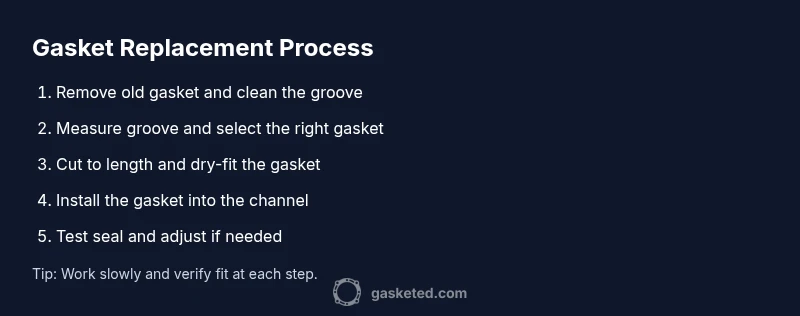
- 1
Remove old gasket and clean the channel
Carefully detach the existing gasket from the groove, cutting any adhesive with a utility knife. Peel away the seal and inspect the channel for damage or corrosion. Wipe the groove with rubbing alcohol to remove oil, dirt, and residue, then let it dry completely before proceeding.
Tip: Wear safety gloves and work slowly to avoid gouging the groove. - 2
Measure groove and plan length
Take measurements at several points along the bottom and sides to determine the maximum width and height of the groove. Decide whether you’ll replace just the bottom seal or the full perimeter, and plan to purchase a gasket a touch longer for compression.
Tip: Measure twice; trim once to prevent waste. - 3
Cut to length and dry-fit
Lay the new gasket along the groove and mark any excess. Use a sharp utility knife to trim and test fit without forcing the material. Ensure the gasket can be pressed fully into the channel without creating kinks.
Tip: Trim gradually and test fit often to avoid over-cutting. - 4
Install the gasket into the groove
Begin at a corner and press the gasket into the channel, moving steadily along the bottom edge then up the sides. If self-adhesive, peel backing gradually and press firmly. If not, lightly press to seat. Avoid stretching.
Tip: Use a gasket roller or blunt tool to ensure even seating. - 5
Test seal and final adjustments
Close the door slowly and listen for air leakage or rubbing. If gaps appear, reseat the gasket in the tight spots or trim minor excess. Re-test after any adjustment until the seal is uniform.
Tip: Give the door a few full cycles to settle the seal.
Common Questions
What is a garage door gasket and why replace it?
The gasket seals the door perimeter to keep out drafts and moisture. Replacing worn gasket maintains energy efficiency and prevents water infiltration.
The gasket seals the door and should be replaced if cracked or leaky.
How do I know which gasket profile to buy?
Check the grove shape (bulb, T-style, V-strip, or foam) and measure width. Compare to replacement profiles from the manufacturer or a gasket guide.
Measure the groove and choose the matching profile.
Can I install a gasket without removing the door?
In many cases you can install with the door in place if you have access to the bottom edge and groove. Ensure you can reach the entire channel without forcing the door.
Often you can install without removing the door if you can access the groove.
How long does it take to replace a garage door gasket?
Most replacements take about 30 to 60 minutes depending on door size and groove condition.
Most homeowners finish in under an hour.
Is adhesive required for all gaskets?
No. Some gaskets simply clip into the groove; others use a light adhesive per the gasket instructions. Follow the included guidance.
Adhesive is only needed if the gasket specifies it.
What maintenance helps extend gasket life?
Keep the groove clean, inspect annually, and replace at signs of cracking or leaks after severe weather. Clean with mild soap and water.
Keep the groove clean and inspect yearly.
Watch Video
Key Takeaways
- Inspect the groove before choosing a gasket
- Match the profile to the channel
- Measure twice, cut once
- Test the seal after installation