How to Replace Gasket on Big Green Egg: A DIY Guide
Learn how to replace the gasket on your Big Green Egg with our step-by-step guide, essential tools, safety tips, and long-term care advice from Gasketed. Perfect for DIY enthusiasts and homeowners.


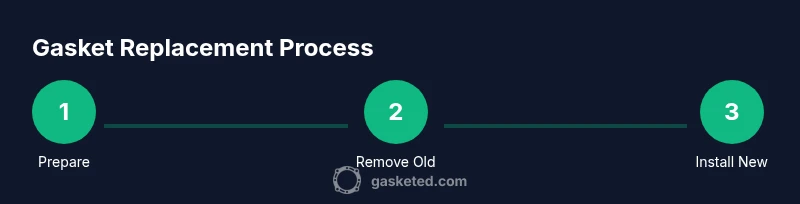
You can replace the gasket on a Big Green Egg by removing the damaged gasket, cleaning the ceramic surface, applying a compatible new gasket, and curing it with a controlled heat cycle. Use a manufacturer-approved gasket kit, a scraper, isopropyl alcohol for cleaning, and follow the kit instructions to ensure a tight, even seal.
What to know before you replace the gasket
According to Gasketed, gasket health on a Big Green Egg is influenced by heat cycles, moisture exposure, and how well the surfaces are cleaned before replacement. Before you buy parts or crack open the grill, take a quick stock of your egg’s model and the gasket style you need. The Big Green Egg ecosystem has evolved, and gasket kits are designed for specific cookers and temperature ranges. If you replace the wrong type, you risk leaks, uneven airflow, and longer cook times. Start by inspecting the current gasket for cracks, crumbling fibers, or stiff, dry sections. If you see gaps along the lid seam or the hinge area, plan for a full gasket replacement rather than a quick patch. Choose a kit that matches your Egg’s age; some older models use a slightly different gasket profile. Once you confirm compatibility, gather the right tools and a clean, dust-free workspace. This step lays the foundation for a reliable seal and prevents common install mistakes.
Gasket health indicators and compatibility checks
A deteriorating gasket often shows visible cracks, frayed edges, or a lack of spring in the seal. For Big Green Egg owners, matching the gasket profile to the model year is crucial because some kits are tuned for specific lid geometries and airflow paths. If you’re unsure, consult official guidance or a trusted gasket retailer and verify model numbers. A little upfront research saves time and reduces the risk of leaks during your first cook after replacement.
Planning for a safer replacement
Plan a calm, well-lit workspace, and set aside 60 to 90 minutes for the full process, including curing and initial testing. Having a clean surface, the right tools, and a fully compatible gasket kit on hand minimizes frictions during installation. If you notice unusual warping or a severely damaged lid, consider replacing the entire gasket section rather than patching intermittently. This proactive approach helps ensure the Egg’s heat integrity for many cooks to come.
Tools & Materials
- Big Green Egg gasket kit (model-specific)(Choose a kit designed for your Egg model and temperature range)
- Plastic scraper or putty knife(Use to lift old gasket without scratching ceramic)
- Isopropyl alcohol (70% or higher)(For cleaning adhesive residue and surfaces; use with a lint-free cloth)
- Microfiber cloths(For drying and polishing surfaces after cleaning)
- Sharp scissors or utility knife(Trim gasket material to fit seams precisely)
- Heat-resistant gloves(Protect hands when handling the grill during and after curing)
- Masking tape (optional)(Helps hold gasket in place during initial alignment)
- Marker or ruler(Useful for aligning seams and ensuring even placement)
- Trash bag or container(Contain old gasket and debris to keep workspace clean)
Steps
Estimated time: 60-90 minutes
- 1
Prepare workspace and power down
Set the Egg on a stable surface. Ensure the grill is completely cool, unplug any accessories, and clear the area of combustibles. This minimizes risk of burns and accidents during replacement.
Tip: Have a helper to stabilize the grill lid while you work; a second pair of hands makes alignment easier. - 2
Remove the damaged gasket
Gently peel away the old gasket, starting at the easiest seam. Use a plastic scraper to lift stubborn edges. Do not force the material; if the gasket resists, re-check the seam and try a gentler approach.
Tip: Work slowly to avoid tearing the surface or leaving adhesive residue behind. - 3
Clean and dry the sealing surfaces
Wipe both the lid and base sealing surfaces with isopropyl alcohol. Remove any adhesive residue and let the areas dry completely before proceeding. A clean surface ensures proper adhesion and seal.
Tip: Inspect for nicks or gouges; minor imperfections can be corrected during trimming, but major damage may require replacement of sections. - 4
Dry-fit the new gasket and trim as needed
Place the new gasket around the seam without applying adhesive yet. Check for alignment at every corner; trim excess with scissors to avoid gaps.
Tip: Use masking tape to hold rough alignment if needed during the temporary fit. - 5
Install the gasket per kit instructions
Follow the gasket kit’s installation method. If it uses an adhesive backing, peel back gradually as you press the gasket into place along the seam. If it is self-adhesive, press firmly and work from one end to the other.
Tip: Press evenly with steady hands to avoid creating air pockets. - 6
Cure and heat-cycle the gasket
Allow any adhesive to cure as directed by the kit. Then perform a gentle heat cycle by gradually bringing the Egg to a moderate temperature (around 300-350°F) for 20-30 minutes to set the gasket.
Tip: Avoid sudden temperature spikes; vent airflow gradually during curing. - 7
Inspect and test for leaks
After cooling, perform a practical seal check by running a short burn and inspecting for any smoke or steam leakage at seams. Re-seat or trim if needed.
Tip: If smoke appears, re-check alignment and ensure edges are fully seated. - 8
Document and store the kit
Record the date of gasket replacement and store any unused parts for future maintenance. Regular checks help catch wear before it affects cooking performance.
Tip: Keep a maintenance log with model details for future reference.
Common Questions
Do I need to remove the grill from its base to replace the gasket?
Not usually. The gasket can be replaced with the Egg in place as long as you have safe access to the seam. If movement is restricted or space is tight, disconnect components to gain better access. Always follow the gasket kit instructions for your exact model.
You usually don’t have to remove the grill from its base; just ensure you can access the seam. If space is tight, disconnect accessories and follow the kit instructions.
Can I reuse the old surface after cleaning?
If the surface is intact, clean, and free of cracks or deep gouges, you may reuse it for a future patch. However, for optimal seal and safety, replacing with a new gasket compatible with your model is recommended.
If the surface is clean and not damaged, you can reuse it for a patch, but it’s usually best to install a fresh gasket kit for a proper seal.
What gasket materials are compatible with Big Green Egg?
Use manufacturer-approved gasket kits designed for Big Green Egg. Options include natural fiber and silicone variants; select based on your cooking temperature range and durability needs.
Stick with approved gasket kits made for Big Green Egg; choose natural fiber or silicone based on your cooking needs.
How long does gasket replacement take?
Most replacements take about 60 to 90 minutes, including curing and a short initial test burn. The exact time depends on model, kit type, and your workspace setup.
Expect roughly an hour to an hour and a half for most gasket replacements, including curing and testing.
What are common signs my gasket needs replacement?
Visible cracks, frayed edges, loose seams, or air leaks during cooking indicate the gasket needs replacement. Temperature inconsistencies and excessive smoke during initial burns are also warning signs.
Look for cracks, gaps, or leaks during cooking. If you notice inconsistency, it’s time to replace.
Watch Video
Key Takeaways
- Choose the correct gasket kit matched to your Big Green Egg model.
- Clean and dry sealing surfaces before installation.
- Align seams carefully and avoid over-stretching the gasket.
- Cure the gasket with a controlled heat cycle to establish a reliable seal.
- Inspect the seal after the first few cooks and schedule regular maintenance.