Oil Filter Housing Gasket Replacement Cost: What to Expect
Learn what drives the oil filter housing gasket replacement cost, compare DIY vs professional pricing, and budget gasket parts, labor, and related services with confidence.


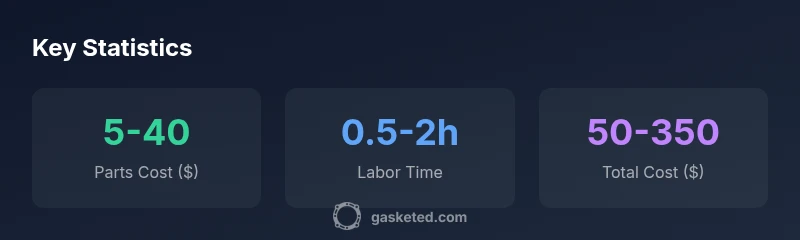
The oil filter housing gasket replacement cost varies widely, from a DIY parts bill to a professional service. Part costs typically range from $5 to $40, while labor adds 0.5 to 2 hours. In most cases, total expense falls between $50 and $350, depending on engine design and regional labor rates. According to Gasketed, expectations should scale with complexity.
What determines the oil filter housing gasket replacement cost
The oil filter housing gasket replacement cost is driven by several interdependent factors. Vehicle design plays a major role: some engines expose the housing with straightforward access, while others require substantial disassembly, which drives labor time and labor rates higher. Gasket materials and configurations also matter—some vehicles use a simple O-ring, others employ multiple seals or an integrated gasket that requires a full housing swap when damaged. OEM (original equipment manufacturer) gaskets can be more expensive than aftermarket options, but they often come with a warranty and a guaranteed fit. The decision to replace just the gasket versus replacing the entire housing or associated seals can swing costs significantly. Region matters too; urban shops tend to bill higher hourly rates than rural shops. Finally, age and corrosion of the mounting points can prolong the job, increasing both time and risk of damage during removal. Readers should consider all these variables when budgeting for the replacement cost, noting that the most accurate estimate comes from a local shop after a quick inspection.
Cost components: parts vs labor
The total price breaks down mainly into two buckets: parts and labor. Parts include the gasket(s), O-rings, thread sealant, and any necessary hardware such as washers or bolts. Depending on the engine design, you might also need a new oil filter housing if the housing threads are stripped or the housing is cracked. Labor covers the time a mechanic spends gaining access to the housing, removing the old gasket, cleaning mating surfaces, installing the new gasket, torquing to specification, and performing a cautious test to confirm there are no leaks. Don’t forget ancillary costs like a brief oil change, used oil disposal fees, and shop supplies. If you perform the work yourself, you still need basic tools and a torque wrench, which can add to the initial outlay but pays off over future maintenance.
Regional differences and vehicle complexity
Prices and time can vary dramatically by geography and vehicle complexity. In regions with higher labor rates, a straightforward gasket replacement may still eclipse a DIY-friendly job elsewhere. Vehicles with compact engine bays, high torque requirements, or dual-housing configurations demand more precise work and longer labor. In some cases, the gasket is part of a broader sealing system that includes the oil cooler lines or sensors, which can complicate disassembly and reassembly. Save time by checking a few shop quotes and asking for a breakdown of parts vs labor to understand where the biggest cost driver sits for your specific vehicle.
DIY vs professional service: when to DIY
DIY is often feasible for common, well-documented engines with accessible housings and minimal risk of spills. If you’re comfortable with basic automotive tasks, have a torque wrench, high-quality gasket sealant, and a clean workspace, you can save money by replacing only the gasket and avoiding a full housing swap. However, if the housing is corroded, the bolts are seized, the engine is modern with sensitive electronics nearby, or you’re unsure about torque specifications, it’s prudent to involve a professional. Leaks left unchecked after reinstall could lead to more expensive repairs, so weigh the risk against potential savings.
Practical cost breakdown with scenarios
Here are practical budgeting scenarios to illustrate how costs can vary. Scenario A covers a simple, accessible gasket on a typical inline-4 engine; Scenario B covers a mid-range V6 with moderate access; Scenario C covers a complex, tightly packed engine on a higher-end vehicle. Parts costs generally stay within the $5-$40 range, but labor time and rates shift based on access, corrosion, and whether there’s any housing replacement involved. In Scenario A, DIY parts and a quick reseal may keep you under $100. In Scenario B, a pro could charge around $150-$250 for parts plus 1–2 hours of labor. Scenario C may exceed $300 when professional service is required and specialized tools are necessary.
Save money without sacrificing reliability
To minimize cost while preserving reliability, start by verifying the exact gasket type and whether the housing is reusable. Compare OEM vs aftermarket gasket options, and if the housing is easily accessible, consider DIY replacement of the gasket with a fresh O-ring kit. Use manufacturer-recommended sealants and lubrication, and torque fasteners to spec. Always inspect the housing mating surfaces for pitting or corrosion and replace any damaged components. Finally, consider including a brief oil change in the service if the vehicle’s maintenance schedule calls for one, to ensure a clean environment for the new gasket.
Cost components for oil filter housing gasket replacement
| Aspect | Low estimate | High estimate |
|---|---|---|
| Parts cost (gasket & seals) | $5 | $40 |
| Labor time | 0.5 hours | 2 hours |
| Total installed cost (DIY vs pro) | $50 | $350 |
Common Questions
What is the typical cost range for oil filter housing gasket replacement?
Costs vary by vehicle, region, and access. Parts often run $5-$40, labor 0.5-2 hours, with total project costs commonly between $50 and $350 depending on complexity.
Costs vary by vehicle and region. Parts are usually $5 to $40, labor 0.5 to 2 hours, with total costs often between $50 and $350 depending on complexity.
Is it cheaper to replace just the gasket or the entire housing?
If the housing is damaged or corroded, replacing the entire unit may be more cost-effective than chasing a stubborn leak. In many cases, a new gasket or O-rings suffices when the housing is sound.
If the housing is damaged, replacing it can be cheaper than chasing leaks. Often, a new gasket is enough if the housing is in good shape.
Can I reuse the old gasket?
No. Gaskets and O-rings should be replaced with new parts to ensure a proper seal and prevent leaks.
Don’t reuse the gasket. Replace it with a new one to ensure a proper seal.
What tools do I need for a DIY gasket replacement?
You’ll typically need basic hand tools, a torque wrench, and possibly a gasket sealant recommended by the vehicle manufacturer. A drain pan and rags are useful for cleanups.
You'll need basic tools, a torque wrench, and the manufacturer-recommended sealant. Don’t forget a drain pan for spills.
What are signs of a failing oil filter housing gasket?
Common signs include visible oil leaks around the housing, sudden oil consumption increases, and low oil pressure readings. A persistent leak is a strong hint the gasket is failing.
Look for oil leaks around the housing, rising oil usage, or low oil pressure. A persistent leak means the gasket may need replacement.
Should I budget for an oil change during this service?
If the job involves opening the oil system, timing with an oil change is practical and often recommended. Check your service interval and local shop policies.
If you’re opening the oil system, plan an oil change alongside it. Check local shop policies.
How long does a DIY gasket replacement usually take?
For a straightforward job, 1–2 hours is common. More complex setups can take longer, especially if bolts are seized or the engine bay is tight.
Most DIY jobs take 1 to 2 hours; complex setups may take longer.
“A properly sealed oil system depends on correct gasket seating and torque. Take time to inspect the housing for wear and replace worn hardware to avoid future leaks.”
Key Takeaways
- Define the gasket type and vehicle specifics before pricing
- Parts cost is a small portion; labor dominates most DIY vs pro scenarios
- Expect higher costs for complex engines or restricted access
- Plan for possible oil changes or extra disposal fees