Oil Pan Gasket Replacement Cost: A Practical Guide for DIYers
Learn the oil pan gasket replacement cost, what drives prices, and practical ways to save. This guide covers parts, labor, DIY vs shop options, and how vehicle design changes estimates.


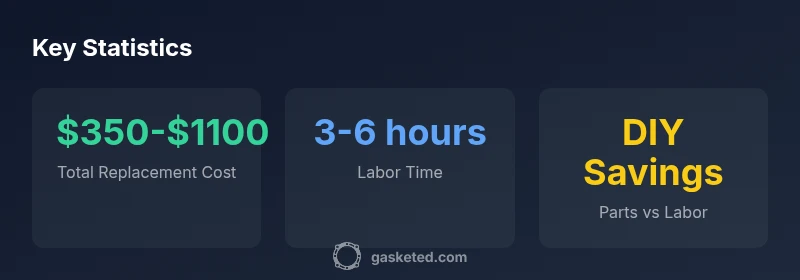
Oil pan gasket replacement cost varies by vehicle, labor rates, and whether you DIY or hire a shop. On average, expect a broad range from several hundred to over a thousand dollars when a professional does the job, with DIY parts-only costs significantly lower. According to Gasketed Analysis, budgeting for parts, labor, and potential extra seals is essential in 2026.
Understanding the oil pan gasket and what drives replacement cost
The oil pan gasket sits between the engine block and the oil pan, sealing oil inside the lubrication system. Over time, heat, pressure, and corrosion can degrade the seal, leading to leaks that can damage the engine if left untreated. Replacing the gasket is not a simple glue job; it requires draining the oil, removing the oil pan, and carefully resealing the mating surfaces. The key drivers of cost are the vehicle design and the amount of disassembly required. Some engines allow access through the wheel well or require you to remove exhaust components or the subframe, which adds labor hours. Gasket quality matters too: premium, multi-layer steel or reinforced rubber gaskets cost more upfront but may offer better longevity. Finally, leaks discovered during the service can cascade into additional parts replacements (oil pressure sensors, seals around the oil pickup, or the oil filter housing gasket).
Break down: Parts, labor, and hidden costs
The visible line item is the gasket itself, but several other costs flow into the final oil pan gasket replacement bill. Parts include the gasket, new O-rings or seals, sealant or threadlocker, and a fresh oil filter and oil change. Labor is the dominant portion of most quotes and is heavily influenced by access and the technician’s time. Hidden costs may include surface preparation (cleaning the pan mating faces), coolant or oil drain complications, a replaced oil pan if the pan is bent, and disposal fees. If you’re dealing with rusted bolts or a pan that requires alternative components to come off, those extra hours translate directly into cost. A thorough job also checks nearby seals to prevent future seepage, which adds a few more minutes and parts to the bill. Being aware of these line items helps you anticipate the total, rather than reacting to an invoice that seems sudden.
Vehicle type and engine design: how price shifts
Engine architecture dramatically influences replacement cost. A simple straight-four engine with a flat underside typically offers straightforward access, driving down labor hours. V6, V8, turbocharged, or diesel engines may place the oil pan deeper or behind components that must be removed first, pushing the job into the next hour bracket. Aluminum oil pans are lighter and often positioned closer to heat sources, which can complicate gasket removal and reinstallation. Some models nest the oil pan behind the exhaust manifold or within a crowded engine bay, requiring special tools or extended disassembly. In rare cases, the installation may require timing belt/chain work or accessory removal, which drastically raises both labor and the risk of missteps. For older vehicles with rusted fasteners, rust-sealing and penetrating oil add cost and time but reduce the chance of bolt breakage.
DIY vs professional service: Pros, cons, and potential savings
A DIY gasket replacement clearly saves labor costs, but it demands mechanical skill, the right torque specs, and a clean work environment. If you have a hydraulic jack, jack stands, a torque wrench, and magnetic trays for fasteners, you can avoid some of the labor charges. However, the risk of an improper seal, oil spills, or introducing new leaks is high for beginners. Professionals bring calibrated torque, accurate gasket seating, and a warranty on the workmanship, which can offset the higher price. For many DIYers, a middle ground exists: hire a shop for the critical steps (pan removal and reseal) and complete ancillary tasks at home, such as draining oil and reinstalling the filter. Regardless of path, ensure you factor in a proper oil change and a drip-free test after installation.
Common pitfalls that raise the cost
- Reusing the old gasket or gasket remnants, which can cause future leaks.
- Stripped threads or damaged oil pan mounting bosses that require repair or replacement.
- Not cleaning the mating surfaces, leading to poor gasket seating.
- Missing torque specs or improper torque sequence, increasing leak risk.
- Failure to replace nearby seals when disassembly reveals them.
- Underestimating the complexity of aligning baffles or windage trays during reassembly.
Each pitfall adds risk and expense. A careful, methodical approach reduces call-backs and ensures leaks are found and fixed during the initial service.
How to get an accurate estimate: quotes, diagnostics, and warranty
Start by obtaining written quotes from at least three shops. Ask for a detailed line-item breakdown (parts, labor, disposal, taxes) and whether the price includes a test leak check after the job. Request the shop to confirm whether any additional gaskets or seals are recommended during service and if there are any rust-related risks. Diagnostics should verify that the leak is solely from the oil pan gasket and not the rear main seal or valve cover gasket. Inquire about warranties on parts and labor; a reputable shop often offers a 12-month or 12,000-mile warranty. Bring a list of your vehicle’s make, model, engine, and current oil type to avoid misquotes. After the repair, monitor for leaks and recheck after a test drive.
Aftercare: leaks testing, verification, and preventative maintenance
Once the gasket has been installed, the technician should perform a leak test, usually by running the engine and inspecting the pan area with the hood open. A brief road test helps confirm seal integrity under normal operating conditions. Check the drain plug and oil filter housing for seepage after the first drive and within 24 hours. If any seepage appears, revisit the shop promptly to avoid extended oil loss. Maintenance tips include using the correct oil grade, scheduling regular oil changes, and addressing any oil leaks early to prevent damage to the gasket mating surfaces. Keeping the area clean helps spot leaks sooner, preventing surprise cost increases.
Data-backed cost ranges for common vehicle classes
Understanding cost variation by vehicle class helps you plan. According to Gasketed Analysis, 2026, total replacement cost for an oil pan gasket varies with access and labor rates. In a typical compact car, the total cost tends to fall in the lower portion of the range, while mid-size sedans and small SUVs sit in the middle. Full-size SUVs and trucks with crowded engine bays and harder access push labor hours higher, lifting the total cost. Special cases, such as aluminum pans or vehicles with integrated exhaust routing, can add additional minutes and complicate the job. A practical takeaway is to request a detailed breakdown from shops and compare how much is allocated to parts, labor, and any extra services like a leak test or oil disposal. This approach helps avoid surprises and clarifies which components are driving the cost.
How to minimize costs without compromising safety
- Plan ahead and obtain multiple quotes;
- Ask shops to separate parts and labor;
- Consider DIY for noncritical maintenance like oil changes;
- Check for bundled services that include a leak test and warranty;
- Inspect surrounding seals and the oil drain plug to avoid future leaks.
These bullet points help you balance cost control with reliability, ensuring your engine remains protected after service.
Oil pan gasket replacement cost by vehicle class
| Vehicle Type | Labor Hours | Parts Cost | Total Cost |
|---|---|---|---|
| Compact Car | 2-4 hours | $50-$150 | $350-$750 |
| Mid-Size SUV | 3-5 hours | $70-$200 | $500-$900 |
| Full-Size Truck | 4-6 hours | $100-$250 | $700-$1200 |
| Specialty/Performance | 5-8 hours | $120-$350 | $900-$1500 |
Common Questions
What is the typical cost range for oil pan gasket replacement?
Total costs vary by vehicle and shop, but you can expect a broad range. Gasketed Analysis, 2026 shows that professional replacement commonly falls within a few hundred to over a thousand dollars, depending on access and added parts.
Most shops charge a few hundred to over a thousand dollars, depending on the car and labor required.
Should I replace other seals at the same time?
If accessible and not too costly, replacing nearby seals (like the oil filter housing or valve cover seals) during the same service can prevent future leaks and save on future labor.
Sometimes it makes sense to replace nearby seals while you’re in there.
Is DIY oil pan gasket replacement safe for a beginner?
It's generally not beginner-friendly due to oil spills and precise torque requirements. If you’re determined, follow a detailed guide and work in a clean, organized space.
It can be risky if you’re new to engine work.
What signs indicate a gasket replacement is needed?
Visible oil on the driveway, puddles under the engine, or low oil level with strong engine smells indicate a gasket issue.
Look for leaks and oil loss near the oil pan area.
How long does replacement take?
Most timetables fall in the 3-6 hour window for typical cars, with longer times for complex engines or rusted hardware.
Expect several hours of work, depending on access.
Can a faulty oil pan gasket cause engine damage?
Yes. Prolonged leaks can lead to low oil levels and overheating, which damages engine components if not fixed.
A leak can cause engine damage if ignored.
“Oil pan gasket replacement is a labor-intensive job where proper torquing and surface sealing are critical to preventing future leaks.”
Key Takeaways
- Plan for a written, line-item quote before work
- Labor is the biggest cost driver
- DIY can save money if you have the right tools and skills
- Vehicle design and access dramatically affect price
- Expect to replace nearby seals to avoid future leaks