Plenum Gasket vs Intake Manifold Gasket: A DIY Comparison Guide
A detailed, DIY-focused comparison of plenum gasket vs intake manifold gasket, covering roles, symptoms, diagnosis, and replacement tips for gasket repairs.


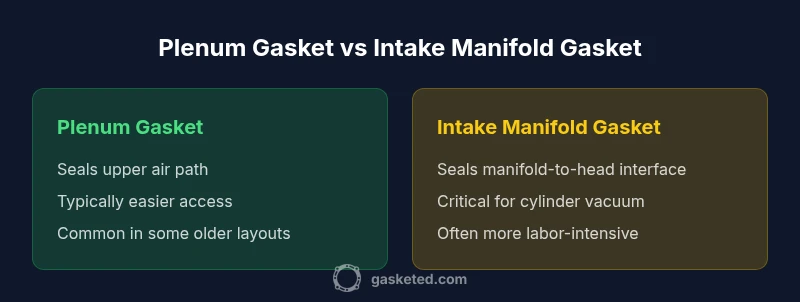
The plenum gasket vs intake manifold gasket each seals a different portion of the air and vacuum path in an engine. The plenum gasket often seals the plenum-to-throttle-body interface, while the intake manifold gasket seals the manifold-to-head interface and affects cylinder vacuum. For most DIY repairs, prioritize the intake manifold gasket if you suspect a vacuum leak, with plenum concerns addressed when indicated.
What the plenum gasket vs intake manifold gasket actually do
In automotive terms, gaskets seal interfaces where metal parts meet and fluids or air must not escape. When professionals talk about the plenum gasket vs intake manifold gasket, they’re distinguishing two different seal points in the intake system. According to Gasketed, recognizing the distinct roles helps homeowners avoid guesswork and reduces repair downtime. The plenum gasket sits at the upper end of the air path, sealing the junction between the throttle body and the intake plenum in many engine designs. Its job is to prevent vacuum leaks that can cause a whistle, rough idle, or lean conditions at steady throttle. By contrast, the intake manifold gasket seals the manifold-to-head interface, creating a consistent vacuum seal across all cylinders. If this gasket leaks, you may see misfires, loss of power, and fuel economy issues, sometimes accompanied by coolant or oil intrusion in certain layouts. In some engines, these two gaskets share responsibilities or appear as a single combined sealing surface, but in most layouts they are distinct parts with separate maintenance implications. Understanding these differences helps you plan the repair and source the correct replacement part.
Engine locations: where these gaskets sit in the layout
The plenum gasket often sits at the interface where the throttle body meets the intake plenum or at a junction in a short, upper intake design. It seals the path for incoming air and can influence idle quality if it leaks. The intake manifold gasket, however, sits between the intake manifold and the cylinder head(s). This gasket is responsible for maintaining a consistent vacuum seal for each cylinder and for preventing cross-leakage between cylinders. On V-shaped engines, there may be multiple manifold gaskets or a single large gasket spanning both banks. The exact layout depends on the engine family, but the principle remains: the plenum gasket guards the upper air path, while the intake manifold gasket guards the lower, cylinder-facing interface. For DIY diagnostics, mapping these locations in your service manual is crucial to avoid misidentification and improper replacement.
Materials and design variations across engines
Gaskets come in a range of materials to balance sealing performance, heat resistance, and compatibility with coolant and oil. Common plenum gaskets use multi-layer steel (MLS), graphite, or silicone compounds designed for higher air pressures and temperatures at the upper intake. Intake manifold gaskets frequently use MLS or compressed composite materials that tolerate repeated heat cycles and resist vacuum nutation. Some engines employ cork or rubber seals in older designs, while modern engines favor MLS or graphite for durability and reuse prevention. The gasket material should align with the engine’s coolant paths, fuel-air system, and the torque sequences used when reinstalling the intake components. If you’re swapping gaskets, consult the vehicle’s service manual for the exact material specification and cleaning requirements to ensure a reliable seal after reassembly.
Failure modes and symptoms: how to tell them apart
Both gaskets can fail due to heat, age, improper installation, or debris on sealing surfaces. Common signs of a failing plenum gasket include irregular idle, whistle or hiss from the upper intake area, and occasional leaning conditions under light throttle. A failing intake manifold gasket can cause vacuum leaks that lead to misfires, rough idle, reduced power, and fuel economy loss. In some layouts, coolant or oil intrusion may accompany a manifold gasket failure, especially on engines with cross-over coolant passages. Because symptoms often overlap, a careful diagnostic approach is essential. Start with vacuum tests, visual inspection for obvious cracks or misalignment, and note any coolant pooling near valve covers or intake ports. Remember, these gaskets serve different interfaces, so misattributing a leak to the wrong gasket can lead to unnecessary parts replacement and extended downtime.
Diagnostic steps: confirming which gasket is failing
Begin with a thorough visual inspection of the plenum and the intake manifold surfaces for signs of seepage, cracks, or loose bolts. Perform a controlled vacuum test or use a smoke machine to trace leaks from the upper airpath down to the cylinders. If you observe a leak around the plenum-to-throttle-body area, the plenum gasket is suspect. If the leak appears at the manifold-to-head interface or causes symptoms across multiple cylinders, start with the intake manifold gasket. For engines with coolant passages, inspect for signs of coolant intrusion into the intake area or oil leaks around the gasket surfaces. Document the exact locations of any leakage and compare findings against the service manual’s diagnostic flow for your specific engine family.
Replacement scope and labor considerations
Replacing a plenum gasket is often less involved than swapping an intake manifold gasket, but both jobs depend on your engine layout. A plenum gasket replacement may require removing a few components to access the plenum corners, cleaning the mating surfaces, and re-torquing bolts to spec. An intake manifold gasket replacement typically requires removing the entire intake manifold, disconnecting sensors, and ensuring the head surface is clean and free of old gasket material. Expect to reassemble with careful torque sequencing and a new gasket set. Consider replacing related seals or O-rings in the same area to avoid future leaks, and don’t forget to check for vacuum line integrity and sensor connectors after reassembly.
Tools and torque specs: what you’ll need
The gasket job commonly requires metric socket sets, torque wrenches, a gasket scraper, and sometimes a thread-sealing compound or gasket sealant approved for intake use. For intake manifold work, you’ll need service-manual torque specs, a clean workspace, and a method to keep track of disconnected lines and bolts. Always clean the mating surfaces with appropriate solvents and back-brushes to remove gasket remnants before installing the new gasket. Proper torque sequencing is essential to avoid warping the manifold and ensuring an even seal across the gasket surface.
Cost and time: estimating DIY vs professional service
Labor times vary widely by engine design, but a plenum gasket job often runs 1-3 hours for a simple layout and 3-5 hours for more complex routes. Intake manifold gasket replacement typically spans 4-8 hours depending on accessibility and engine type. Parts costs for gaskets and seals can range from modest to moderate, with total job costs including labor. These figures are general estimates and can differ based on vehicle make, model, engine layout, and regional labor rates. Planning for the possibility of related seals or sensors needing replacement helps avoid underbudgeting.
Common mistakes and how to avoid them
Common missteps include misidentifying the gasket location, failing to clean gasket surfaces thoroughly, and over-torquing bolts on reassembly. Misalignment of the gasket can cause uneven sealing and quick failure. Always verify the exact gasket part number for your engine, reference the torque sequence, and inspect all sealing surfaces for nicks or debris before reassembly. Consider replacing stiff vacuum hoses and sensor O-rings during the same repair window to prevent future leaks.
Decision framework: choosing the right gasket for your engine
Start by confirming your engine family and layout in the service manual. If symptoms point to an upper airpath leak (idle irregularities, whistle), assess the plenum gasket first. If symptoms involve cylinder vacuum loss or cross-cylinder leakage, start with the intake manifold gasket. In mixed signals, inspecting both gaskets and the surrounding seals is prudent. Always source OEM-equivalent gaskets and use recommended sealants if specified by the manufacturer.
Model notes: engine-family considerations
Some engine families use a shared gasket surface, while others have separate seals for the plenum and the manifold. For engines with turbocharging or direct injection, the sealing surfaces and cooling paths may differ, which can affect gasket material choice and replacement sequence. When in doubt, consult the vehicle’s specific service bulletin or manufacturer guidance. A careful review of your engine’s geometry ensures you don’t confuse a joint gasket with a sensor gasket or a PCV seal. By understanding the interface differences, you’ll be more effective at diagnosing leaks and choosing the correct replacement gaskets for your model.
Comparison
| Feature | Plenum gasket | Intake manifold gasket |
|---|---|---|
| Role in sealing | Seals upper air path in the plenum region, protecting the throttle body and air path from leaks | Seals the manifold-to-head interface, preserving cylinder vacuum and proper air-fuel distribution |
| Common locations | Between the throttle body and plenum or upper intake junctions | Between the intake manifold and cylinder head(s); may span multiple ports on V-engines |
| Failure symptoms | Vacuum/air leaks can cause idle roughness, whistle, and lean symptoms | Vacuum leaks cause misfires, rough idle, power loss; coolant/oil intrusion possible in some designs |
| Replacement difficulty | Typically easier to access; may require cleaning and resealing corners | Typically more involved; manifold removal and re-torquing are common |
| Labor time (typical) | 2-5 hours | 4-8 hours (engine-dependent) |
| Price range (gasket kit) | $20-$100 | $40-$180 |
| Best for | Engines with simpler upper plenum layouts or accessible plenum seals | Engines where cylinder sealing integrity is critical and manifold is accessible for replacement |
Pros
- Helps prioritize the repair by clarifying which gasket is at fault
- Improves diagnostic accuracy and parts sourcing
- Provides a practical framework for DIY planning
- Highlights when professional service may be more cost-effective
- Encourages comprehensive inspection of related seals
What's Bad
- Requires engine-specific knowledge to apply correctly
- Symptoms can overlap, potentially delaying a precise fix
- Materials and layouts vary across brands and generations
Intake manifold gasket issues take priority for most DIYers; address plenum gasket concerns if upper intake leaks are indicated.
For typical engines, cylinder vacuum and misfire symptoms point toward the intake manifold gasket. The plenum gasket is important but usually a secondary concern unless the upper air path reveals a leak. Use a structured diagnostic approach to decide.
Common Questions
What is the main difference between a plenum gasket and an intake manifold gasket?
The plenum gasket seals the upper air path between the throttle body and the plenum, while the intake manifold gasket seals the manifold-to-head interface. They are not interchangeable because they seal different interfaces.
The plenum gasket seals the upper air path, and the intake manifold gasket seals the manifold-to-head interface. They’re not interchangeable, so be sure you’re fixing the right one.
Can I replace just one gasket without removing the entire intake manifold?
In some layouts you can replace the plenum gasket without removing the manifold, but many engines require manifold removal to replace the intake gasket properly. Always consult the service manual for your specific engine.
Sometimes you can replace just the plenum gasket, but usually you’ll need to remove the manifold to replace the intake gasket.
What are common symptoms of a failing intake manifold gasket?
Common signs include vacuum leaks causing misfires, rough idle, and power loss. In some designs, you may also see coolant or oil intrusion near the intake surface.
Look for misfires, rough idle, and power loss as key signs of a failing intake manifold gasket.
Is a plenum gasket replacement common on modern engines?
Plenum gasket issues are less common in modern engines but can occur in models with older upper-air-path designs or aggressive intake layouts. Diagnosis should start with symptom direction.
Not as common as intake gaskets, but don’t ignore it if upper-air leaks show up.
What tools do I need for these gasket jobs?
Common tools include metric sockets, a torque wrench, gasket scraper, and appropriate sealant as specified by the service manual. Don’t forget to inspect hoses and sensors during reassembly.
You’ll typically need a socket set, torque wrench, scraper, and any sealants your manual recommends.
How do I diagnose which gasket is leaking?
Use a systematic approach: inspect surfaces, perform a vacuum or smoke test to locate leaks, and correlate symptoms with the gaskets’ locations. Confirm findings against the engine’s service manual.
Check for leaks with a smoke test and map symptoms to the gasket locations.
Key Takeaways
- Identify which gasket matches the failure mode
- Prioritize intake manifold gasket when vacuum leaks are suspected
- Plan for potential manifold removal on replacement
- Inspect related hoses and sensors during the job
- Source gaskets that match engine family and torque specs