Replace Toilet Tank Gasket: A Step-by-Step DIY Guide
Learn to replace toilet tank gasket with a DIY-friendly, step-by-step approach. This resource covers tools, safety, and troubleshooting to stop leaks and restore a flush.


To replace toilet tank gasket, you’ll remove the tank from the bowl, replace the gasket, and reseal to stop leaks and restore proper flush. This quick, step-by-step guide uses common tools and a replacement gasket kit, with about 30-60 minutes for a standard toilet. It’s a manageable DIY task for most homeowners.
What is a toilet tank gasket and why leaks happen
A toilet tank gasket sits between the tank and the bowl, sealing water that moves from the tank into the overflow tube. Over time, exposure to water, pressure, and minerals can cause the gasket to deteriorate, crack, or misalign. According to Gasketed, the most common DIY repair for a leaking toilet is to replace toilet tank gasket. This simple, two-part seal is often the root cause of leaks around the tank bolts or at the base of the flush valve. By understanding how the gasket works, you’ll approach replacement with confidence.
Choosing the right gasket kit and parts
Not all gasket kits fit every toilet. Look for a tank-to-bowl gasket that matches your model and the bolt pattern. If you replace the bolts or washers, ensure you use compatible hardware and non-corrosive materials. Gasketed Analysis, 2026 notes that using an ill-fitting kit is a frequent source of leaks after replacement, so verify compatibility before you buy. Consider replacing the bolts, washers, and the fill-valve seal at the same time for a longer-lasting repair.
Tools and materials you’ll need
Before you start, gather the essential tools and the correct gasket kit. You’ll need an adjustable wrench, a screwdriver set (flathead and Phillips), pliers, a bucket, towels or rags, and a sponge for cleanup. A replacement toilet tank gasket kit, plus new bolts and washers if included, will simplify the job. Keep a small flashlight handy so you can see beneath the tank during removal, and have a camera or note-taking method to remember orientation. Having everything at hand minimizes delays and helps prevent leaks during reassembly.
Step-by-step overview before you begin
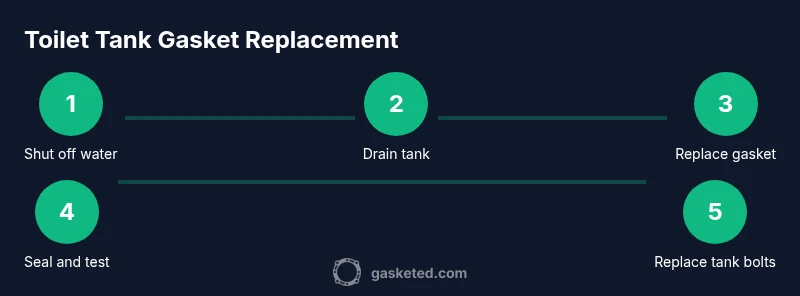
This overview summarizes the core actions you’ll perform, in order, to replace the gasket successfully. First, shut off the water supply and flush to drain as much water as possible. Next, disconnect the water line and remove the tank bolts. With a helper, lift the tank off the bowl, exposing the old gasket. Clean the mounting surfaces, remove the old gasket, and dry everything thoroughly. Install the new gasket, re-seat the tank, reconnect water, and slowly refill the tank to test for leaks. If leaks persist, reseat the gasket or tighten slowly in small increments.
Common mistakes and how to avoid leaks
Rushing the process can lead to improper gasket seating or overtightened bolts that crack porcelain. Misplacing the gasket or bolts will cause misalignment and leaks after reassembly. Not cleaning the mounting surfaces allows old debris to prevent a proper seal. Always dry surfaces, align bolt holes precisely, and test for leaks at low water pressure before full operation. Label or photograph parts positions to avoid confusion during reassembly.
Aftercare and maintenance tips
After replacing the gasket, recheck for leaks every day for the first week. If you notice any drips, tighten a quarter-turn at a time and re-test. Clean the resting area regularly to prevent mineral buildup, and consider replacing the sealant around the tank edges if you observe dampness after several months. Keeping spare washers and bolts on hand can help with quick fixes in the future, reducing downtime and frustration. The Gasketed team recommends using a compatible gasket kit and following these steps for a durable gasket replacement and leak prevention.
Safety considerations and environmental notes
Work in a well-ventilated area and wear gloves to protect your hands from sharp edges and cleaners. Always shut off water supply before starting and never force parts that resist. Dispose of old gasket material in accordance with local waste guidelines. If your toilet remains leaky after multiple attempts, consider consulting a licensed plumber; persistent leaks may signal a more serious issue such as a faulty fill valve or bowl cracks.
Tools & Materials
- Adjustable wrench(Loosen locknuts on the water supply line and tank bolts.)
- Screwdriver set (flathead & Phillips)(Remove tank bolts and hoses.)
- Pliers(Help with stubborn fittings; avoid damage to porcelain.)
- Bucket(Catch any residual water when removing the tank.)
- Towels or rags(Keep the area dry and prevent slips.)
- Sponge or cloth(Clean gasket surfaces and wipe dry.)
- Replacement toilet tank gasket kit(Ensure kit matches your toilet model and includes compatible bolts if possible.)
- New bolts and washers (if not included in kit)(Use non-corrosive hardware for longevity.)
Steps
Estimated time: Estimated total time: 45-75 minutes
- 1
Shut off water and drain the tank
Locate the shut-off valve near the floor behind the toilet and turn it clockwise until snug. Flush the toilet to empty the tank, then soak up any remaining water with towels. This reduces splash and prepares for safe disassembly.
Tip: Have towels and a small bucket ready; water exposure is predictable and easy to manage. - 2
Disconnect water supply and remove tank bolts
Place a container under the connection to catch drips. Use an adjustable wrench to loosen the supply line, then remove the nuts securing the tank to the bowl bolts. If bolts resist, apply gentle, even pressure rather than twisting aggressively.
Tip: Take note of bolt orientation for reassembly; this saves time later. - 3
Lift the tank off the bowl
With a helper, carefully lift the tank straight up to avoid bending the bolts. Gently set the tank aside on a soft surface. Expose the old gasket and the mounting surfaces for inspection.
Tip: Support the tank to prevent cracks; a heavy tank can slip unexpectedly. - 4
Remove the old gasket and clean surfaces
Peel away the old gasket, then scrub the contact surfaces on the bowl and tank with a sponge. Ensure both surfaces are dry and free of debris before applying the new gasket. Inspect bolt holes for corrosion.
Tip: A clean, dry surface is essential for a reliable seal. - 5
Install the new gasket and remount the tank
Position the new gasket correctly in the groove between tank and bowl. Align bolt holes, then reattach the tank using the original bolts or new ones from the kit. Hand-tighten first, then snug with wrenched turns.
Tip: Do not overtighten; porcelain cracks easily under excessive torque. - 6
Reconnect water supply and fill the tank
Reconnect the supply line, turn the valve slowly, and allow the tank to fill. Check for leaks around bolts and the gasket area as the water pressure rises. Readjust if necessary.
Tip: Fill slowly to catch leaks early without overflowing. - 7
Test for leaks and finalize
Flush several times to verify the seal. Inspect around the tank edges and bolts for any signs of dampness. If leaks appear, reseat the gasket or tighten small increments while monitoring.
Tip: Patience matters; one-quarter turn can make a difference.
Common Questions
Do I need to turn off the water before starting?
Yes. Always shut off the water at the valve and drain the tank before touching any components to prevent floods and water damage.
Yes. Start by turning off the water and draining the tank to prevent leaks while you work.
What gasket kit should I buy?
Find a gasket kit that matches your toilet model and tank-to-bowl bolt pattern. If unsure, check the model number and consult the retailer or manufacturer.
Look for the exact model-compatible kit, and if you’re unsure, ask for guidance at the store.
Can I reuse the old bolts and washers?
It's best to use new bolts and washers if possible. Worn or corroded hardware can compromise the seal and cause leaks.
Avoid reusing old bolts if they look worn; new hardware helps ensure a solid seal.
How will I know the gasket is failing?
Common signs include persistent leaks around the base, dampness on the floor, or water trickling from the tank bolts after refilling. Inspect regularly.
If you see drips near the bolts or base, the gasket might be failing.
Is plumber’s putty or silicone necessary?
A dedicated gasket kit typically provides a proper seal. Silicone around the edges is usually unnecessary unless the kit directs it.
Usually not needed; follow the kit instructions for the best seal.
What if leaks persist after replacement?
If leaks continue, reseat the gasket, check alignment, and ensure the tank is level. Persistent leaks may indicate a cracked tank or improper seating.
If leaks keep happening, recheck the seating and consider professional help if needed.
Watch Video
Key Takeaways
- Shut off water and drain the tank before starting
- Choose a gasket kit that matches your model
- Clean mounting surfaces for a reliable seal
- Tighten bolts gradually to avoid porcelain damage
- Test for leaks and recheck after final assembly