What Gasket Maker for Rear Differential: A DIY Guide
Learn how to choose and apply gasket maker for rear differential covers, with practical tips on oil resistance, cure times, surface prep, and leak prevention.


Use a silicone gasket maker that’s oil-resistant and rated for gear oil on rear differential covers. Avoid non-oil-rated sealants. Clean / degrease both surfaces, apply a continuous bead to the differential cover or mating surface, mate the parts, and torque to spec. Let the sealant cure per label before refilling with gear oil.
What gasket maker for rear differential to use
When tackling a rear differential cover leak or reseal, the first decision is selecting a gasket maker that can withstand gear oil and elevated temperatures without hardening. The exact phrase you’ll want to see on the label is oil resistance or gear-oil compatibility. For the DIY homeowner, this means choosing a silicone-based gasket maker that remains flexible after cure and tolerates the viscous, mineral-rich environment inside a differential.
In practice, you are aiming for a product that forms a reliable seal between the cover and the housing while remaining compatible with the specific gear oil your vehicle uses. This is especially important if your differential experiences heat cycling or if the cover surface has minor imperfections. The goal is a dependable, leak-free seal that lasts through many miles of operation without frequent re-sealing.
Key properties to look for when selecting gasket maker for the rear differential
Choosing the right gasket maker starts with reading labels and product data sheets. Look for terms like oil-resistant, gear oil compatibility, and high-temperature tolerance. A high-quality gasket maker should also be non-shrinking, non-corrosive to metal, and able to tolerate the mineral content found in most gear oils. It should cure to a flexible, rubber-like state rather than a rigid, brittle film. Always verify that the product is designed for automotive applications and can withstand the ambient temperatures your vehicle experiences.
Additionally, consider the working time and cure time indicated on the label. Some products offer faster handling but longer cure times, which may affect your service plan. The key takeaway is to select a gasket maker that explicitly mentions compatibility with gear oil and automotive use, then cross-check the cure conditions with your intended repair window.
Silicone RTV vs polyurethane and anaerobic options for the rear diff
There are several families of gasket sealing products, but for a rear differential, silicone RTV and oil-rated gasket makers are the most common. Silicone RTV typically offers excellent oil resistance and remains flexible over a wide temperature range, which is ideal for gear oil environments. Polyurethane-based sealants can offer strong initial tack and good adhesion but may be more rigid once cured, which could be less forgiving on imperfect surfaces. Anaerobic sealants, which cure in the absence of air between metal surfaces, can perform well on rigid joints, but their cure behavior in an oil-filled, hotter environment may be less forgiving if surface prep isn’t perfect.
For most DIY rear-diff reseal jobs, a dedicated oil-rated silicone gasket maker is a safer, more forgiving option. Always confirm that the product is rated for gear oil and automotive service, and follow the manufacturer’s instructions for surface prep, tool use, and curing times.
Application steps for rear differential cover repair
Before you start, gather the necessary tools: a plastic scraper, degreaser, lint-free rags, and a torque wrench. Start with a clean workspace and ensure the vehicle is safely supported. Steps:
- Drain the diff oil and remove the cover if resealing. 2) Remove old gasket material completely; wipe surfaces clean and dry. 3) Brush or smear a continuous, uniform bead of gasket maker along the cover edge or mating surface. 4) Align and hand-tighten bolts, then torque to manufacturer spec in a criss-cross pattern. 5) Allow the product to cure as per label before refilling with gear oil. 6) Refill and check for leaks after a heat cycle.
Common mistakes and how to avoid them
Mistakes to avoid include over-applying gasket maker, which can squeeze out and clog oil channels, or applying over a dirty, oily surface, which compromises adhesion. Do not mix sealants with incompatible materials or use a product not rated for gear oil. Neglecting proper surface prep is another frequent issue. Always pre-clean and dry surfaces, remove old gasket remnants, and verify that you are using an automotive-grade, gear-oil-compatible gasket maker. Finally, skip the cure time can lead to leaks; obey label directions for curing before refilling the differential.
Maintenance tips to extend gasket life
After install, monitor for leaks during the first heat cycle and the first drive after refilling. Re-torque bolts per vehicle specification after heat cycling if recommended by the manufacturer. Schedule periodic checks for leaks around the cover perimeter, especially in vehicles that see heavy use or off-road conditions. Keep the differential area clean to help you spot early signs of seepage and address them promptly.
Comparison of gasket sealing options for rear differentials
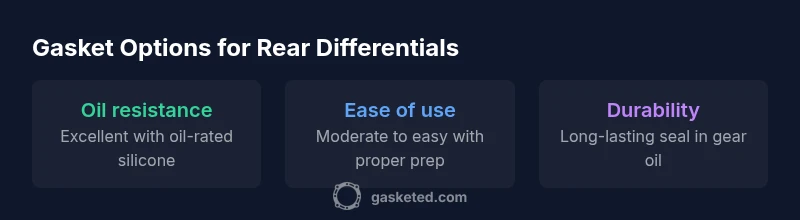
| Option | Oil Resistance | Ease of Use | Durability | Best Use |
|---|---|---|---|---|
| Silicone RTV (oil-rated) | excellent | moderate | high | Rear differential covers |
| Gasket maker (oil-rated) | excellent | easy | high | Rear differential covers and oil assemblies |
| Traditional premade gasket | good | easy | moderate | Older or machined surfaces |
Common Questions
Can I use ordinary RTV silicone for a rear differential?
Ordinary RTV silicone may not be oil-resistant enough for gear oil. Choose a gasket maker explicitly rated for automotive gear oil to ensure longevity and leak resistance.
No—use an oil-rated gasket maker designed for gear oil.
Do I need to remove old gasket material before applying gasket maker?
Yes. Fully clean the mating surfaces and remove any remnants of the old gasket. A clean surface ensures proper adhesion and a reliable seal.
Yes—clean surfaces and remove old gasket remnants.
How long does a gasket maker take to cure?
Cure time varies by product. Always follow the product label. Expect different durations depending on temperature and humidity.
Check the label; cure times vary.
Is gasket maker compatible with gear oil?
Choose a product specifically rated for gear oil. Not all gasket makers are compatible with mineral and synthetic gear oils.
Make sure it’s gear oil compatible.
Can I reuse the rear differential cover after resealing?
You can reuse if the mating surfaces are clean and free of damage. If there is any warping or deep scratches, replace the cover or gasket.
Reusing is possible if surfaces are clean and undamaged.
“Surface preparation and selecting the right oil-rated gasket maker are essential steps for a leak-free rear differential repair.”
Key Takeaways
- Choose oil-rated, gear-oil compatible gasket maker.
- Prepare surfaces thoroughly before application.
- Follow cure times and torque specs precisely.
- Avoid non-oil-rated sealants in gear oil systems.
- Inspect for leaks after heat cycles and service.