Can You Use Gasket Maker on a Carburetor? Practical DIY Guide
Explore whether gasket maker is appropriate for carburetor repairs, safe application steps, common mistakes, and practical, fuel-system-safe alternatives for DIY enthusiasts.


Yes, you can use gasket maker on a carburetor, but only in specific, manufacturer-approved situations. Generally, avoid permanent sealants on critical fuel paths and opt for OEM gaskets. When applicable, choose a fuel-resistant gasket maker and apply sparingly to clean, dry surfaces following the product's instructions. For most carburetor repairs, gasket kits or sealants designed for fuel systems are safer.
What is gasket maker and when is it used in carburetor maintenance?
Many DIYers ask can you use gasket maker on carburetor surfaces. The short answer is: it depends on the surface, the seal required, and the fuel exposure. Gasket makers are a broad family of sealants designed to bridge gaps, fill irregularities, and help prevent leaks where a traditional gasket might not seal perfectly. For carburetors, the primary goal is a reliable seal that won’t degrade in gasoline or ethanol blends. According to Gasketed, gasket choices should be driven by surface type, exposure to fuel, and operating temperatures. This is why you’ll often see gasket makers recommended for non-fuel-adjacent joints or as a supplementary measure alongside a proper gasket. Treat gasket maker as a supplementary tool rather than a universal fix. If used, choose products that are explicitly labeled fuel-resistant and compatible with petroleum-based fuels and evaporative emissions. Gasketed Analysis, 2026 notes that many DIY carb rebuilds fail due to improper sealing practices rather than the gasket material itself, reinforcing the idea that material choice is important, but surface preparation and correct application are equally critical. For most carburetor work, the safer route is OEM or manufacturer-approved gaskets.
Understanding gasket maker types and compatibility
Gasket maker comes in several chemistries: silicone RTV, anaerobic sealants, and polyurethane-based products. Silicone RTV is common for fuel-insensitive surfaces and vacuum ports, but not all silicones are fuel-resistant. Anaerobic sealants cure without air and can work for metal-to-metal joints, yet they can be too rigid for some carburetor surfaces that experience heat cycles and vibration. When you ask can you use gasket maker on carburetor, the key is to check the product label for fuel compatibility, temperature range, and surface compatibility. If a sealant is marketed as fuel-resistant and compatible with hydrocarbons, it may be suitable for non-fuel surfaces like mounting flanges or air-cleaner interfaces, but never apply a gasket maker inside fuel passages, jets, or fuel lines. Always cross-reference with the carburetor’s service manual. Gasketed guidance emphasizes avoiding solvent-heavy products on delicate composite components and ensuring the product can withstand engine heat and fuel exposure without delaminating.
Ideal scenarios for gasket maker on carburetors
There are limited, specifically defined scenarios where gasket maker might be appropriate during a carburetor service. External surfaces such as the mating surfaces of the carburetor body to the intake or throttle body can sometimes benefit from a thin bead of fuel-resistant gasket maker when a gasket is missing or damaged, provided an appropriate gasket is not available. Use gasket maker only after you have thoroughly cleaned and dried the surfaces and verified there is no fuel or oil residue that could trap beneath the sealant. In these cases, use only a light layer and avoid any excess that could squeeze into small ports. The recommendations from experienced technicians stress that gasket maker should not replace a gasket where there is direct exposure to gasoline, ethanol blends, or heat that could soften the sealant.
Surfaces and parts to avoid with gasket maker
Avoid applying gasket maker to fuel passages, jets, needle seats, and any area that carries raw fuel or vapors. Do not seal screws or bolts that hold inner components if the sealant could contaminate the passageways. Never apply gasket maker to valve seats, metering rods, or metering blocks where fuel flows; if sealant enters fuel passages, it can cause poor performance or a leak. Surfaces painted or coated for anti-corrosion should not be coated with non-compatible gasket makers, as chemical interactions may occur. Always ensure you’re using an oil-free, clean surface. The product’s cure time must be observed, and any squeeze-out should be cleaned promptly.
Stepwise approach to evaluating gasket maker use on carburetors (high level)
- Identify the exact surfaces that need sealing and confirm whether a gasket is missing or damaged. 2) Check the carburetor service manual for approved sealants or gasket materials. 3) Clean mating surfaces with a compatible solvent and let dry completely. 4) If a gasket is required, install the proper gasket first; use gasket maker only if the manual permits it on non-fuel surfaces. 5) Apply a thin, uniform bead only to non-fuel surfaces, then assemble promptly to avoid contaminating moving parts. 6) After assembly, inspect for leaks and run a brief engine test, monitor for signs of seepage. 7) If any doubt remains, replace with OEM parts rather than relying on sealants. 8) Store any leftover product safely and clearly label the container.
Alternatives to gasket maker for carburetor repairs
In most cases, OEM gaskets or carburetor rebuild kits provide the most reliable seal. RTV silicone that is explicitly fuel-rated can be used on non-fuel surfaces, but avoid using it where fuel flows. Mechanical fixes such as replacing gaskets, seals, or o-rings with proper parts ensure a safer outcome. If you are unsure, consult a professional or the carburetor manufacturer’s guidance. Gasketed guidance suggests prioritizing manufacturer-approved solutions to minimize risk and maximize reliability.
Safety-first: best practices and maintenance tips
Always wear eye protection and gloves when working around carburetors, as solvents and fuel are hazardous. Work in a well-ventilated area away from open flames. Keep a clean workspace, and wipe surfaces with a degreaser before applying any sealant. After sealing, allow the recommended cure time and test for leaks with a small amount of fuel or compressed air as appropriate. Regular maintenance, including cleaning, replacing gaskets, and inspecting seals, can prevent failures that would require sealants as a retrofit.
Tools & Materials
- Safety glasses or face shield(Protect eyes from solvents and fuel splashes)
- Nitrile gloves(Keep skin away from solvents and fuel)
- Carburetor gasket kit (OEM or universal)(Preferred over sealant-only repairs)
- Fuel-rated gasket maker (if approved by manual)(Check compatibility with carburetor surfaces)
- Isopropyl alcohol or carburetor cleaner(For surface degreasing and drying)
- Rubbing or lacquer thinner(Use sparingly for heavy residues)
- Lint-free shop towels(Dry surfaces and wipe away residue)
- Small brushes or wooden stick(Apply sealant precisely; avoid jets)
- Torx/Allen wrenches and screwdrivers(Disassemble and reassemble carburetor components)
- Calibrated torque wrench (optional)(Ensure correct clamping force)
- Latex-free work mat or tray(Keep parts organized and prevent loss)
Steps
Estimated time: 60-90 minutes
- 1
Gather and inspect
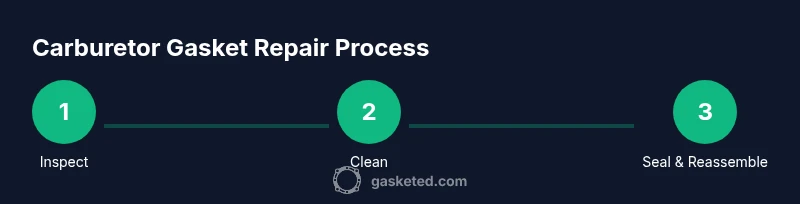
Collect OEM gaskets, compatible sealants (if approved), and cleaning supplies. Inspect the carburetor surfaces for flatness, damage, and old gasket remnants. Remove any old gasket material carefully to avoid gouging the metal surfaces.
Tip: Document the original gasket arrangement before disassembly to simplify reassembly. - 2
Clean mating surfaces
Degrease all mating surfaces with isopropyl alcohol or carburetor cleaner until the surface is free of oil, fuel, and residue. Dry thoroughly with lint-free towels and inspect for pitting or scratches that could cause leaks.
Tip: Do not scrub aggressively on delicate ports; use a soft brush to reach crevices. - 3
Select seating method
Choose OEM gaskets first. If a gasket is missing and the manual allows, use a fuel-rated gasket maker on non-fuel surfaces only. Never apply sealant inside fuel passages or jets.
Tip: Review the service manual to confirm compatibility before applying any sealant. - 4
Apply sealant sparingly
If permitted, apply a thin, even bead on the non-fuel surface. Avoid excessive amounts that could squeeze into ports. Allow the surface to remain dry and free of dust before reassembly.
Tip: A dot of sealant at the corners is often enough—avoid continuous beads along long edges. - 5
Reassemble carefully
Reinstall gasket and carburetor components in the reverse order. Torque fasteners to the manufacturer’s specification and avoid overtightening, which can crack gaskets or warp surfaces.
Tip: Use a torque wrench when specs are provided; if not, tighten evenly in a crisscross pattern. - 6
Test and diagnose
After assembly, perform a leak test and run the engine to verify proper idle and acceleration. Watch for fuel seepage around gaskets and joints and be prepared to re-inspect if symptoms persist.
Tip: If any fuel odor or seepage is detected, stop and recheck the seals immediately.
Common Questions
Can gasket maker be used on carburetor surfaces?
It can be used on non-fuel surfaces if the sealant is explicitly rated for fuel exposure and the manufacturer permits it. Do not use on fuel passages or jets. Always consult the carburetor’s service manual before proceeding.
Gasket maker on carburetor surfaces is only okay for non-fuel areas if the product is fuel-rated and your manual says so. Avoid fuel passages and consult the manual.
Is gasket maker fuel-rated?
Some gasket makers are labeled fuel-rated, but compatibility varies by surface and application. Check the label and the carburetor manual to ensure it’s appropriate for use near fuel systems.
Some gasket makers are fuel-rated, but you must verify compatibility on the label and with the carburetor manual.
What parts of a carburetor can gasket maker be used on?
Typically non-fuel surfaces like mounting flanges may accept a fuel-rated sealant if approved by the manual. Do not apply to jets, passages, or fuel lines.
Only non-fuel surfaces, if approved, and never on jets or fuel paths.
What are safer alternatives to gasket maker?
Rely on OEM gaskets or carburetor rebuild kits. Use sealants only when explicitly allowed by the manufacturer and ensure compatibility with fuels and temperatures.
Use OEM gaskets or rebuild kits; sealants only if the manual allows it.
How do I identify a leak after resealing?
Perform a careful external inspection for seepage, then run the engine at idle and check for fuel smell or wet spots near joints. If detected, stop and recheck the seals.
Look for leaks around joints after a test run; if in doubt, recheck the seals.
What risks come with using gasket maker on a carburetor?
Primarily fuel leakage, varnish buildup, and degraded performance if the wrong product is used. It may also contaminate passages if applied improperly.
The main risks are leaks and contamination if you pick the wrong product or apply it incorrectly.
Watch Video
Key Takeaways
- Understand where gasket maker belongs on a carburetor.
- Rely on OEM gaskets first; use fuel-rated sealants only where permitted.
- Never seal fuel passages with gasket maker.
- Proper cleaning and surface preparation are critical to success.