Is a gasket the same as an o-ring? A practical comparison for DIY
A thorough, DIY-friendly comparison clarifying whether gaskets and O-rings are interchangeable, with material, design, and application guidance for home repairs.


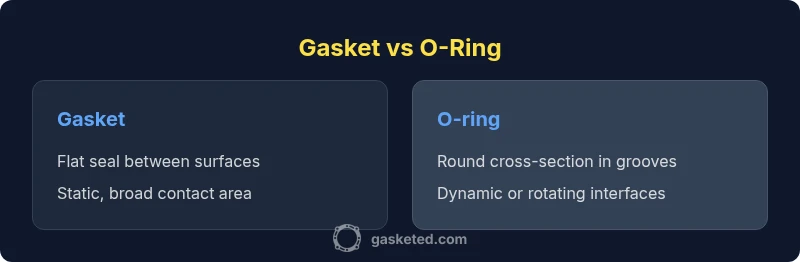
Gaskets and O-rings are not the same. A gasket is a flat-seal surface designed for stationary joints to prevent leaks, while an O-ring is a round, doughnut-shaped seal used in dynamic or moving joints. The right choice depends on surface geometry, pressure, temperature, and mating materials. For most home applications, select the seal type based on the joint design and service conditions.
Is a gasket the same as an o-ring? Clarifying definitions
At first glance, the terms gasket and o-ring are often used interchangeably in casual conversations, but they describe different seal geometries and intended uses. A gasket typically refers to a flat or molded surface that sits between two mating parts — think pipe flanges, appliance lids, or access panels. An O-ring, by contrast, is a torus-shaped ring that fits into a groove and is compressed to seal. In practice, the question is not simply whether they are "the same"; it is about choosing the device that matches the joint geometry and operating conditions. According to Gasketed, understanding the geometry and the mating surfaces is the first step toward a durable leak seal. The right terminology helps homeowners source the correct part quickly and avoids common misfits.
Quick note on terminology
When people say gasket, they often mean a flat-seal solution used on large, stationary interfaces. When they say O-ring, they usually mean a round cross-section seal designed to fit into a groove and be compressed. This distinction matters because it guides how the seal is installed, what materials are suitable, and how it performs under pressure. In practical terms, is gasket the same as o ring? Not for the same joint or service conditions. Reading part specifications and cross-checking diagrams will save time and reduce the risk of leaks.
Practical implication for DIYers
For a homeowner tackling a dishwasher, faucet, or toilet repair, the difference translates into a few concrete decisions: surface geometry, availability of the seal in the necessary material, and the expected movement of the joint. Gaskets are favored for flat, stationary surfaces with large contact areas where uniform compression can occur. O-rings excel where the seal lives in grooves and may endure some motion or rotation without losing integrity. In most household scenarios, you’ll identify the right seal by inspecting the joint design and consulting manufacturer diagrams.
Why this matters in maintenance
Misidentifying a gasket as an O-ring can lead to insufficient sealing, leaks, or compromised reliability. Conversely, forcing an O-ring into a flat-seal interface is often impossible or leads to premature failure. The practical upshot is that the homeowner benefits from learning the core difference: geometry and function drive the correct part. Diligent labeling and keeping a small parts kit with a few gasket sheets and O-rings of common sizes will speed future repairs.
A note on home diagnostics
If you are unsure whether a gasket or O-ring is required, start by measuring the joint geometry and looking for grooves. Flat flange faces typically require a gasket, while grooves and round channels usually call for an O-ring. When in doubt, photograph the joint, note the operating temperature and chemical exposure, and consult a gasket guide or the original equipment manufacturer. The goal is to minimize leaks and ensure a durable seal that lasts through typical daily use.
Comparison
| Feature | Gasket | O-ring |
|---|---|---|
| Cross-section / shape | Flat profile (sheet or molded) | Round cross-section (torus) |
| Primary application | Static joints with flat mating surfaces | Grooved, moving, or circular joints |
| Sealing mechanism | Compression on a surface to seal | Comparison pressure squeezes the ring into contact |
| Materials commonly used | Rubber, silicone, PTFE, graphite, metal-supported sheets | Nitrile, Viton, silicone, fluorocarbon elastomers |
| Installation considerations | Flat surface finish, proper gasket thickness, even clamping force | Correct groove size, lubrication often beneficial, avoid twisting |
| Best for | Static seals on flanges, lids, appliances | Dynamic or rotating joints, shafts, fittings |
Pros
- Gaskets offer a large sealing area for flat joints and can handle wide surfaces
- O-rings are versatile for dynamic or groove-based interfaces
- Material variety provides options for temperature and chemical resistance
- Standardized sizes and common materials simplify replacement
- Relatively inexpensive parts for many common DIY projects
What's Bad
- Gasket substitutes may be less forgiving on imperfect surfaces
- O-rings won’t seal flat, broad interfaces without a groove
- Material compatibility must match service chemicals; wrong choice can cause swelling or degradation
- O-rings can be damaged by improper installation if twisted or pinched
Not interchangeable by default; choose by geometry and service conditions
Gasket vs O-ring decisions hinge on joint shape and operating environment. Use flat gaskets for static, flat interfaces and O-rings for grooves and moving parts.
Common Questions
Is a gasket the same as an O-ring?
No. A gasket is typically a flat seal for stationary surfaces, while an O-ring is a round seal that fits into a groove and is compressed. Understanding the joint geometry is essential to select the correct type.
No. Gaskets are flat seals for stationary joints, while O-rings are round seals used in grooves. Always match the seal to the joint geometry.
Can I substitute an O-ring for a gasket on a flat surface?
Not typically. O-rings rely on a groove and are not suitable for flat, broad contact surfaces. Using an O-ring in a flat gasket seat can lead to leaks and improper compression.
Usually not. O-rings need a groove; flat surfaces typically require a gasket.
How do I measure for replacement gasket or O-ring?
Measure the joint geometry first: flat face vs groove. For O-rings, record inside diameter (ID) and cross-section (thickness). For gaskets, measure thickness and the flange dimensions. Always verify with manufacturer diagrams.
Measure the groove or flat face, then check the manufacturer's spec to pick the right size.
What materials work best for kitchen appliances?
Common materials include silicone and nitrile for gaskets, and Viton or silicone elastomers for O-rings. Choose based on water exposure, cleaning chemicals, and heat levels typical of kitchens.
Silicone and nitrile are common in kitchens; pick based on temperature and chemical exposure.
Are gaskets reusable after removal?
Most gaskets are single-use because surface compression and conditioning after removal reduce sealing effectiveness. Inspect for nicks, tears, or deformations before reuse.
Generally not reusable; inspect carefully if you consider reuse.
Where can I source these seals for DIY repairs?
Home improvement stores and online retailers stock common gaskets and O-rings. Check the original equipment manufacturer (OEM) part numbers when possible to ensure a precise fit.
Most hardware stores carry both; have the old part or measurements handy for a perfect match.
Key Takeaways
- Know the joint geometry before sourcing a seal
- Gaskets suit flat, stationary surfaces; O-rings suit grooves and movement
- Check materials for temperature and chemical exposure
- Measure accurately and use diagrams to confirm fit
- Keep a small parts kit with common gasket sheets and O-rings