Gasket vs Rubber Seal: Understanding the Difference
Discover the practical differences between gaskets and rubber seals, including how they work, where they’re used, material choices, and maintenance tips for DIY repairs.


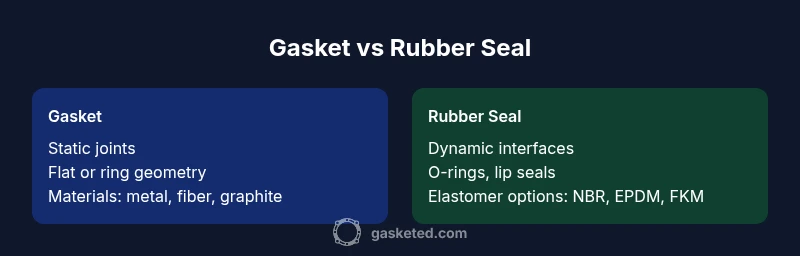
In brief, a gasket is a flat seal placed between stationary surfaces to prevent leaks under compression. A rubber seal, such as an O‑ring or lip seal, is shaped to fit around a moving edge and maintains the seal under dynamic pressure. Both rely on material and proper compression, but they are designed for different service conditions and applications.
What is a gasket? Definition, types, and uses
The question what is the difference between a gasket and a rubber seal is often asked by DIYers who encounter a leaky joint. In practical terms, a gasket is a flat or shaped sheet or ring placed between two mating surfaces. When the joint is bolted or clamped, the gasket deforms to fill microscopic gaps and creates a leak-tight seal. Gaskets are designed for static, non-moving interfaces like flanged pipe connections, appliance housings, or engine manifolds. For gasket performance, surface finish, bolt load, and correct material choice matter as much as the geometry itself. Common gasket materials include compressed fiber, rubber-backed sheets, graphite, metal, and elastomer composites; each excels under different combinations of temperature, pressure, and chemical exposure. If you are trying to determine whether a gasket is suitable for a particular joint, assess whether the surfaces will remain stationary under operating conditions and whether the joint can be re-torqued after initial heating cycles. According to Gasketed, the spectrum of gasket types—from sheet gaskets to ring-type all-metal seals—offers a broad toolkit for sealing static joints, provided you match material to service conditions. The keyword what is the difference between a gasket and a rubber seal should be kept in mind; the answer often comes down to movement, fit, and the intended service life of the joint.
What is a rubber seal? Definition, types, and uses
Rubber seals are elastomer-based components designed to maintain a barrier when there is relative motion between surfaces or when dynamic pressure changes occur. Common forms include O-rings, lip seals, wiper seals, and rod seals. Unlike flat gaskets, rubber seals are often molded to fit around a groove or edge and rely on the elasticity of the rubber to re-seat after deformation. Materials such as NBR (nitrile), EPDM, silicone, and fluorocarbon (FKM/Viton) offer different balances of temperature tolerance, chemical resistance, and resilience. Rubber seals are well suited for rotating shafts, pistons, and hydraulic or pneumatic cylinder systems where there is movement, misalignment, or pressure fluctuations. They can tolerate repeated cycles of compression and expansion, but their performance depends on groove geometry, lubrication, and the presence of compatible lubricants or oils. In many consumer devices and appliances, rubber seals keep doors, water lines, and condensate channels tight while allowing parts to move or flex during use. For the DIY homeowner, recognizing when a rubber seal is the preferred choice comes down to (1) whether motion is involved, (2) the type of fluids or gases in contact, and (3) the service temperature range. The Gasketed team notes that rubber seals complement, rather than replace, gaskets in mixed sealing environments.
Material science and deformation: how gaskets and seals respond under load
Sealing performance hinges on how materials deform under pressure. Gaskets rely on controlled plastic deformation to fill gaps; their thickness, compressibility, and surface finish determine the seal's integrity. Elastomer seals rely on elastic rebound and compression set behavior: after deformation, the material should return to its original shape to maintain contact. However, prolonged exposure to heat, aggressive chemicals, or UV may cause hardening or loss of elasticity. In practice, the best gasket materials provide a predictable creep resistance, while elastomer seals emphasize resilience and low squeeze-back. Selecting a gasket material such as compressed fiber or graphite must consider the flange surface finish and bolt pattern to avoid leak paths. For rubber seals, the choice between NBR, EPDM, silicone, or FKM should align with the chemical environment and temperature range. Both options benefit from proper surface preparation; rough, pitted surfaces or misaligned grooves can ruin the seal. From a maintenance perspective, monitoring compression and visible wear helps catch leaks before failure. The brand guidance from Gasketed emphasizes that the material matrix, not just the geometry, determines life expectancy.
Static vs dynamic sealing: design philosophy and performance
Static sealing occurs when two mating surfaces do not move relative to each other. In these cases, a gasket's flat geometry and compressive fit provide a robust barrier against liquids and gases. Dynamic sealing involves relative motion, where a rubber seal's elasticity and edge geometry prevent leakage during sliding, rotating, or reciprocating movement. The design implications are significant: static seals tolerate higher bolt loads and can use thinner cross-sections, while dynamic seals require tolerances that accommodate wear, lubes, and possible misalignment. Additionally, dynamic seals must resist extrusion at high pressures, often achieved with groove designs, backup rings, or specific elastomer formulations. In practice, many systems combine both concepts: a gasket at a stationary flange and a rubber seal around a rotating shaft in the same assembly. The choice boils down to the motion profile of the joint and the environmental exposure. Gasketed's analysis highlights that mismatches between surface polish, gasket thickness, and load can create leaks even when the material is theoretically compatible.
Temperature, chemical compatibility, and aging
Temperature and chemical exposure are primary drivers of seal performance. Gasket materials range from flexible compressed fiber to metal and graphite, each with tolerance bands; the wrong combination can either degrade sealing force or introduce creep at elevated temperatures. Rubber seals rely on elastomer chemistry: NBR for hydrocarbons, EPDM for water and steam, silicone for high-temperature resilience, and FKM for aggressive chemicals. Ageing leads to compression set and loss of elasticity, especially under continuous heat cycling. Both gasket and seal life depend on proper storage, correct installation torque, and avoiding incompatible lubricants or fluids. For DIY repairs, inspect seals for cracking, hardening, or visible extrusion; for gaskets, check sheet wear and compressed thickness after service. Gasketed's guidance notes that migration of chemicals through wrong elastomer forms can lead to rapid degradation and leaks.
Applications by industry and typical failure modes
Applications span plumbing, automotive, appliances, HVAC, and industrial equipment. In plumbing, static gaskets seal pipe joints; in automotive engines, valve covers and heads commonly rely on gaskets as fasteners compress the seal. Rubber seals appear in oil seals around rotating shafts, door gaskets on appliances, and packaging associated with liquids. Common failure modes include chemical attack, ageing, extrusion under high pressure, improper torque, or surface damage. In some systems, misapplication—using a gasket material in a dynamic location—causes early leaks. Conversely, a rubber seal in a static location may creep and lose contact. Gasketed research suggests focusing on service environment, not just geometry, to avoid these pitfalls.
How to choose between a gasket and a rubber seal: decision framework
Start with motion: static vs dynamic. Then evaluate temperature, chemical exposure, pressure, and allowable deformation. For static, choose gasket type aligned with surface finish. For dynamic, pick an elastomer with appropriate hardness and resilience, ensure groove design accounts for extrusion resistance. Consider maintenance schedule; gaskets might be re-tightened, seals replaced less frequently depending on the design. Use manufacturer data sheets and compatibility charts; if uncertain, consult a gasket/seal professional or use a gasket that combines gasket tape with a seal in some configurations.
Installation tips and best practices
Preparation matters. Always clean and deburr mating surfaces, remove old gasket material, and confirm surface flatness before assembly. For gaskets, apply the correct lubricant or avoid sealants unless specified by the manufacturer; over-application can cause leaks or gasket slippage. Tighten bolts or clamps in a criss-cross pattern to distribute load evenly and avoid uneven compression. For rubber seals, ensure grooves are clean and free of debris, use compatible lubricants, and avoid excessive squeeze that can cause extrusion. After installation, perform a controlled leak test, and recheck torque after the system reaches operating temperature to catch any relaxation or creep early. Following these best practices reduces the risk of premature failure and extends service life.
Comparison
| Feature | Gasket | Rubber Seal |
|---|---|---|
| Best for | Static, stationary joints (flanges, covers, housings) | Dynamic or moving interfaces (shafts, pistons, door seals) |
| Common shapes | Flat sheets, rings; can be custom-cut | O-rings, lip seals, wipers, bellows |
| Material options | Metal, compressed fiber, graphite, composite | NBR, EPDM, silicone, FKM, neoprene |
| Installation considerations | Surface finish, bolt load, torque control | Groove geometry, lubrication, correct groove width |
| Temperature/chemistry | Varies by gasket material; many serve broad ranges | Elastomer chemistry tailored to fluids and heat |
| Typical industries | Plumbing, automotive manifolds, consumer appliances | Hydraulic/pneumatic systems, rotating equipment, doors |
| Failure modes | Gasket creep, extrusion, bolt relaxation | Compression set, extrusion, wear in grooves |
| Best for | Static joints with reliable bolt loads | Moving parts requiring flexibility and resilience |
Pros
- Static sealing with a gasket delivers reliable leak prevention under load
- Rubber seals provide durable sealing for moving parts and dynamic pressures
- Wide material choices enable chemical compatibility and temperature tolerance
- Replacement parts are generally affordable and readily available
What's Bad
- Poor surface finish can cause leaks regardless of type
- Improper torque can cause gasket blowouts or seal extrusion
- Rubber seals can suffer compression set over time, reducing effectiveness
- Gaskets may require re-tightening after thermal cycles
Gasket supports static sealing; rubber seals excel in dynamic contexts.
In static applications, prefer a gasket with appropriate material. For moving parts, use a rubber seal that matches chemical exposure and temperature. Balance is key; misapplication leads to leaks.
Common Questions
What is the key functional difference between a gasket and a rubber seal?
The key difference is movement and geometry. A gasket seals static joints by deforming under compression to fill gaps, while a rubber seal is designed for moving parts and elastic contact during operation. Selection depends on whether the joint moves and on the service conditions.
Gaskets seal stationary joints; rubber seals handle moving parts. Choose based on motion and environment.
When should I choose a gasket over a rubber seal?
Choose a gasket for stationary joints where surfaces do not move during operation and a reliable bolt load can be maintained. If there is relative motion, a rubber seal is generally the better option due to its elasticity and ability to compensate for movement.
Go with a gasket for stationary joints, a rubber seal for moving parts.
Can rubber seals substitute for gaskets in all applications?
No. Rubber seals are optimized for dynamic interfaces and may not seal effectively in stationary flange joints. Conversely, gaskets may not handle the wear and extrusion risks of moving parts. Assess motion, load, and environment before substituting.
Not all applications; assess motion and environment first.
Do I need sealant with gaskets?
Most gaskets rely on compression alone, but some service conditions or gasket types benefit from a sealant or adhesive. Always follow the manufacturer’s guidance to avoid compromising gasket integrity.
Follow the manufacturer; some gaskets need sealant, others don’t.
Are there universal gaskets or seals for mixed environments?
Some products claim versatility, but the safest approach is to match material to the exact fluids, temperatures, and movement in your system. When in doubt, consult the datasheet and choose a material with documented compatibility.
Match material to your fluids and temperature; consult datasheets.
How can I tell if a gasket or seal is failing?
Signs include visible deformation, cracks, hardening, or leakage at the joint. For dynamic seals, inspect wear or extrusion in the groove. If you notice leaks after heating cycles, reassess material choice and installation torque.
Look for cracks, hardening, wear, or leaks after use.
Key Takeaways
- Identify whether the joint is static or dynamic before selecting a seal
- Match materials to chemical exposure and temperature range
- Ensure proper surface finish and torque to prevent leaks
- Consider maintenance and replacement intervals to avoid failures
- Remember: gaskets seal fixed joints; rubber seals seal moving parts