Kammprofile Gasket vs Spiral Wound: A Practical Comparison
A practical guide comparing kammprofile gaskets and spiral wound gaskets, covering materials, sealing performance, temperature tolerance, and maintenance tips for DIY and home systems.


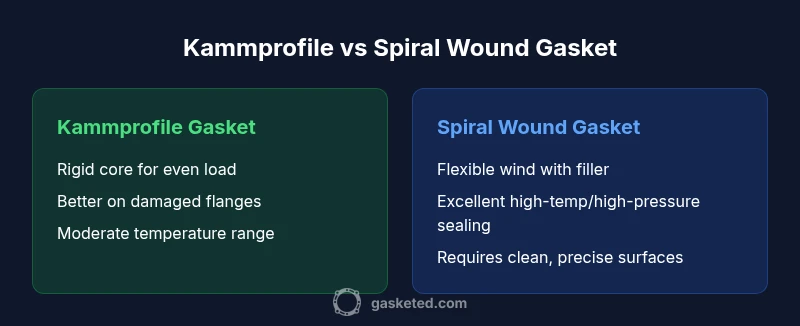
Both gasket types serve different sealing roles. The kammprofile gasket vs spiral wound choice hinges on surface conditions, temperature, and maintenance tolerance. Kammprofiles are rugged, easy to inspect, and provide steady load distribution on imperfect flanges. Spiral wound gaskets excel in high-temperature, high-pressure systems but require careful handling and more precise preparation. Choose based on operating demands.
Material and Construction: What Are They?
The term kammprofile gasket vs spiral wound refers to two distinct construction philosophies. A kammprofile gasket combines a rigid metallic core with a uniform, serrated profile that enhances load distribution, while using a soft sealing face and an elastomer or PTFE-compatible seating. This design tends to be robust against flange surface imperfections and readily accommodates minor misalignments. A spiral wound gasket, by contrast, uses a winding of metal strip around a resilient filler (commonly graphite or PTFE) with an inner seal, delivering excellent conformability and a wide sealing range. In practice, the choice hinges on flange condition, operating temperature, and fluid properties. For DIYers, it helps to compare kammprofile gasket vs spiral wound by focusing on rigidity, surface tolerance, and maintenance needs.
Sealing Principles and How They Work
Sealing in static gaskets relies on a stable compression zone that keeps the pressure boundary intact. Kammprofile gaskets generate robust seating by distributing compressive load across a rigid core, reducing face indentation on rough surfaces. Their serrated geometry traps sealing elements that seal the micro-gaps, and the metal frame resists creep under load. Spiral wound gaskets instead rely on the winding's flexibility and the filler’s tight packing, which allow sealing over a wider temperature and pressure range. The trade-off is that spiral wound assemblies often require precise flange face finishes and careful torque practices to avoid extrusion of the filler. Understanding these sealing principles helps determine which family better suits your system's dynamics.
Temperature and Pressure Profiles
In many industrial contexts, you must balance seal integrity with mechanical stability. Kammprofile gaskets excel when you have moderate to high pressure but encounter flange irregularities or corrosion on faces; their rigid core resists compression-set and maintains a sealing ligament. Spiral wound gaskets shine in high-temperature and high-pressure environments where system geometry is stable; their flexible wind and filler adapt to surface deviations and thermal expansion. Both types have limits; particularly, spiral wound gaskets can suffer from filler creep or winding relaxation if misused, while kammprofiles can be less forgiving of extreme flange dish or misalignment.
Flange Surface Condition Impact
Flange face condition is a key deciding factor. If the surface is rough, pitted, or slightly bowed, a kammprofile gasket often maintains a reliable seal due to its rigid structure and load distribution. However, for surfaces with very smooth finishes, a spiral wound gasket’s filler can adapt to small gaps, offering excellent conformity. The choice also depends on whether you expect flange creep under temperature cycles; kammprofiles resist such creep better but may still require proper bolt load distribution. In DIY contexts, assess surface finish (Ra) and run a simple mock-tightening test to gauge how well the gasket seats, then decide.
Installation Nuances: Gasket Handling and Torques
Installation accuracy matters more with spiral wound gaskets, where the winding and filler can be damaged by improper torque or misalignment. Generally, you must follow flange standards, pre-clean mating surfaces, and apply recommended bolt loads in a criss-cross pattern. Kammprofile gaskets can tolerate slightly rough surfaces and may be more forgiving of minor misalignment, but you still need clean faces and correct gaging. In either case, inspect gasket seating with a torque wrench and consider using a backing ring or anti-extrusion rings if the system is prone to extrusion.
Life Expectancy and Maintenance: When to Inspect
Maintenance cycles for gaskets depend on service, but some patterns emerge. Kammprofile gaskets tend to retain sealing force longer in the presence of flange surface faults, reducing leak risk between maintenance. Spiral wound gaskets may require tighter monitoring in dynamic systems where thermal cycling causes filler creep. Regular visual checks, pressure testing, and bolt-load verification are essential. Replace gaskets if damage, corrosion, or extrusion signals appear, rather than reusing compromised components. DIYers should document service intervals and keep spare gaskets for common sizes to avoid long downtime.
Cost and Availability: Budgeting Your Gasket Choice
Cost considerations affect choice because kammprofile gaskets with metal cores and premium seats can have higher upfront prices, but their durability may reduce maintenance costs over time. Spiral wound gaskets are typically priced in a broad range depending on wind complexity and filler selection; they can be cost-effective for high-heat applications when installed correctly. Availability varies by region and supplier, so compare lead times, stock levels, and recommended replacement intervals. In home systems, factor in future repairs and the potential need for flange refurbishment alongside gasket replacement.
Industry Practices and Use Cases
Across industries, practitioners select gasket types based on service demands. In chemical processing and petrochemical plants, spiral wound gaskets are common for high-temperature, high-pressure piping and reactors. In situations with damaged or corroded flanges, kammprofile gaskets often perform better due to rigidity and predictable seating. In water treatment or HVAC loops with moderate temps, either option can work, but maintenance access and inspection ease may tilt the decision toward kammprofile gaskets. Understanding both options helps technicians adapt to a wide range of retrofit challenges.
Practical DIY Guide: How to Choose and Replace
If you're tackling a gasket replacement at home, start by documenting service conditions: fluid type, max temperature, and typical pressures. Compare gasket families by evaluating flange finish and suspected surface damage. Then gather tools: torque wrench, thread sealant (if applicable), cleaning brushes, and appropriate backup rings. Remove the old gasket, clean mating surfaces, inspect for corrosion, and ensure correct bolt sequence. When selecting kammprofile vs spiral wound, prioritize rigidity and ease of inspection for gaskets on imperfect surfaces, or opt for spiral wound when the service demands maximum conformability. Finally, perform a controlled seating test and monitor for leaks after reassembly.
Comparison
| Feature | Kammprofile Gasket | Spiral Wound Gasket |
|---|---|---|
| Construction and Core | Rigid metallic core with serrated profile for load distribution | Spirally wound metal strip with flexible filler for conformability |
| Sealing Mechanism | Load distribution and micro-gap sealing on imperfect faces | Filler compression with a flexible winding to adapt to gaps |
| Temperature Range | Good thermal stability in moderate to high temps | Excellent tolerance to high temperatures when used with proper filler |
| Pressure Range | Strong load-bearing with rigid face; reliable on higher pressures | Superior sealing under extreme pressures with dynamic expansion |
| Installation Ease | Relatively forgiving surface conditions, easier seating on rough faces | Requires precise seating and careful torque to avoid filler extrusion |
| Maintenance Ease | Easier inspection due to stable seating | Requires monitoring for filler creep and extrusion |
| Cost Considerations | Typically higher upfront durability, potential long-term savings | Broad price range based on winding complexity and filler choice |
| Best For | Rough flange surfaces, easy inspection, long service life | High-temperature/high-pressure systems with stable flanges |
Pros
- Stable load distribution on imperfect flanges
- Good durability and predictable seating on damaged faces
- Easier inspection and replacement cycles
What's Bad
- Higher upfront cost and potential lead times
- Requires skilled installation and precise flange preparation
- Spiral wound may suffer filler creep if misused
Kammprofile gaskets are generally more practical for imperfect flange surfaces and straightforward inspection; spiral wound gaskets excel in demanding high-temperature/high-pressure service.
Choose kammprofile when flange condition is a concern and ease of inspection matters. Opt for spiral wound when the system operates under harsh conditions and you can ensure precise flange preparation and torque control.
Common Questions
What is the main difference between kammprofile gaskets and spiral wound gaskets?
Kammprofile gaskets use a rigid core with a serrated profile to distribute load, making them forgiving on imperfect flanges. Spiral wound gaskets rely on a flexible winding and filler to adapt to gaps, performing better in harsh conditions but requiring precise seating.
The main difference is rigidity versus conformability. Kammprofiles distribute load on rough faces; spiral winds adapt to gaps but need careful seating.
Which gasket is easier to install for DIY homeowners?
Kammprofile gaskets are typically easier for DIYers on damaged or uneven flanges due to their rigidity, while spiral wound gaskets demand accurate surface finishing and torque control.
Kammprofiles are usually easier for rough surfaces, but spirals need careful prep.
Can kammprofile gaskets be used on damaged flanges?
Yes, kammprofile gaskets often perform better on damaged or pitted flanges thanks to their rigid core and load distribution, provided the mating surfaces are cleaned and properly bolted.
They handle rough flanges well, as long as the bolt pattern is correct.
Are there common applications best suited for spiral wound gaskets?
Spiral wound gaskets are common in high-temperature and high-pressure piping, reactors, and systems with stable flange geometry where conformability is crucial.
Great for harsh service where surfaces are well-prepared.
How do I determine the right gasket type for my system?
Assess flange condition, temperature, pressure, fluid properties, and maintenance plans. If flange surfaces are uneven, lean toward kammprofile; for extreme heat and pressure with good faces, spiral wound is often preferred.
Check surface condition, then match to service needs.
What maintenance steps help extend gasket life?
Regular bolt-load verification, visual leak checks, and proper surface cleaning extend gasket life. Replace gaskets showing signs of extrusion, corrosion, or significant deformation.
Keep torque in spec and inspect for leaks.
Key Takeaways
- Evaluate flange surface condition before choosing a gasket type
- Kammprofile suits rough, damaged, or uneven flanges
- Spiral wound suits extreme temperature and pressure when flange integrity is solid
- Proper torque and seating are critical for both types