What Are Most Gaskets Made Of? A Practical Materials Guide
Explore common gasket materials, from elastomeric polymers to PTFE and metal composites, and learn how to choose the right gasket for DIY repairs and home systems.


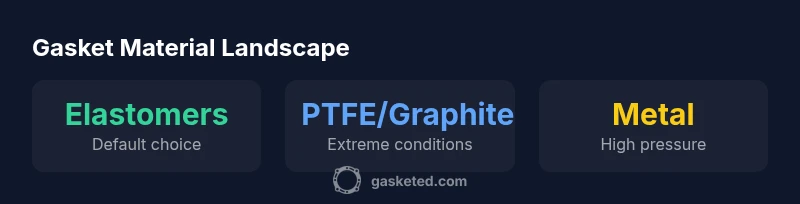
Most gaskets are made from elastomeric polymers such as nitrile (NBR), EPDM, silicone, and fluorosilicone, often with fillers or coatings. For high-temperature or chemical-heavy environments, PTFE, graphite, or metal-containing composites are common. The final choice depends on temperature, pressure, and chemical exposure, making elastomers the default for many applications while special materials handle extreme conditions.
Overview of gasket materials
Gasket design sits at the intersection of chemistry, mechanical engineering, and practical DIY practice. The question many homeowners ask is what are most gaskets made of. In everyday sealing tasks, the vast majority rely on elastomeric polymers because they seal reliably under compression, resist seepage, and flex with moving parts. Elastomers like nitrile (NBR), EPDM, silicone (VMQ), and fluorosilicone provide a good balance of elasticity, chemical tolerance, and cost. Within each family, performance hinges on formulation, cure system, and additives such as fillers, plasticizers, or reinforcing fabrics. For example, NBR offers solid oil resistance but moderates heat tolerance, while EPDM shines in water and steam environments but may struggle with hydrocarbons. Silicone provides an exceptional temperature window but can be heavier on static seals and cost. Beyond elastomers, many gaskets incorporate PTFE for chemical resistance, graphite for heat transfer, or metal rings for strength, often in laminated or composite structures. The end choice is dictated by intended service conditions: temperature, pressure, chemical exposure, and the intended service life.
Common base materials
At the core, gasket materials fall into two broad categories: elastomers and non-elastomers. Elastomers—NBR, EPDM, silicone, fluorosilicone—are the default for most sealing jobs because they compress and recover. These polymers tolerate vibration and seal dynamic joints, such as appliance lids, pipe connections, and automotive flanges. Non-elastomer baselines include PTFE, graphite, and metal composites; these are chosen when chemical compatibility, heat resistance, or structural rigidity is paramount. PTFE is inert to most chemicals and retains dimensional stability, making it popular in clean-room seals and chemical processing lines. Graphite gasket sheets excel in high-temperature or abrasive environments and often serve as furnace seals or exhaust manifolds. Metal gaskets, usually copper or steel with laminates, provide robust sealing under extreme pressure and can be machined to precise profiles for flanges. The material choice is rarely about a single property; it’s about a balance among elasticity, gap tolerance, and long-term performance under expected aging factors.
Elastomer families: NBR, EPDM, silicone
Elastomer families include nitrile rubber (NBR), ethylene propylene diene monomer (EPDM), silicone (VMQ), fluorosilicone, and fluorocarbon rubbers. NBR is widely used in oil and fuel systems, offering good abrasion resistance and cost-effectiveness. EPDM is excellent for water, steam environments, and weathering due to outstanding aging resistance, but it is not compatible with petroleum-based fuels. Silicone operates across an extraordinary temperature range, maintaining flexibility from sub-zero to well above 200°C, which makes it ideal for food-grade and medical seals, as well as high-temperature appliances. Fluorosilicone blends combine fluorocarbon resistance with silicone flexibility, serving specialized chemical environments. Fluorocarbon (FKM/Viton) rubbers resist fuels and solvents at high temperatures but can be stiffer and more expensive. Each material requires attention to cure method, surface finish, and assembly tolerances to prevent leakage. For DIY projects, selecting the right elastomer hinges on the exposure type, the system’s pressure, and the acceptable service life.
Non-elastomer materials
Non-elastomer options expand the toolkit for extreme environments. PTFE (Teflon) offers unmatched chemical resistance and very wide temperature ranges, but low elasticity means it’s less forgiving in poorly machined joints. Graphite, often used as a laminated sheet, tolerates high temperatures and aggressive media, though handling and installation require care to avoid embedding in mating surfaces. Metal gaskets, including copper, stainless steel, and bimetal composites, provide robust sealing under extreme pressure and can be machined to precise profiles for flanges. Composite gaskets—hybrid materials that pair metal with elastomer faces or soft fillers—blend the strengths of their components, providing reliable seals with improved conformability. When choosing non-elastomer materials for a DIY project, you’ll weigh sealing performance against ease of handling, reusability, and the cost of replacement. For corrosive chemicals or aggressive solvents, PTFE and graphite-based seals often win out; for high-load but moderate temperatures, metal or metal-faced composites may be preferred.
Performance factors shaping material choice
Performance in real-world seals depends on several interacting factors. Temperature range and thermal cycling influence elastomer aging and hardening; dynamic seals in machinery may require materials with excellent recovery and low compression set. Chemical compatibility determines resistance to oils, fuels, acids, or bases; radiation hardness may matter in sterilization contexts. Pressure rating and gasket thickness affect sealing load, so the material must maintain elasticity and not creep under load. Surface finish and flange geometry also play a role; a rough mating surface or improper bolt load can cause leaks even with the right material. Compatibility with cleaning processes, lubricants, and assembly methods further narrows options. In practice, engineers often use a material compatibility chart that lists media, temperature, and pH ranges, then cross-reference with mechanical constraints. For DIYers, a conservative approach is to start with a proven elastomer type for general use and reserve non-elastomer choices for conditions where the system clearly demands them.
Industry-standard constructions: laminated and reinforced seals
Many gaskets rely on layered or laminated constructions to optimize performance. A simple elastomer gasket may be a single sheet; sophisticated seals often combine a soft sealing face with a reinforcing core or a metal backing to handle high pressures. Laminates might use PTFE faces over elastomer cores to combine chemical resistance with elasticity. Metal-reinforced gaskets integrate copper, stainless steel, or other metals with elastomer coatings for improved conformability and sealability on uneven flanges. For food-grade applications, FDA-compliant elastomers with smooth surfaces reduce contamination risk. The manufacturing method—compression molding, extrusion, or laminating—also affects tolerances and repeatability. When DIYing replacements, match the gasket thickness and inner diameter with the existing flange to avoid leaks and bolt over-tightening. Remember that the right construction type can compensate for a modest material difference, but improper geometry or improper bolt patterns will defeat even the best material choice.
DIY considerations: selecting materials for home repairs
For home repairs, start with the simplest, most widely supported material. A nitrile or EPDM gasket often handles standard plumbing and appliance sealing tasks and is widely available at hardware stores. Check the system's exposed medias: oils, solvents, or water; choose a material known to resist those media. If the seal is exposed to high heat or steam, consider silicone for its temp tolerance, but verify compatibility with the media. For mechanical loads and portable devices, consider a laminated gasket that combines a soft seal with a more rigid backing. Always measure precisely: inner diameter, outer diameter, and thickness; use a gasket ring gauge if available. When disassembling, inspect mating surfaces for scoring or debris that could prevent a proper seal, and clean surfaces before reassembly. With DIY projects, it's prudent to replace gaskets rather than reuse old ones. Keep spare materials on hand and label replacements by application to simplify future maintenance.
Safety and handling considerations
Handle gasket materials with appropriate PPE: gloves to avoid skin irritation and eye protection when cutting gaskets. Some elastomers can produce dust or fumes during processing, so ensure adequate ventilation when cutting. Avoid mixing different gasket materials within the same joint unless you have explicit compatibility guidance, as dissimilar materials can chemically interact or wear unevenly. Store gaskets away from solvents and heat sources; keep them flat to prevent warping. Follow manufacturer cure and installation instructions; improper curing can lead to premature leaks or failures. If you’re recycling, discard damaged gaskets and replace with new stock.
Trends and future directions in gasket materials
Gasket material science continues to push for longer life, broader chemical compatibility, and easier installation. New composites blend elastomers with reinforced fibers and fluoropolymers to extend temperature ranges and reduce creep. Advances in sealants, coatings, and anti-galling finishes improve flange reliability and reusability. There is growing emphasis on sustainability: low-VOC formulations, recyclable elastomers, and designs that allow easier disassembly for repair. For DIYers, staying aware of material families and their typical media compatibility helps when shopping for replacements. The 2026 landscape remains dominated by elastomeric cores with specialized outer faces for extreme environments, but the tail end of the spectrum sees growing use of PTFE and graphite in niche applications. The Gasketed team expects ongoing refinement in surface engineering and standardized testing to reduce leaks and extend service life.
Comparison of gasket material types by use and trade-offs
| Material Type | Typical Applications | Key Properties | Limitations |
|---|---|---|---|
| Elastomer (NBR) | General gaskets, oils and fuels | Good oil resistance; flexible | Limited high-temp resistance; solvent sensitivity |
| Elastomer (EPDM) | Water/steam, weather seals | Excellent heat aging; water resistance | Not compatible with petroleum-based fuels |
| Elastomer (Silicone) | Food-grade, medical | Wide temp range; inert | Tear resistance moderate; cost |
| PTFE | Chemical seals, aggressive media | Excellent chemical resistance; broad temp | Low elasticity; creep under load |
Common Questions
What is the most common gasket material?
Elastomeric polymers, especially NBR and EPDM, are the most commonly specified due to their versatility and cost. They cover a broad range of everyday sealing needs.
Elastomer gaskets like NBR and EPDM are the most common choices for everyday sealing tasks.
Are silicone gaskets suitable for food and medical applications?
Yes. Silicone gaskets are widely used in food-grade and medical contexts because of their purity, flexibility, and broad temperature tolerance.
Yes—silicone is a popular choice for food and medical seals due to its purity and temperature range.
Can gaskets be made from metal?
Metal gaskets are used in high-pressure and high-temperature systems, typically with a soft-facing material or laminate to improve sealability on imperfect surfaces.
Metal gaskets are used for tough environments, often with a softer facing for the seal.
How should I choose gasket material for automotive vs home appliances?
Automotive seals prioritize high temperature and chemical resistance with strong environmental aging. Home appliances often rely on elastomers for reliability and cost, with silicone in high-heat areas.
Automotive gaskets need tougher materials; appliances usually use elastomers like NBR or EPDM.
How does temperature affect gasket material selection?
Temperature governs elasticity, compression set, and aging. Higher temps favor stable materials like silicone or fluoropolymers; lower temps require materials that stay flexible.
Temperature drives elasticity and aging, so pick materials that stay flexible across the expected range.
What are best practices for DIY gasket replacement?
Measure accurately, replace with a matching gasket, clean mating surfaces, and avoid mixing dissimilar materials unless specifically instructed.
Measure precisely, replace old gaskets, clean surfaces, and don’t mix incompatible materials.
“Material choice in gasket design is a balancing act between seal performance, media exposure, and operating temperature.”
Key Takeaways
- Elastomer polymers form the backbone of most gaskets.
- Material choice hinges on temperature, media, and pressure.
- Non-elastomer options are for extreme environments or strict chemical needs.
- Match thickness and surface finish to flange geometry for a reliable seal.